- UPSC Exam
- State PCS
- One Day Exam
- Current Affairs
- PT Quiz
- Downlaods
- About Coaching
- Blog
- Videos

| Prelims: (International Relations + CA) Mains: (GS 2 – International Relations, Global Governance, Multilateralism, India–US Relations, West Asia) |
India has chosen, for now, to stay away from US President Donald Trump’s proposed Board of Peace, unveiled at the World Economic Forum in Davos, adopting a cautious “wait and watch” approach despite an invitation extended to Prime Minister Narendra Modi.
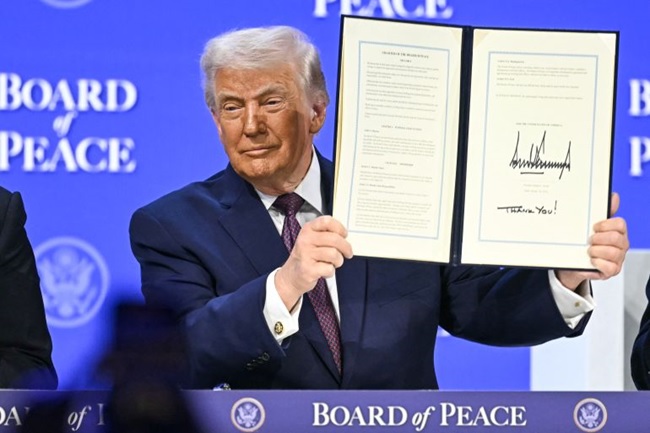
The Board of Peace is a US-led intergovernmental body designed to manage global conflict resolution and post-war reconstruction.
India is unlikely to ignore the platform entirely, yet joining carries reputational, diplomatic, and domestic political risks.
The strategic challenge lies in balancing engagement with caution — safeguarding India’s multilateral principles, domestic consensus, and global credibility in a Trump-led geopolitical forum.
FAQs1. What is Trump’s Board of Peace ? It is a US-led intergovernmental body aimed at managing post-war reconstruction and conflict resolution, starting with Gaza. 2. Why has India not joined the Board of Peace yet ? India is assessing the strategic, diplomatic, and political implications, particularly regarding multilateralism, regional balance, and domestic considerations. 3. Why is the board controversial ? It bypasses the UN system, has a pay-to-enter structure, and lacks clarity on its long-term mandate and geographic scope. 4. How does Pakistan’s involvement affect India’s decision ? Sharing a high-profile peace platform with Pakistan creates domestic and strategic complications, given India’s security concerns. 5. What is at stake for India if it stays out ? India risks losing influence in emerging global security frameworks and being excluded from key discussions on conflict resolution and reconstruction. |
| Prelims: (Economy + CA) Mains: (GS 3 – Indian Economy, Growth & Development, Public Finance, Banking & Financial Stability, Governance) |
As Union Budget 2026 approaches, India’s macroeconomic indicators project stability and relatively strong growth amid global uncertainty. However, a closer reading of RBI data (Financial Stability Report, Annual Report 2024–25) and recent Budget documents reveals a structural shift in India’s growth model — households are saving less and borrowing more, thereby absorbing risks earlier shared by the State.
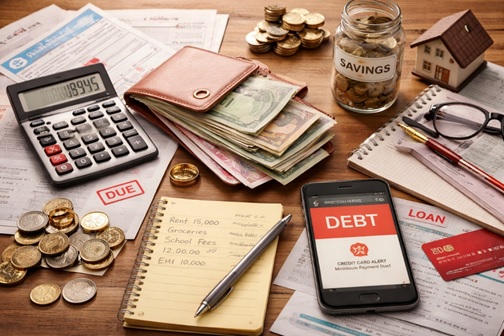
Headline indicators suggest stability:
Limitation: Debt-to-GDP ratios reveal how much debt exists, not why households are borrowing, nor their capacity to service debt under income stress.
According to the RBI Annual Report (2024–25):
Inference: Consumption stability masks underlying income fragility.
Implication: Credit is acting as a shock absorber, not as a growth accelerator.
Balance Sheet Position (Stock):
Households remain net holders of financial wealth, indicating no immediate balance sheet insolvency.
Flow Dynamics (Critical Insight):
Inference: Financial wealth may still rise, but the shock-absorbing buffer is thinning, weakening household resilience to future shocks.
At the State Level — A Quiet Transfer of Risk:
Result: States have become fiscally leaner but less responsive to household income stress, effectively shifting risk onto households.
At the Union Level:
This strategy:
Conclusion: Growth-enhancing, but not household-neutral.
Risk: Any shock — income slowdown, tighter financial conditions, unemployment — could trigger abrupt consumption retrenchment, destabilising growth.
Key Challenges:
Policy Options:
FAQs1. Why are household finances important for India’s macroeconomic stability? Because private consumption accounts for nearly 60% of GDP, household spending acts as the economy’s primary stabiliser. 2. Is India facing a household debt crisis? No. Household debt at 41.3% of GDP is lower than many peers, but the concern lies in why households are borrowing and their declining savings buffer. 3. What does “credit as a cushion, not capital” mean? It means borrowing is being used to maintain consumption rather than to invest in assets or income-generating activities. 4. How have fiscal policies contributed to rising household borrowing? Both State and Union governments have prioritised capital expenditure while compressing revenue spending, reducing income support and shifting risk to households. 5. What should Budget 2026 focus on to address this issue? Enhancing disposable incomes, promoting job creation, strengthening household savings, and balancing capital expenditure with income-smoothing measures. |
| Prelims: (International Relations + CA) Mains: (GS 2 – International Relations, Regional Groupings, Maritime Security, Indo-Pacific Strategy, Global Governance) |
India has recently welcomed Spain’s decision to join the Indo-Pacific Oceans Initiative (IPOI), marking the expansion of this India-led maritime cooperation framework and reinforcing growing international engagement in the Indo-Pacific region.
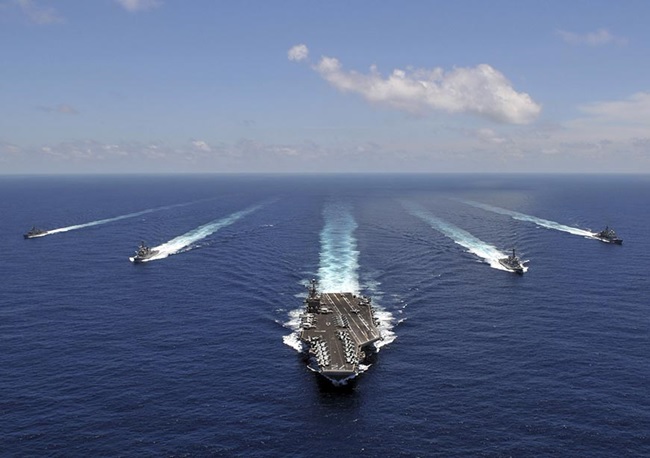
The Indo-Pacific Oceans Initiative (IPOI) is a multilateral framework launched by India to promote a free, open, inclusive, and rules-based Indo-Pacific order.
The IPOI is structured around seven thematic pillars, each addressing a core maritime challenge:
Leads: India and the United Kingdom (UK) Focuses on:
Leads: Australia and Thailand Addresses:
Leads: France and Indonesia Covers:
Lead: Germany Aims at:
Leads: India and Bangladesh Focuses on:
Leads: Italy and Singapore Promotes:
Leads: Japan and the United States (US) Addresses:
Spain’s participation:
FAQs1. What is the Indo-Pacific Oceans Initiative (IPOI) ? It is an India-led, voluntary, non-treaty-based framework aimed at promoting cooperation for a free, open, and rules-based Indo-Pacific maritime order. 2. Where was IPOI launched ? It was launched at the ASEAN-led East Asia Summit (EAS) in Bangkok. 3. How many pillars does IPOI have ? IPOI has seven thematic pillars covering security, ecology, resources, disaster management, science, capacity building, and connectivity. 4. Why is Spain joining IPOI significant ? Spain’s participation broadens European engagement, strengthens maritime cooperation, and enhances the initiative’s global legitimacy. 5. How does IPOI differ from military alliances in the Indo-Pacific ? Unlike military blocs, IPOI is inclusive, voluntary, and issue-based, focusing on functional maritime cooperation rather than strategic alignment. |
| Prelims: (Environment + CA) Mains: (GS 3 – Environment, Pollution, Climate Change, Public Health, Governance) |
A recent synthesis report by the Commission for Air Quality Management (CAQM) has identified secondary particulate matter as the single largest contributor to Delhi’s winter air pollution, reshaping the understanding of pollution sources and policy priorities in the National Capital Region (NCR).
Background: Understanding Delhi’s Air Pollution Challenge
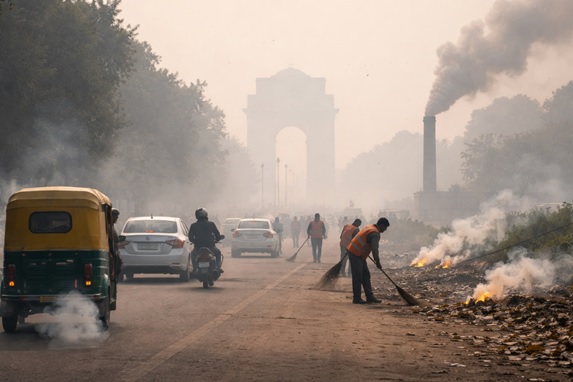
Delhi and the NCR experience severe air pollution every winter due to a complex interplay of:
Over the years, numerous scientific studies have attempted to apportion pollution sources. However, differences in data sets, methodologies, and time frames led to conflicting estimates, making it difficult to design targeted interventions.
To bridge this gap, the CAQM undertook a meta-analysis of existing peer-reviewed studies, producing a consolidated and evidence-based assessment of pollution sources affecting Delhi during the winter months.
The report provides a source-wise contribution to Delhi’s winter air pollution:
Importantly, the report notes that:
Unlike primary pollutants that are directly emitted, secondary particulate matter forms in the atmosphere through chemical reactions involving:
These react to form sulphates and nitrates, which together constitute nearly 25–60% of PM2.5 concentrations during winter.
Why this matters:
Ammonia plays a critical enabling role in the formation of secondary particulate matter.
These compounds significantly increase PM2.5 levels during winter, highlighting the rural–urban linkage in Delhi’s air pollution problem and the need to integrate agricultural practices into air quality governance.
1. Transport Emissions (23%)
2. Biomass Burning (20%)
3. Dust Pollution (15%)
The CAQM report has far-reaching implications for air quality management:
FAQs1. What is the CAQM synthesis report? It is a consolidated scientific assessment by the Commission for Air Quality Management that harmonises multiple studies to identify the major contributors to Delhi’s winter air pollution. 2. Which pollutant contributes the most to Delhi’s winter air pollution? Secondary particulate matter, contributing about 27%, is the largest single contributor. 3. Why is ammonia important in air pollution formation? Ammonia reacts with SO₂ and NOx to form sulphates and nitrates, which significantly increase PM2.5 levels, especially during winter. 4. How significant are transport and biomass burning compared to secondary particles? Transport contributes 23%, biomass burning 20%, while secondary particles remain the largest at 27%. 5. Why is the CAQM report significant for policymaking? It provides a unified scientific basis for targeted, multi-sectoral interventions and strengthens forecasting and governance mechanisms for air quality management. |
| Prelims: (Polity & Governance + CA) Mains: (GS 3 – Infrastructure, Energy, Climate Change, Economic Development, Governance) |
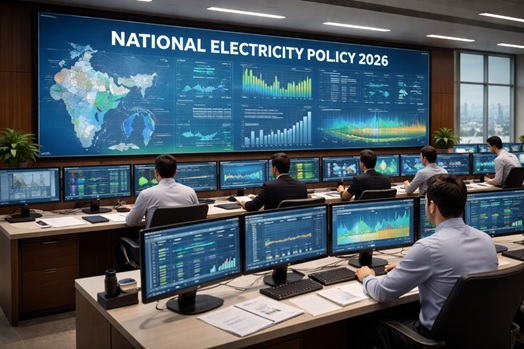
The Ministry of Power has released the Draft National Electricity Policy (NEP) 2026, outlining a comprehensive roadmap to overhaul India’s power sector in line with the vision of Viksit Bharat @2047.
Once finalised, the policy will replace the National Electricity Policy, 2005, reflecting two decades of transformation in energy demand, technology, market structures, and climate priorities.
From Shortages to Scale: How the Power Sector Has Evolved
Despite progress, structural issues remain, particularly in the distribution segment:
The Draft NEP 2026 sets forward-looking national targets:
These goals signal a decisive shift toward a low-carbon, reliable, and resilient power system.
The Draft NEP 2026 proposes wide-ranging reforms across planning, tariffs, markets, generation, grids, and technology.
1. Resource Adequacy Planning
2. Financial Viability and Economic Competitiveness
3. Renewable Energy Generation and Storage
4. Thermal Power: Supporting the Energy Transition
5. Nuclear Energy Expansion
6. Hydropower Development
7. Power Markets and Competition
8. Transmission Reforms
9. Distribution System Reforms
10. Grid Operations and Governance
11. Cybersecurity and Data Sovereignty
12. Data Sharing and Visibility
13. Technology and Skill Development
FAQs1.What is the Draft National Electricity Policy 2026? It is a comprehensive policy framework released by the Ministry of Power to guide the transformation of India’s power sector in line with long-term growth and climate goals. 2. What policy will it replace? It will replace the National Electricity Policy, 2005. 3. What are the consumption targets under the Draft NEP 2026? Per capita electricity consumption is targeted at 2,000 kWh by 2030 and over 4,000 kWh by 2047. 4. How does the policy support renewable energy and storage? Through market-based capacity addition, promotion of BESS and pumped storage, peer-to-peer energy trading, and incentives like Viability Gap Funding. 5. Why is the Draft NEP 2026 significant? It integrates energy security, financial sustainability, market competition, and climate commitments into a unified roadmap for India’s power sector transformation. |

Our support team will be happy to assist you!

 Contact Us
  New Batch : 9555124124/ 7428085757
  Tech Support : 9555124124/ 7428085757