
- UPSC Exam
- State PCS
- One Day Exam
- Current Affairs
- PT Quiz
- Downlaods
- About Coaching
- Blog
- Videos

|
Prelims: FAO, Lawngtlai District, Horticulture, Agrifood Systems, International Year of the Woman Farmer 2026, World Food Forum, FAO Headquarters, Women Farmers, Rural Development, Agricultural Diversification |
Z T Lalrithangi, popularly known as Pi Mari-i, a former teacher-turned-farmer from Mizoram, has been selected among the FAO 100 Women Heroes in Agrifood Systems and Rural Development.

Prelims Practice QuestionWith reference to Z T Lalrithangi, recently in the news, consider the following statements:
Which of the statements given above are correct? A. 1 and 2 only Mains Practice QuestionQ. Women play a crucial role in India’s agrifood systems and rural economy. Discuss the major challenges faced by women farmers and suggest measures to strengthen their participation in agriculture and rural development. |
1. Who is Z T Lalrithangi?Z T Lalrithangi, popularly known as Pi Mari-i, is a former teacher and farmer from Sangau in Mizoram's Lawngtlai district. She has gained recognition for her work in strawberry cultivation. 2. What is the FAO 100 Women Heroes initiative?It recognizes women making significant contributions to agrifood systems and rural development. 3. Why is Lalrithangi in the news?She has been selected among the FAO 100 Women Heroes for her contribution to agriculture and rural development through strawberry cultivation. 4. What is the International Year of the Woman Farmer?The United Nations has designated 2026 as the International Year of the Woman Farmer to highlight the contribution of women to agrifood systems and address the challenges they face. 5. Where will the award ceremony be held?The recognition will be presented during the World Food Forum at FAO Headquarters in Rome, scheduled for 12–16 October 2026. |
| Prelims: Ayushman Bharat, PM-JAY, National Health Authority (NHA), Ayushman Vay Vandana Card, Ayushman Arogya Mandirs, ABHA, Universal Health Coverage and National Health Policy 2017. Mains: GS Paper II: Government Policies and Interventions, Health Sector, Social Justice, Welfare Schemes for Vulnerable Sections and Public Health Infrastructure. |
Ayushman Bharat-Pradhan Mantri Jan Arogya Yojana (AB PM-JAY) completed eight years since its launch in 2018.

|
Particular |
Details |
|
Full name |
Ayushman Bharat-Pradhan Mantri Jan Arogya Yojana |
|
Launch date |
23 September 2018 |
|
Launch location |
Ranchi, Jharkhand |
|
Launched by |
Prime Minister Narendra Modi |
|
Nodal ministry |
Ministry of Health and Family Welfare |
|
Implementing authority |
National Health Authority (NHA) |
|
Annual health cover |
₹5 lakh per eligible family |
|
Target population |
Economically vulnerable families, originally covering the bottom 40% of the population |
|
Family coverage |
More than 12 crore families |
|
Type of treatment |
Secondary and tertiary hospitalisation |
|
Nature of scheme |
Government-funded health assurance |
|
Major objective |
Financial protection and progress towards Universal Health Coverage (UHC) |
The government's anniversary data provides a picture of the scheme's expansion in beneficiary identification, hospital admissions, treatment expenditure and healthcare access.
|
Feature |
Explanation |
|
Cashless treatment |
Eligible beneficiaries can receive covered treatment without paying the approved package amount upfront. |
|
Family floater |
The ₹5 lakh annual limit is shared among eligible members of a family. |
|
No family-size restriction |
No cap on family size, age or gender for eligible families under the general scheme. |
|
Pre-existing diseases |
Covered from the first day of enrolment. |
|
Nationwide portability |
Eligible beneficiaries can access treatment at empanelled hospitals across India. |
|
Public and private hospitals |
Both categories can participate through empanelment. |
|
Covered expenses |
Includes specified hospitalisation expenses, medicines, diagnostics and applicable pre- and post-hospitalisation care. |
|
Challenge |
Explanation |
|
Unequal hospital distribution |
Availability of empanelled hospitals and specialist services varies across regions. |
|
Awareness gaps |
Some eligible households may lack information about benefits or enrolment. |
|
Fraud and misuse |
Inappropriate claims and irregular billing require effective monitoring. |
|
Treatment exclusions |
Certain outpatient and non-hospitalisation expenses remain outside standard PM-JAY coverage. |
|
Claims and payment management |
Timely settlement is important for continued provider participation. |
|
Quality of care |
Empanelment must be accompanied by effective clinical quality monitoring. |
|
Digital accessibility |
Limited digital literacy and connectivity can affect access to digital services. |
Prelims MCQQ. With reference to Ayushman Bharat PM-JAY, consider the following statements:
Which of the statements given above are correct? (a) 1 and 2 only (b) 2 and 3 only (c) 1 and 3 only (d) 1, 2 and 3 Mains Practice QuestionQ. Discuss the role of Ayushman Bharat in advancing Universal Health Coverage in India. |
When was Ayushman Bharat PM-JAY launched?It was launched on 23 September 2018. How much health coverage does PM-JAY provide?Up to ₹5 lakh per eligible family per year. Which authority implements PM-JAY nationally?The National Health Authority (NHA). How many Ayushman cards had been created by September 2026?Over 48.51 crore, as of 21 September 2026. Who is eligible for Ayushman Vay Vandana?All Indian citizens aged 70 years and above, irrespective of income. |
| Prelims: No. III Space Effects Squadron, electronic warfare, anti-satellite weapons, Outer Space Treaty, Mission Shakti and NETRA. Mains: GS Paper II—International security and global governance; GS Paper III—Space technology and security challenges. Keywords: Counterspace capability, Electronic warfare, Jamming, Space situational awareness, ASAT, Satellite resilience |
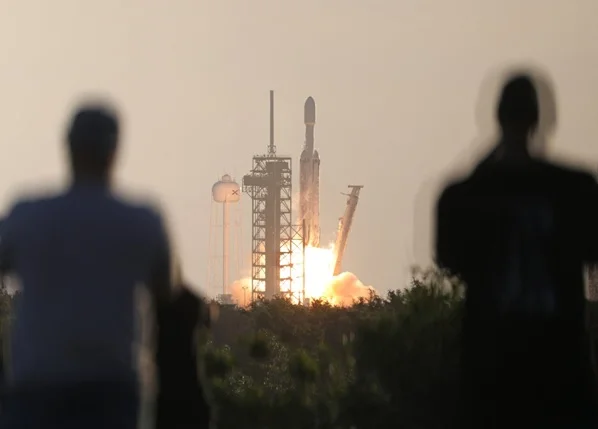
The announcement does not provide a complete inventory of its equipment. The creation of the squadron should therefore not be interpreted as confirmation that Britain has deployed a particular weapon in orbit.
|
Unit |
Broad function |
|
No. I Space Operations Squadron |
Space operations and monitoring |
|
No. II Space Warning Squadron |
Warning of threats |
|
No. III Space Effects Squadron |
Acting against hostile activity |
The distinction is between identifying a threat and possessing the means to respond to it. The new squadron adds the latter function to Britain’s space security structure.
These are general categories of space threats, not a confirmed list of the new squadron’s capabilities.
The British squadron highlights the growing need to protect satellite services against deliberate interference. For India, the central lesson is to strengthen space security while supporting measures that reduce debris, prevent escalation and preserve reliable access to space.
Prelims MCQsQ. With reference to the Outer Space Treaty, consider the following statements:
Which of the statements given above are correct? (a) 1 and 2 only Mains Practice Question“Growing dependence on satellites has made space security inseparable from national security.” Discuss the challenges posed by counterspace capabilities and suggest measures India should adopt to safeguard its space assets. |
1. What is No. III Space Effects Squadron?It is a new British RAF unit tasked with countering hostile activity threatening British interests in space. 2. Why do satellites need military protection?Their disruption can affect defence operations and civilian services, including communications and navigation. 3. What is electronic warfare in the space context?It involves electromagnetic capabilities that can disrupt hostile activity or protect satellite-related communications and signals. 4. Does the Outer Space Treaty ban every weapon in space?No. It prohibits nuclear weapons and other weapons of mass destruction in orbit and elsewhere in space, with additional restrictions applying to celestial bodies. 5. Why is this development relevant to India?It highlights the need to protect India’s satellite services through monitoring, resilience, secure infrastructure and international cooperation. |
| Prelims: SAT-SAAW, DRDO, Bharat Dynamics Limited, glide bombs and stand-off weapons. Mains (GS Paper III): Defence indigenisation, technological self-reliance and military modernisation. Keywords: SAT-SAAW, Glide bomb, Stand-off capability, Precision guidance, Indigenisation |
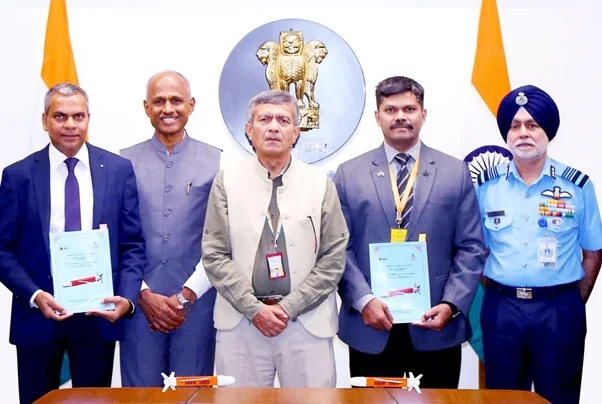
The acquisition is intended to improve the IAF’s ability to engage airfield targets from a distance. Its practical value will depend on effective aircraft integration, mission preparation and operational availability.
The contract links indigenous research with manufacturing and military procurement. Such orders can help sustain specialised production facilities and encourage suppliers to invest in quality and capacity.
Reliable access to domestically produced weapons can support inventory planning and replenishment. This makes production capacity and delivery consistency strategically important alongside weapon performance.
For India, the broader policy issue is how to turn indigenous designs into dependable military capability at scale. Procurement alone is only one stage; testing, production, training and maintenance also determine operational outcomes.
The agreement provides a useful example for examining the relationship between defence modernisation and industrial policy. Greater domestic capability can give India more control over future upgrades and supply arrangements.
The following are broader implementation considerations, rather than reported shortcomings of this contract.
The SAT-SAAW agreement connects India’s precision-strike requirements with domestic defence manufacturing. Its lasting value will depend on timely delivery, dependable integration and continued progress in critical technologies.
Prelims MCQs1. SAT-SAAW is primarily a: A. Surface-to-air interceptor 2. Consider the following statements about the September 2026 SAT-SAAW agreement:
Which statements are correct? A. 1 and 2 only Mains Practice Question“Defence self-reliance requires more than indigenous design; it demands reliable production and sustained operational support.” Discuss with reference to India’s precision-weapon programmes. (150 words, 10 marks) |
|
1. What does SAT-SAAW stand for? Satellite Smart Anti Airfield Weapon. 2. What is the value of the new agreement? ₹810.79 crore, commonly rounded to ₹811 crore. 3. Is a glide bomb the same as a conventional unguided bomb? No. A guided glide bomb combines aerodynamic travel with guidance to improve targeting accuracy. 4. Why does release condition matter? The aircraft’s altitude and speed at release influence the distance a glide weapon can travel. 5. Does indigenous design necessarily mean every component is domestic? No. Design origin and the share of domestic content are distinct measures. |
|
Prelims: Bharat Taxi, cooperative sector, Uttar Pradesh Cooperative Gramya Vikas Bank, agricultural credit and social security. |
Uttar Pradesh Chief Minister Yogi Adityanath has launched Bharat Taxi and the Mukhyamantri Krishak Samriddhi Yojana in the state. The two initiatives aim to provide greater social security to taxi and three-wheeler drivers and reduce the financial burden on farmers.
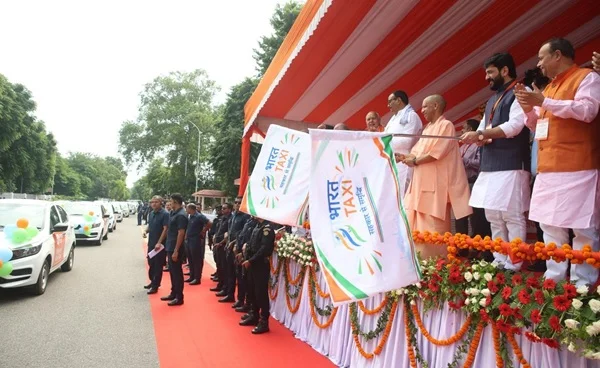
Bharat Taxi is a cooperative-based taxi service aimed at supporting two-wheeler, taxi and three-wheeler drivers.
Under the initiative:
The initiative is intended to provide drivers with better income opportunities and social security while creating an organised transport service.
The Mukhyamantri Krishak Samriddhi Yojana has been launched to provide farmers with loans at a lower interest rate through the Uttar Pradesh Cooperative Gramya Vikas Bank.
Bharat Taxi and Mukhyamantri Krishak Samriddhi Yojana focus on improving livelihood and financial security for two important groups—transport workers and farmers. The initiatives also highlight the role of cooperative institutions in providing economic support and access to formal credit.
Prelims Practice QuestionWith reference to the Saryu Canal National Project, consider the following statements:
Which of the statements given above are correct? (a) 1 only Mains Practice QuestionQ. “Irrigation infrastructure plays an important role in strengthening agricultural productivity and the rural economy.” Discuss with reference to the Saryu Canal National Project. |
1. What is the Saryu Canal National Project?It is a major irrigation project in Uttar Pradesh aimed at expanding irrigation facilities for farmers. 2. What is the main objective of the Saryu Canal Project?Its main objective is to improve irrigation coverage and support agricultural productivity. 3. Which state is associated with the Saryu Canal National Project?Uttar Pradesh. 4. Which region benefits particularly from the project?The project is particularly important for the eastern region of Uttar Pradesh. 5. Why is the project important for UPSC?It can be studied in the context of irrigation, agriculture, rural development and infrastructure. |
| Prelims: Project 75(I), Air-Independent Propulsion (AIP), Mazagon Dock Shipbuilders Limited (MDL), TKMS, Project 75, and defence indigenisation. Mains: GS II—India–Germany relations; GS III—maritime security, defence technology, indigenous manufacturing and strategic autonomy. |
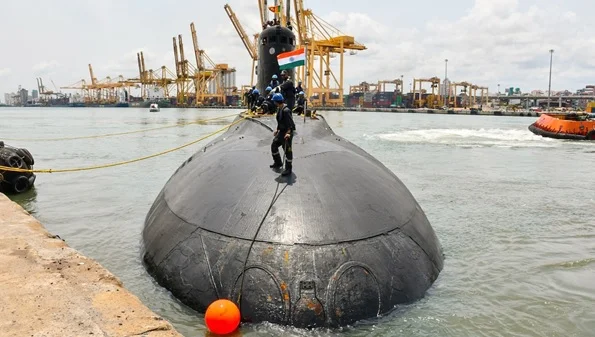
Project 75(I) envisages six AIP-equipped conventional submarines. Its original requirements include modern sensors, torpedoes, missiles and countermeasure systems, together with training, spares and shore support. These are programme requirements; the final contracted configuration should be confirmed through official announcements.
AIP increases the time a conventional submarine can operate underwater without accessing atmospheric air for power generation. Fuel-cell-based AIP is a central requirement of Project 75(I).
Longer submerged endurance can improve operational persistence and reduce exposure associated with frequent snorkelling. AIP does not make a submarine nuclear-powered, and it does not provide unlimited endurance.
MDL would be the Indian shipbuilding partner, while TKMS would contribute submarine technology and associated expertise. The proposed arrangement centres on construction in India, with technology transfer intended to strengthen domestic capabilities.
Technology transfer can support local manufacturing, integration, maintenance and workforce training. Its actual value depends on the depth of technical knowledge, documentation and rights provided to the Indian partner.
Domestic construction alone does not automatically establish complete indigenous design capability. The final agreement’s provisions will therefore matter as much as the number of submarines ordered.
Germany’s readiness does not mean that India’s approval process is complete. Reporting indicates that Indian clearances, including the process leading to Cabinet Committee on Security approval, remain relevant before signature. No firm delivery schedule should be inferred from the envoy’s statement.
The following are potential strategic and industrial implications, subject to successful contracting and implementation:
India’s trade routes, ports and offshore infrastructure make maritime security a major strategic priority. A stronger conventional submarine fleet could support surveillance and help deny hostile forces freedom of operation in contested waters.
The programme could support Atmanirbhar Bharat by developing local suppliers and increasing India’s ability to maintain complex naval platforms. Its contribution would be greater if Indian firms acquire meaningful technical competence and reliable access to critical components.
An additional major industrial partnership could broaden India’s defence options. However, lasting autonomy would depend on domestic repair capability, assured spares and the ability to undertake future upgrades.
These are implementation risks to assess, rather than confirmed defects in the proposed agreement.
Project 75(I) could strengthen India’s underwater capabilities and deepen defence-industrial cooperation with Germany. Its long-term contribution will depend on timely delivery, effective technology absorption and domestic maintenance capacity. Germany’s readiness is a significant negotiating milestone, while Indian approvals and contract signature remain essential next steps.
Prelims MCQsQ. Project 75(I) primarily envisages the acquisition of: (a) Six nuclear-powered ballistic missile submarines Mains Practice Question“The strategic value of defence procurement depends on technology absorption and lifecycle autonomy as much as on platform acquisition.” Discuss with reference to Project 75(I). |
1. Has the India–Germany submarine agreement been signed?The reports reviewed for this article describe Germany as ready to sign, with India’s internal processes still pending. They do not establish a completed procurement contract. 2. Will these submarines be nuclear-powered?No. Project 75(I) concerns conventional submarines equipped with AIP. 3. Where would the submarines be manufactured?The proposed partnership envisages construction in India through MDL and TKMS. 4. Is Project 75(I) the same as Project 75?No. Project 75 produced the Kalvari-class submarines based on the French Scorpene design. Project 75(I) is a separate programme for six advanced conventional submarines. 5. What is the final value of the proposed agreement?The final signed contract value has not been established by the reports cited here. Published estimates vary. |

Our support team will be happy to assist you!

 Contact Us
  New Batch : 9555124124/ 7428085757
  Tech Support : 9555124124/ 7428085757

