
- UPSC Exam
- State PCS
- One Day Exam
- Current Affairs
- PT Quiz
- Downlaods
- About Coaching
- Blog
- Videos

| Prelims: Project 75(I), Air-Independent Propulsion (AIP), Mazagon Dock Shipbuilders Limited (MDL), TKMS, Project 75, and defence indigenisation. Mains: GS II—India–Germany relations; GS III—maritime security, defence technology, indigenous manufacturing and strategic autonomy. |
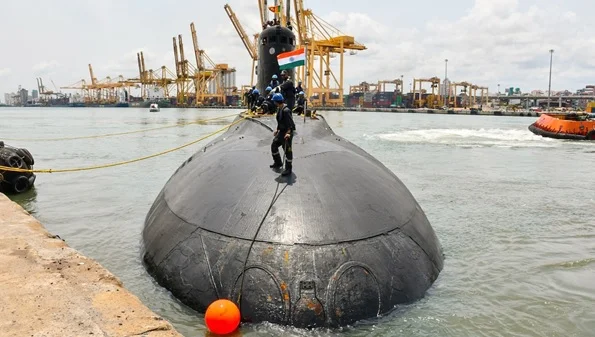
Project 75(I) envisages six AIP-equipped conventional submarines. Its original requirements include modern sensors, torpedoes, missiles and countermeasure systems, together with training, spares and shore support. These are programme requirements; the final contracted configuration should be confirmed through official announcements.
AIP increases the time a conventional submarine can operate underwater without accessing atmospheric air for power generation. Fuel-cell-based AIP is a central requirement of Project 75(I).
Longer submerged endurance can improve operational persistence and reduce exposure associated with frequent snorkelling. AIP does not make a submarine nuclear-powered, and it does not provide unlimited endurance.
MDL would be the Indian shipbuilding partner, while TKMS would contribute submarine technology and associated expertise. The proposed arrangement centres on construction in India, with technology transfer intended to strengthen domestic capabilities.
Technology transfer can support local manufacturing, integration, maintenance and workforce training. Its actual value depends on the depth of technical knowledge, documentation and rights provided to the Indian partner.
Domestic construction alone does not automatically establish complete indigenous design capability. The final agreement’s provisions will therefore matter as much as the number of submarines ordered.
Germany’s readiness does not mean that India’s approval process is complete. Reporting indicates that Indian clearances, including the process leading to Cabinet Committee on Security approval, remain relevant before signature. No firm delivery schedule should be inferred from the envoy’s statement.
The following are potential strategic and industrial implications, subject to successful contracting and implementation:
India’s trade routes, ports and offshore infrastructure make maritime security a major strategic priority. A stronger conventional submarine fleet could support surveillance and help deny hostile forces freedom of operation in contested waters.
The programme could support Atmanirbhar Bharat by developing local suppliers and increasing India’s ability to maintain complex naval platforms. Its contribution would be greater if Indian firms acquire meaningful technical competence and reliable access to critical components.
An additional major industrial partnership could broaden India’s defence options. However, lasting autonomy would depend on domestic repair capability, assured spares and the ability to undertake future upgrades.
These are implementation risks to assess, rather than confirmed defects in the proposed agreement.
Project 75(I) could strengthen India’s underwater capabilities and deepen defence-industrial cooperation with Germany. Its long-term contribution will depend on timely delivery, effective technology absorption and domestic maintenance capacity. Germany’s readiness is a significant negotiating milestone, while Indian approvals and contract signature remain essential next steps.
Prelims MCQsQ. Project 75(I) primarily envisages the acquisition of: (a) Six nuclear-powered ballistic missile submarines Mains Practice Question“The strategic value of defence procurement depends on technology absorption and lifecycle autonomy as much as on platform acquisition.” Discuss with reference to Project 75(I). |
1. Has the India–Germany submarine agreement been signed?The reports reviewed for this article describe Germany as ready to sign, with India’s internal processes still pending. They do not establish a completed procurement contract. 2. Will these submarines be nuclear-powered?No. Project 75(I) concerns conventional submarines equipped with AIP. 3. Where would the submarines be manufactured?The proposed partnership envisages construction in India through MDL and TKMS. 4. Is Project 75(I) the same as Project 75?No. Project 75 produced the Kalvari-class submarines based on the French Scorpene design. Project 75(I) is a separate programme for six advanced conventional submarines. 5. What is the final value of the proposed agreement?The final signed contract value has not been established by the reports cited here. Published estimates vary. |



Our support team will be happy to assist you!

 Contact Us
  New Batch : 9555124124/ 7428085757
  Tech Support : 9555124124/ 7428085757