- UPSC Exam
- State PCS
- One Day Exam
- Current Affairs
- PT Quiz
- Downlaods
- About Coaching
- Blog
- Videos

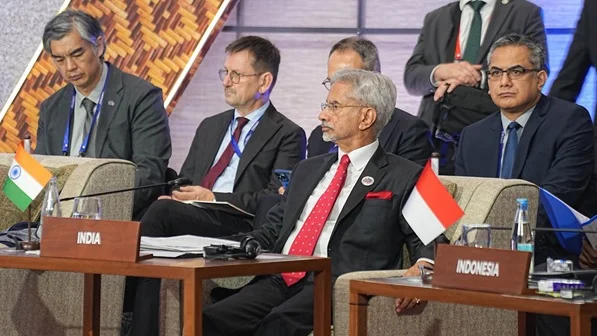
India's External Affairs Minister (EAM) Dr. S. Jaishankar participated in the 33rd ASEAN Regional Forum (ARF) Ministerial Meeting held in Manila, Philippines, where he emphasized zero tolerance for terrorism, stronger maritime security, enhanced disaster resilience, cyber security cooperation, responsible use of Artificial Intelligence (AI), and the need for a free, open, inclusive, and rules-based Indo-Pacific. He described the ASEAN Regional Forum as a vital platform for addressing political and security challenges in an increasingly complex geopolitical environment.
The ASEAN Regional Forum (ARF) was established in 1994 as the principal multilateral security dialogue platform in the Asia-Pacific and Indo-Pacific region. It provides an institutional framework where member countries discuss political and security issues, promote confidence-building measures, and develop preventive diplomacy to maintain regional peace and stability.
The forum operates on the principle of consensus-based decision-making, allowing all members to participate equally in shaping regional security cooperation.
The ARF aims to:
The ASEAN Regional Forum currently comprises 27 members, including:
India has been an active member of the ARF since 1996 and plays a significant role in regional security cooperation.
India reiterated that maritime security remains fundamental to ensuring peace, stability, and uninterrupted global trade in the Indo-Pacific.
The External Affairs Minister highlighted India's major maritime initiatives, including:
These initiatives contribute to combating:
India also stressed that commercial shipping lanes and international waterways must remain safe, secure, and open for all nations.
Recognizing the increasing frequency of climate-induced disasters, India emphasized the importance of regional cooperation in disaster preparedness and response.
India reaffirmed its commitment to:
The Minister highlighted India's support for the Coalition for Disaster Resilient Infrastructure (CDRI) and recalled India's assistance during disasters in countries such as:
India has regularly deployed field hospitals, search and rescue teams, medical personnel, relief materials, and emergency supplies to affected regions.
India reaffirmed its support for a rules-based maritime order in the Indo-Pacific.
The External Affairs Minister emphasized that:
Regarding the South China Sea, India reiterated its support for an effective, substantive, and legally binding Code of Conduct (CoC) that is fully consistent with the United Nations Convention on the Law of the Sea (UNCLOS), 1982 and safeguards the legitimate rights of all users.
On the margins of the ARF Ministerial Meeting, Dr. Jaishankar held bilateral discussions with several foreign ministers and senior leaders.
These included meetings with representatives from:
The discussions focused on:
For India, the ASEAN Regional Forum is much more than a diplomatic platform. It serves as an important pillar of India's Indo-Pacific strategy and supports its broader foreign policy objectives.
The ARF strengthens India's Act East Policy and complements the Indo-Pacific Oceans Initiative (IPOI). It also reinforces ASEAN Centrality, which remains a key element of India's Indo-Pacific vision.
The forum enhances cooperation in:
Despite its growing importance, the ASEAN Regional Forum faces several challenges:
Q1. What is the ASEAN Regional Forum (ARF)?Answer: The ASEAN Regional Forum (ARF) is the principal multilateral security dialogue platform in the Indo-Pacific. Established in 1994, it provides a forum for discussing political and security issues, promoting confidence-building measures, and developing preventive diplomacy to maintain regional peace and stability. Q2. When was the ASEAN Regional Forum established?Answer: The ASEAN Regional Forum was established in 1994. Q3. What are the main objectives of the ASEAN Regional Forum?Answer: The ARF aims to:
|
|
Preliminary Exam: Indian Polity & Governance, Science & Technology, and Current Affairs. Main Exam:
|
The government aims to develop a transparent, secure, and student-centric examination system. Its key objectives are:
The Prime Minister also stated that long-term institutional reforms are essential, along with stringent legal action against exam malpractices.
|
Designation |
Name |
|
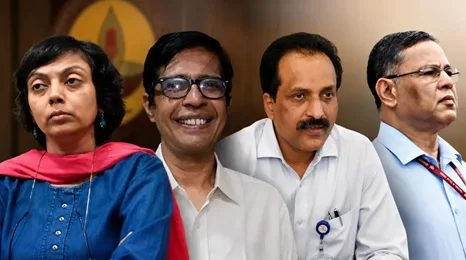
Chairman |
Nandan Nilekani – Infosys Co-founder and Chief Architect of the Aadhaar Project |
|
Member |
S. Somnath – Former Chairman, ISRO |
|
Member |
Tapan Deka – Former Director, Intelligence Bureau (IB) |
|
Member |
V. Kamakoti – Director, IIT Madras |
|
Member |
Anita Karwal – Former Education Secretary |
|
Member |
Amrit Lal Meena – Logistics Expert and Former Civil Servant |
The government is preparing to introduce the Public Examinations (Prevention of Unfair Means) Amendment Bill, 2026, the key provisions of which include:
The need for these reforms was felt due to the following reasons:
During this period, the opposition also demanded answers from the government on the implementation of the K. Radhakrishnan Committee recommendations.
These reforms will-
This high-powered task force, chaired by Nandan Nilekani, is an important initiative towards establishing transparency, security, and credibility in India's public examination system. If its recommendations are effectively implemented, they will not only curb future paper leaks, exam fraud, and technical glitches, but will also strengthen student confidence.
Preliminary Exam QuestionsQ. Consider the following statements regarding the National Testing Agency (NTA):
Which of the above statements is/are correct?
Mains ExamQuestion: The high-powered task force formed to reform the National Testing Agency (NTA) is an important step towards establishing transparency and credibility in the examination system. Discuss. |
1. Why has the High-Powered Task Force been formed for NTA reforms?Answer: The High-Powered Task Force has been formed to address paper leaks, irregularities, and technical glitches in national examinations and to make the examination system more transparent, secure, and reliable. 2. Who is the Chairman of the NTA Reforms Task Force?Answer: This task force is chaired by Nandan Nilekani, co-founder of Infosys and the chief architect of the Aadhaar project. 3. When was the National Testing Agency (NTA) established?Answer: The National Testing Agency (NTA) was established in 2017. 4. Under which ministry does the NTA function?Answer: The NTA is an autonomous body functioning under the Ministry of Education, Government of India. 5. What is the legal status of the NTA?Answer: NTA has the status of an autonomous body registered under the Societies Registration Act, 1860. |
| Prelims: Tropical Cyclones, China, South China Sea, Disaster Management Mains: GS Paper-I (Geography), GS Paper-III (Disaster Management) Keyword: Typhoon Noul, Typhoon Noul 2026, Typhoon Noul China, China Typhoon 2026, Strongest Typhoon in China 2026, Typhoon Hits China, China Weather News, Guangdong Typhoon, Hong Kong Typhoon, China Flash Flood Alert, China Flood News, Guangdong Evacuation, Hong Kong Flight Cancellations, Tropical Cyclone China. |
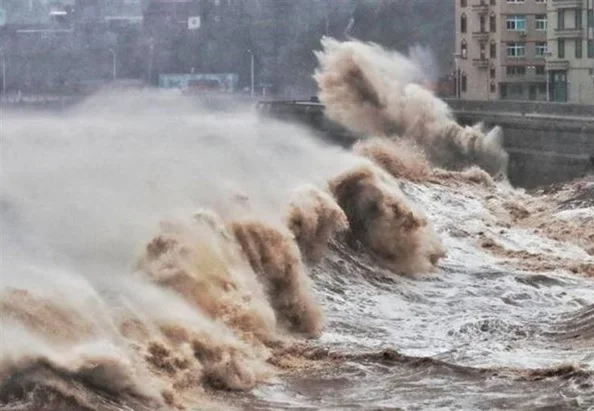
A typhoon is a tropical cyclone that forms in the North-West Pacific Ocean. The same weather system is known by different names in different ocean basins:
|
Ocean Basin |
Name |
|
Northwest Pacific |
Typhoon |
|
North Atlantic & Eastern Pacific |
Hurricane |
|
Indian Ocean & South Pacific |
Cyclone |
|
Particular |
Details |
|
Name |
Typhoon Noul |
|
Meaning |
"Glow of Sunrise or Sunset" (Korean) |
|
Type |
Tropical Cyclone (Typhoon) |
|
Cyclone Number |
12th Tropical Cyclone of 2026 |
|
China's Count |
Third tropical cyclone to hit China in July 2026 |
|
Maximum Sustained Winds |
Around 110 km/h near the centre |
|
Landfall |
Huidong County, Guangdong Province |
|
Movement |
Moving inland towards Jiangxi and Hunan while weakening |
|
China
|
Hong Kong
|
Taiwan
|
|
Human Impact
|
Infrastructure
|
|
Transport
|
Weather
|
|
Typhoon |
Landfall |
Impact |
|
Maysak |
3 July 2026 |
Heavy rainfall in southern China |
|
Bavi |
11 July 2026 |
Over 2 million people evacuated |
|
Noul |
27 July 2026 |
Strongest landfall in China in 2026 |
Prelims MCQConsider the following statements regarding Typhoon Noul: It is the strongest typhoon to make landfall in China in 2026. It originated in the North Atlantic Ocean. More than 715,000 people were evacuated in Guangdong Province. Which of the statements given above is/are correct? (a) 1 and 2 only Mains Practice Question"Increasing intensity of tropical cyclones in the western Pacific highlights the growing challenge of disaster preparedness under climate change." Discuss with reference to recent Typhoon Noul. |
1. Why is Typhoon Noul in the news?Typhoon Noul became the strongest typhoon to hit China in 2026, forcing over 7.15 lakh people to evacuate and disrupting transport across southern China. 2. Which areas were affected by Typhoon Noul?Typhoon Noul affected Guangdong, Fujian, Jiangxi, Hunan, Hong Kong, and parts of Taiwan, bringing heavy rain, strong winds, and flash floods. 3. What is the difference between a typhoon and a cyclone?A typhoon forms in the Northwest Pacific Ocean, while the same storm is called a cyclone in the Indian Ocean. 4. Why is Typhoon Noul important for UPSC?It is important for UPSC Geography and Disaster Management as it covers tropical cyclones, climate change, and disaster preparedness. 5. What caused large-scale evacuations during Typhoon Noul?Authorities evacuated over 7.15 lakh people due to the risk of flash floods, landslides, torrential rainfall, and gale-force winds caused by Typhoon Noul. |
The Government of India has amended its Foreign Direct Investment (FDI) policy to allow foreign investment in the inventory-based model of e-commerce exclusively for the export of goods manufactured in India. The decision, announced by the Department for Promotion of Industry and Internal Trade (DPIIT), is aimed at boosting India's e-commerce exports, reducing compliance burdens on Micro, Small and Medium Enterprises (MSMEs), and improving Indian manufacturers' access to global markets.
The move comes at a time when Indian exporters are facing rising trade barriers in major markets, particularly the United States and the European Union, making compliance with international standards increasingly important.

DPIIT has permitted FDI in the inventory-based model of e-commerce only for exports of goods manufactured and produced in India.
The policy specifies that such exports must comply with:
The government clarified that restrictions applicable to inventory-based e-commerce will not apply when the goods are exported, while domestic retail restrictions continue unchanged.
Before this amendment:
However,FDI was not allowed in the inventory-based model for B2C retail operations.
This prevented foreign-funded platforms from owning inventory and selling directly to customers.
|
Parameter |
Inventory-Based Model |
Marketplace Model |
|
Ownership of Goods |
Platform owns inventory |
Independent sellers own inventory |
|
Sales |
Platform sells directly to customers |
Platform only connects buyers and sellers |
|
Pricing |
Platform decides prices |
Sellers decide prices |
|
Revenue Source |
Direct product sales and margins |
Commission, listing fees and advertisements |
|
Product Liability |
Platform responsible |
Seller responsible |
|
Examples |
Apple Store, Zara, DMart Ready |
Amazon, Flipkart |
Indian MSMEs face multiple export-related requirements including:
These compliances are expensive and complicated for small exporters.
Large e-commerce companies can now undertake these responsibilities on behalf of MSMEs.
Many developed countries are introducing stringent traceability requirements.
For example:
Major international platforms possess:
This helps Indian manufacturers reach overseas buyers more efficiently.
India's e-commerce exports remain significantly below potential.
Current estimates indicate:
According to the Global Trade Research Initiative (GTRI), India's e-commerce exports have the potential to reach $350 billion by 2030.
The reform supports India's broader economic goals including:
Under the new framework:
Large e-commerce companies can:
This enables small manufacturers to focus primarily on production rather than export formalities.
The decision comes amid:
India aims to make its exporters more competitive in this evolving global trade environment.
The Global Trade Research Initiative (GTRI) has cautioned that the policy may eventually create pressure to permit inventory-based e-commerce for domestic sales as well.
Key concerns include:
India's current export framework largely follows rules designed for conventional B2B exports rather than small parcel e-commerce exports.
Challenges include:
Experts have recommended a dedicated National E-commerce Export Policy, similar to those adopted by countries such as China, South Korea, Japan, and Vietnam.
To fully realize the potential of e-commerce exports, India should:
The government's decision to permit FDI in the inventory-based e-commerce model exclusively for exports of domestically manufactured goods represents a significant reform in India's trade and investment policy. By enabling foreign-funded e-commerce companies to own inventory solely for export purposes, the policy seeks to reduce compliance burdens on MSMEs, improve access to global markets, and boost India's e-commerce exports. While the move offers substantial opportunities for export growth and manufacturing, effective regulatory oversight will be essential to prevent misuse, safeguard domestic retail markets, and ensure that the benefits reach Indian producers and small businesses.

Our support team will be happy to assist you!


 Contact Us
  New Batch : 9555124124/ 7428085757
  Tech Support : 9555124124/ 7428085757