|
Preliminary Exam: Indian Polity & Governance, Science & Technology, and Current Affairs.
Main Exam:
- General Studies Paper 2 (Governance, Social Justice, and Administrative Reforms)
- General Studies Paper 3 (Science & Technology—Digital Examinations, Cyber Security, and Data Protection).
|
Why in the News?
- The central government has constituted a high-powered task force, chaired by Infosys co-founder Nandan Nilekani, to implement comprehensive reforms to the National Testing Agency (NTA) and India's public examination system.
- This move follows controversies related to paper leaks, irregularities, and technical glitches in various national entrance exams, including NEET-UG. The government is also preparing to introduce the Public Examinations (Prevention of Unfair Means) Amendment Bill, 2026.
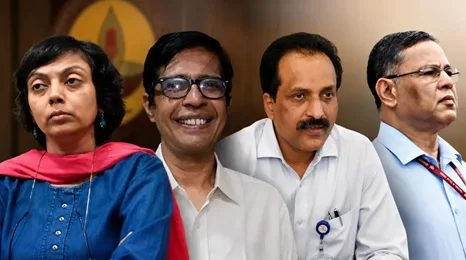
Key Reasons for Forming a Task Force for NTA Reforms
The government aims to develop a transparent, secure, and student-centric examination system. Its key objectives are:
- Restore the credibility, transparency, and fairness of public examinations.
- Ensure maximum use of modern technology in the examination process.
- Effectively curb paper leaks, cyber attacks, and other irregularities.
- Strengthen the institutional capacity, administrative efficiency, and accountability of the National Testing Agency (NTA).
- Build a secure and technology-based examination system.
The Prime Minister also stated that long-term institutional reforms are essential, along with stringent legal action against exam malpractices.
What is the National Testing Agency (NTA)?
- Established: 2017
- Ministry: Ministry of Education
- Legal status: Autonomous body registered under the Societies Registration Act, 1860.
- Functions:
- Conducts various national entrance examinations, including NEET
- JEE
- CUET
- UGC-NET.
Composition of the High-Powered Task Force
|
Designation
|
Name
|
|
Chairman
|
Nandan Nilekani – Infosys Co-founder and Chief Architect of the Aadhaar Project
|
|
Member
|
S. Somnath – Former Chairman, ISRO
|
|
Member
|
Tapan Deka – Former Director, Intelligence Bureau (IB)
|
|
Member
|
V. Kamakoti – Director, IIT Madras
|
|
Member
|
Anita Karwal – Former Education Secretary
|
|
Member
|
Amrit Lal Meena – Logistics Expert and Former Civil Servant
|
Task Force Mandate
1. Technological Reforms
- Developing a secure digital examination system.
- Implementing advanced cybersecurity mechanisms.
- Strengthening digital authentication and monitoring systems.
- Developing mechanisms to prevent paper leaks through technology.
2. Institutional Reforms
- Improving the administrative structure of the NTA.
- Improved governance and accountability.
- Standardizing the examination process.
- Increasing operational efficiency and transparency.
3. Operational Reforms
- Improving examination management and logistics.
- Increasing transparency in large-scale national examinations.
- Improving the efficiency of examination conduct.
Legislative Backing
The government is preparing to introduce the Public Examinations (Prevention of Unfair Means) Amendment Bill, 2026, the key provisions of which include:
- Stringent punishments for examination-related offenses.
- Higher financial penalties for paper leaks and organized cheating.
- Strong legal framework against examination fraud.
- Establishment of fast-track courts for speedy disposal of such cases.
Background to the Reforms
The need for these reforms was felt due to the following reasons:
- Allegations of NEET-UG paper leaks.
- Allegations of irregularities in various competitive examinations.
- Nationwide student protests.
- Demands for judicial intervention and transparency.
- Recent administrative restructuring within the NTA.
Recent Political Developments
- Former Education Minister Dharmendra Pradhan recently resigned.
- Prahlad Joshi was given additional charge of the Education Ministry.
- He initiated a comprehensive review of the ministry's plans and institutional reforms.
During this period, the opposition also demanded answers from the government on the implementation of the K. Radhakrishnan Committee recommendations.
Key recommendations of the K. Radhakrishnan Committee
- Promotion of computer-based testing (CBT).
- Hybrid secure examination system.
- Encrypted digital delivery of question papers.
- Secure local printing at examination centers.
- Multi-stage and multi-session examination system.
Significance of the Proposed Reforms
These reforms will-
- Enhance the credibility of competitive examinations.
- Strengthen student confidence.
- Make the recruitment and admission process more transparent.
- Improve cybersecurity and data protection.
- Promote good governance and accountability in public institutions.
Key Challenges
- Striking a balance between technological innovation and data privacy.
- Ensuring digital access in rural and urban areas.
- Coordinating between various examination agencies.
- Avoiding disruption to examinations while implementing reforms.
- Developing long-term monitoring and institutional capacity.
Conclusion
This high-powered task force, chaired by Nandan Nilekani, is an important initiative towards establishing transparency, security, and credibility in India's public examination system. If its recommendations are effectively implemented, they will not only curb future paper leaks, exam fraud, and technical glitches, but will also strengthen student confidence.
Preliminary Exam Questions
Q. Consider the following statements regarding the National Testing Agency (NTA):
- The NTA was established in the year 2017.
- It is an autonomous body functioning under the Ministry of Education.
- It was established under Article 324 of the Constitution.
Which of the above statements is/are correct?
-
1 and 2 only
-
2 and 3 only
-
1 and 3 only
-
1, 2, and 3
Mains Exam
Question: The high-powered task force formed to reform the National Testing Agency (NTA) is an important step towards establishing transparency and credibility in the examination system. Discuss.
|
High-Powered Task Force for NTA Reforms: FAQs (Frequently Asked Questions)
1. Why has the High-Powered Task Force been formed for NTA reforms?
Answer: The High-Powered Task Force has been formed to address paper leaks, irregularities, and technical glitches in national examinations and to make the examination system more transparent, secure, and reliable.
2. Who is the Chairman of the NTA Reforms Task Force?
Answer: This task force is chaired by Nandan Nilekani, co-founder of Infosys and the chief architect of the Aadhaar project.
3. When was the National Testing Agency (NTA) established?
Answer: The National Testing Agency (NTA) was established in 2017.
4. Under which ministry does the NTA function?
Answer: The NTA is an autonomous body functioning under the Ministry of Education, Government of India.
5. What is the legal status of the NTA?
Answer: NTA has the status of an autonomous body registered under the Societies Registration Act, 1860.
|







 Contact Us
  New Batch : 9555124124/ 7428085757
  Tech Support : 9555124124/ 7428085757