Why in News?
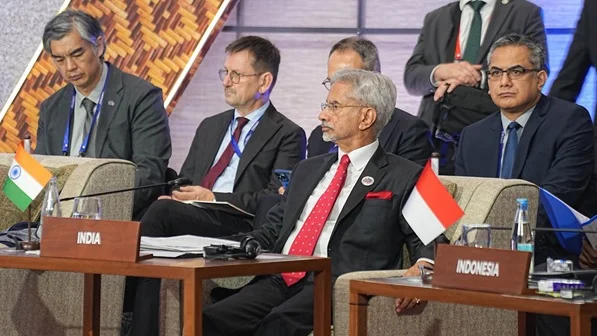
India's External Affairs Minister (EAM) Dr. S. Jaishankar participated in the 33rd ASEAN Regional Forum (ARF) Ministerial Meeting held in Manila, Philippines, where he emphasized zero tolerance for terrorism, stronger maritime security, enhanced disaster resilience, cyber security cooperation, responsible use of Artificial Intelligence (AI), and the need for a free, open, inclusive, and rules-based Indo-Pacific. He described the ASEAN Regional Forum as a vital platform for addressing political and security challenges in an increasingly complex geopolitical environment.
What is the ASEAN Regional Forum (ARF)?
The ASEAN Regional Forum (ARF) was established in 1994 as the principal multilateral security dialogue platform in the Asia-Pacific and Indo-Pacific region. It provides an institutional framework where member countries discuss political and security issues, promote confidence-building measures, and develop preventive diplomacy to maintain regional peace and stability.
The forum operates on the principle of consensus-based decision-making, allowing all members to participate equally in shaping regional security cooperation.
Objectives of the ASEAN Regional Forum
The ARF aims to:
- Promote constructive dialogue and consultation on political and security issues of common interest.
- Strengthen mutual trust and confidence among participating countries.
- Develop preventive diplomacy mechanisms to reduce the risk of conflicts.
- Enhance regional peace, stability, and security.
- Foster cooperation on emerging security challenges, including terrorism, maritime security, cyber threats, and disaster management.
Membership
The ASEAN Regional Forum currently comprises 27 members, including:
- 11 ASEAN Member States
- 10 ASEAN Dialogue Partners
- Other regional participants, including Bangladesh, North Korea, Mongolia, Pakistan, Papua New Guinea, and Sri Lanka.
India has been an active member of the ARF since 1996 and plays a significant role in regional security cooperation.
Key Highlights of the 33rd ASEAN Regional Forum Ministerial Meeting
Zero Tolerance Against Terrorism
- One of the strongest messages delivered by India at the forum was the need for zero tolerance against terrorism.
- Dr. Jaishankar stated that acts of terrorism must have consequences and emphasized that countries should eliminate financial networks supporting terrorist organizations.
- He underlined that no distinction should be made between different forms of terrorism and called for stronger regional cooperation to combat cross-border terrorism.
- India also highlighted its role as the Co-Chair of the Experts Working Group (EWG) on Counter-Terrorism under the ASEAN Defence Ministers' Meeting-Plus (ADMM-Plus), jointly with Malaysia.
- As part of this responsibility, India is preparing a Compendium of Global Best Practices to strengthen regional counter-terrorism cooperation.
Strengthening Maritime Security
India reiterated that maritime security remains fundamental to ensuring peace, stability, and uninterrupted global trade in the Indo-Pacific.
The External Affairs Minister highlighted India's major maritime initiatives, including:
- Information Fusion Centre–Indian Ocean Region (IFC-IOR)
- Indo-Pacific Maritime Domain Awareness (IPMDA)
- Deployment of Indian naval assets from the North Arabian Sea to the Western Pacific
These initiatives contribute to combating:
- Piracy
- Human trafficking
- Drug smuggling
- Illegal maritime activities
- Maritime terrorism
India also stressed that commercial shipping lanes and international waterways must remain safe, secure, and open for all nations.
Disaster Management and Humanitarian Assistance
Recognizing the increasing frequency of climate-induced disasters, India emphasized the importance of regional cooperation in disaster preparedness and response.
India reaffirmed its commitment to:
- Sharing best practices
- Developing Standard Operating Procedures (SOPs)
- Conducting real-time and tabletop exercises
- Providing humanitarian assistance and disaster relief (HADR)
The Minister highlighted India's support for the Coalition for Disaster Resilient Infrastructure (CDRI) and recalled India's assistance during disasters in countries such as:
- Sri Lanka
- The Philippines
- Myanmar
- Afghanistan
- Venezuela
- Jamaica
India has regularly deployed field hospitals, search and rescue teams, medical personnel, relief materials, and emergency supplies to affected regions.
Artificial Intelligence and Cyber Security
- India advocated a responsible, safe, and human-centric approach to Artificial Intelligence.
- Dr. Jaishankar emphasized that emerging technologies must be governed through international cooperation while strengthening efforts to combat cybercrime, digital fraud, and technology-enabled security threats.
- He called upon countries to work together in developing secure and trustworthy digital ecosystems.
South China Sea and Maritime Order
India reaffirmed its support for a rules-based maritime order in the Indo-Pacific.
The External Affairs Minister emphasized that:
- Attacks on commercial shipping and civilian infrastructure are unacceptable.
- Freedom of navigation and overflight must be respected.
- Maritime disputes should be resolved peacefully.
- International waterways must remain open for global commerce.
Regarding the South China Sea, India reiterated its support for an effective, substantive, and legally binding Code of Conduct (CoC) that is fully consistent with the United Nations Convention on the Law of the Sea (UNCLOS), 1982 and safeguards the legitimate rights of all users.
Strengthening Global Non-Proliferation
- India also highlighted the need to strengthen international efforts toward nuclear non-proliferation and disarmament.
- The Minister urged the international community to remain vigilant against attempts to weaken existing global non-proliferation frameworks and stressed the importance of preserving international peace and strategic stability.
Manila Plan of Action
- India welcomed the Manila Plan of Action, noting that its five pillars closely align with India's vision of a Free, Open, Inclusive, Peaceful, and Rules-Based Indo-Pacific.
- The Action Plan seeks to strengthen cooperation in political, security, economic, and humanitarian dimensions across the region.
Bilateral Meetings on the Sidelines
On the margins of the ARF Ministerial Meeting, Dr. Jaishankar held bilateral discussions with several foreign ministers and senior leaders.
These included meetings with representatives from:
- Sri Lanka
- Bangladesh
- European Union
- Brunei
- Papua New Guinea
The discussions focused on:
- Artificial Intelligence
- Digital technologies
- Maritime security
- Capacity building
- Development cooperation
- India's Act East Policy
- Cooperation through the Forum for India-Pacific Islands Cooperation (FIPIC)
Significance of the ASEAN Regional Forum for India
For India, the ASEAN Regional Forum is much more than a diplomatic platform. It serves as an important pillar of India's Indo-Pacific strategy and supports its broader foreign policy objectives.
Strategic Significance
The ARF strengthens India's Act East Policy and complements the Indo-Pacific Oceans Initiative (IPOI). It also reinforces ASEAN Centrality, which remains a key element of India's Indo-Pacific vision.
Security Significance
The forum enhances cooperation in:
- Counter-terrorism
- Maritime security
- Cyber security
- Defence diplomacy
- Intelligence sharing
- Disaster response
Economic Significance
- A secure Indo-Pacific is essential for protecting Sea Lines of Communication (SLOCs), ensuring uninterrupted global trade, strengthening supply chains, and promoting regional economic growth.
Diplomatic Significance
- The ARF provides India with an opportunity to engage simultaneously with major global powers, ASEAN countries, and Indo-Pacific partners, enabling dialogue, confidence-building, and peaceful conflict resolution.
Challenges Before the ASEAN Regional Forum
Despite its growing importance, the ASEAN Regional Forum faces several challenges:
- Intensifying US-China strategic rivalry
- South China Sea disputes
- North Korea's nuclear programme
- Maritime piracy and transnational crime
- Terrorism
- Cyber security threats
- Climate change-induced disasters
- Slow decision-making due to its consensus-based approach
Way Forward
- The ASEAN Regional Forum must strengthen preventive diplomacy and institutional cooperation to effectively address emerging regional security challenges.
- Member states should deepen collaboration in counter-terrorism, maritime domain awareness, cyber security, disaster resilience, and responsible governance of emerging technologies.
- Greater intelligence sharing, enhanced humanitarian assistance mechanisms, and stronger implementation of international law particularly UNCLOS 1982 will be essential for maintaining peace and stability in the Indo-Pacific.
- India's initiatives such as the Act East Policy, Security and Growth for All in the Region (SAGAR), and the Indo-Pacific Oceans Initiative (IPOI) can further strengthen ASEAN-led regional cooperation.
Conclusion
- The 33rd ASEAN Regional Forum Ministerial Meeting reaffirmed the ARF's importance as the premier security dialogue platform in the Indo-Pacific.
- India's strong emphasis on zero tolerance against terrorism, maritime security, disaster resilience, cyber governance, responsible Artificial Intelligence, and adherence to international law reflects its commitment to promoting a stable, secure, and inclusive regional order.
- As geopolitical competition intensifies, the ASEAN Regional Forum will continue to play a crucial role in fostering dialogue, building confidence, and strengthening cooperative security across the Indo-Pacific.
FAQs on ASEAN Regional Forum (ARF)
Q1. What is the ASEAN Regional Forum (ARF)?
Answer: The ASEAN Regional Forum (ARF) is the principal multilateral security dialogue platform in the Indo-Pacific. Established in 1994, it provides a forum for discussing political and security issues, promoting confidence-building measures, and developing preventive diplomacy to maintain regional peace and stability.
Q2. When was the ASEAN Regional Forum established?
Answer: The ASEAN Regional Forum was established in 1994.
Q3. What are the main objectives of the ASEAN Regional Forum?
Answer: The ARF aims to:
- Promote dialogue on political and security issues.
- Build confidence among member states.
- Develop preventive diplomacy mechanisms.
- Strengthen regional peace, stability, and security.
- Enhance cooperation on terrorism, maritime security, cyber security, and disaster management.
|






 Contact Us
  New Batch : 9555124124/ 7428085757
  Tech Support : 9555124124/ 7428085757