| Prelims: (International Relations + CA) Mains: (GS 2: India and its Neighbourhood, Border Disputes, Regional Security, Geopolitics of South Asia) |
Pakistan and Afghanistan have entered a sharp new phase of hostilities after Pakistan carried out airstrikes in Kabul and other provinces following a cross-border attack on its troops. Pakistan’s Defence Minister described the situation as an “open war” with the Taliban-led Afghan government.
Islamabad has accused Kabul of sheltering militant groups responsible for attacks inside Pakistan. However, the roots of tension between the two neighbours go far deeper, stretching back to 1947 and shaped by history, geopolitics, and unresolved border disputes.

Since Pakistan’s creation in 1947, relations with Afghanistan have been marked by distrust and confrontation.
Major historical phases include:
Throughout these upheavals, Pakistan has played a significant role in Afghan political developments, often backing resistance groups or the Taliban. Despite this involvement, bilateral mistrust has persisted.
End of Monarchy and Communist Rule (1973–1989)
Afghanistan’s monarchy ended in 1973. A nationalist regime was followed by communist rule backed by the Soviet Union.
In 1979, the Soviet Union intervened militarily. Pakistan supported Afghan Mujahideen factions during this period.
After Soviet withdrawal, President Najibullah attempted to stabilise the country. His government collapsed in 1992, triggering civil war.
The Taliban emerged in 1994 and captured Kabul in 1996. Pakistan was one of the few countries to recognise the Taliban regime.
Following the September 11 attacks, the United States invaded Afghanistan, overthrowing the Taliban.
A new Islamic Republic was established but struggled with insurgency and corruption.
After the US withdrawal in August 2021, the Taliban regained full control. Pakistan initially welcomed the development, expecting strategic alignment.
However, tensions resurfaced as cross-border militancy continued.
1. The Durand Line Dispute
The most enduring source of tension is the Durand Line.
The Durand Line: A Historical Flashpoint
The 2,640-km Durand Line was drawn in 1893 by Sir Mortimer Durand between British India and Afghanistan.
Afghanistan has consistently refused to formally recognise the Durand Line as an international border.
It even opposed Pakistan’s admission to the United Nations in 1947 on this issue.
In 2018, Afghanistan objected when Pakistan merged its Tribal Areas into Khyber Pakhtunkhwa, reiterating its rejection of the border’s finality.
The unresolved border dispute fuels recurring clashes and accusations of cross-border militant movement.
2. Cross-Border Militancy
Pakistan accuses the Taliban government of sheltering anti-Pakistan militant groups.
Afghanistan, in turn, accuses Pakistan of interference in its internal affairs.
Militant safe havens and border management remain major security flashpoints.
3. Trade and Transit as Strategic Leverage
Afghanistan is landlocked and dependent on transit routes through Pakistan.
The Karachi port route is economically vital.
Disputes have arisen over:
Afghanistan views such restrictions as political coercion.
4. The India Factor
India’s developmental presence in Afghanistan — infrastructure, education, and humanitarian assistance — has shaped Pakistan’s security concerns.
Pakistan fears strategic encirclement by India and Afghanistan.
Recent Taliban outreach to India has heightened Islamabad’s suspicion.
5. Mutual Resentment
Afghans often resent Pakistan’s historical involvement in their domestic politics.
Pakistan argues it has borne heavy costs:
This mutual distrust continues to define bilateral ties.
India traditionally supports an Afghan-led, Afghan-owned peace process while avoiding direct involvement in internal conflicts.
FAQsQ1. What is the Durand Line? It is the 1893 boundary drawn between British India and Afghanistan, inherited by Pakistan in 1947 but never formally recognised by Afghanistan. Q2. Why are Pakistan and Afghanistan currently in conflict? Pakistan accuses Afghanistan’s Taliban government of harbouring militants responsible for cross-border attacks. Q3. How has the Taliban’s return in 2021 affected relations? While initially seen as favourable for Pakistan, relations deteriorated due to continued militant activity and border tensions. Q4. Why is trade and transit important in this dispute? Afghanistan is landlocked and depends heavily on transit routes through Pakistan, giving Islamabad strategic leverage. Q5. How does this tension affect India? Instability may impact India’s security interests, development projects, and regional connectivity plans in Afghanistan. |
| Prelims: (Science Technology + CA) Mains: (GS 3: Defence Technology, Air Power Modernisation, Strategic Partnerships) |
During the Prime Minister’s second State visit to Israel, discussions have advanced regarding India’s potential acquisition of the Israeli-origin ‘Sky Sting’ beyond-visual-range air-to-air missile (BVRAAM) for the Indian Air Force (IAF).
The move signals deepening defence cooperation under the India–Israel Special Strategic Partnership framework.
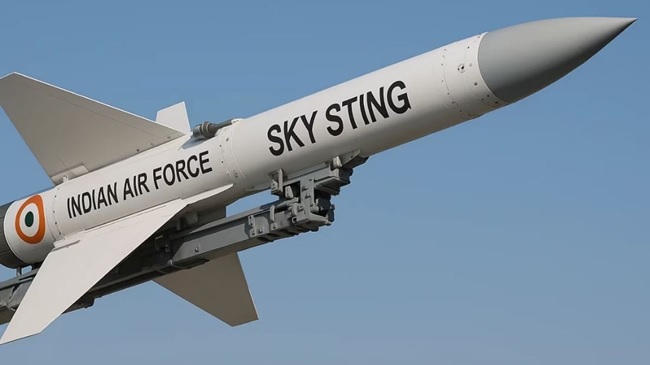
The Sky Sting is a 6th-generation Beyond-Visual-Range Air-to-Air Missile (BVRAAM) being developed by Rafael Advanced Defense Systems.
It is designed to give air forces the ability to engage enemy aircraft from very long distances, beyond the pilot’s visual range, thereby enhancing survivability and air superiority.
1. Long Engagement Range
2. Advanced Propulsion
3. Intelligent Seeker Technology
4. Two-Way Data Link
5. Aircraft Compatibility
1. Evolving Aerial Threats
Modern air combat increasingly relies on long-range precision engagements rather than close dogfights.
2. Regional Security Environment
Neighbouring adversaries are inducting advanced fighter aircraft equipped with long-range air-to-air missiles.
3. Countering Stealth and EW Systems
Sky Sting is designed to engage stealth aircraft and operate in electronically contested environments.
4. Indigenous Platform Enhancement
Equipping Tejas Mk1A with cutting-edge missiles significantly enhances its combat effectiveness.
India and Israel established full diplomatic relations in 1992. Since then, defence cooperation has emerged as a central pillar of bilateral ties.
Israel is among India’s top defence technology partners, supplying:
Past collaborations include advanced missile systems and radar technologies integrated into Indian platforms.
Sky Sting negotiations reflect the next phase — moving towards joint development, advanced technology transfer, and high-end air combat systems.
1. Air Superiority Enhancement
Provides the IAF with long-range engagement dominance.
2. Technological Edge
Incorporates AI-enabled seeker and advanced propulsion — aligning with 6th-generation warfare concepts.
3. Force Multiplication
Enables lighter platforms like Tejas to carry high-impact weaponry.
4. Strengthening Strategic Partnership
Signals deepening India–Israel defence industrial cooperation.
5. Deterrence Signalling
Long-range BVRAAM capability enhances deterrence by complicating adversary air operations.
Modern air warfare increasingly emphasises:
The Sky Sting missile fits within this doctrinal shift, addressing challenges posed by stealth aircraft and advanced countermeasures.
FAQsQ1. What is a Beyond-Visual-Range Air-to-Air Missile (BVRAAM)? A missile capable of engaging targets beyond the pilot’s visual sight, using radar and data-link guidance. Q2. Who is developing the Sky Sting missile? It is being developed by Rafael Advanced Defense Systems of Israel. Q3. What makes Sky Sting a 6th-generation missile? Its AI-enabled seeker, advanced propulsion, electronic counter-countermeasures, and network integration features. Q4. Which Indian aircraft can carry Sky Sting? It is compatible with Tejas Mk1A and Su-30MKI platforms. Q5. Why is long-range missile capability important? It allows aircraft to neutralise threats from safe distances, enhancing survivability and strategic deterrence. |
| Prelims: (Economics + CA) Mains: (GS 3: Indian Economy – Growth, Fiscal Policy, Statistical Reforms, Data Governance) |
The Government has released a new GDP series with 2022–23 as the base year, revising India’s FY26 growth to 7.6% and Q3 (Oct–Dec 2025) growth to 7.8%. The revised series replaces the earlier 2011–12 base year estimates.
The Ministry of Statistics and Programme Implementation (MoSPI) has introduced the updated National Accounts Statistics (NAS) series with 2022–23 as the base year, replacing the 2011–12 base year.
Base year revisions are periodically undertaken to:
The last major revision occurred in 2015 when the base shifted to 2011–12.
Under the new series:
The updated methodology has led to revisions in past GDP figures:
|
Year |
Old Series |
New Series |
|---|---|---|
|
FY23–24 |
9.2% |
7.2% (Revised Down) |
|
FY24–25 |
6.5% |
7.1% (Revised Up) |
|
FY25–26 |
— |
7.6% |
MoSPI has announced that a complete historical back series recalculation will be released by December 2026.
The most significant reform is the move from single-deflator to double-deflation methodology for estimating real Gross Value Added (GVA).
Earlier System – Single Deflator:
New System – Double Deflation:
The revised series incorporates:
Additionally, Supply and Use Tables (SUT) have been integrated into national accounts to reduce discrepancies between production-based and expenditure-based GDP estimates.
Manufacturing-led expansion suggests improved industrial performance.
The slowdown reflects agricultural moderation compared to the previous year.
Services remain a key growth driver.
While real growth has improved, the nominal GDP size has been revised downward.
Nominal GDP is critical for fiscal calculations since it reflects the economy’s current-price value.
Because fiscal ratios are expressed as a percentage of nominal GDP:
Although absolute borrowing remains unchanged, a smaller GDP base increases these ratios, making fiscal consolidation targets steeper.
Represents one of the most important reforms in India’s national accounting system in over a decade.
Improves representation of manufacturing, services, and informal sectors.
Revised numbers influence fiscal planning, monetary policy, and debt management strategies.
Alignment with global statistical standards enhances investor confidence.
Provides a more realistic measure of growth trends.
Transparent communication and timely release of historical data will be critical.
FAQsQ1. Why is the base year revised in GDP calculation ? To reflect structural economic changes, incorporate better data sources, and improve estimation accuracy. Q2. What is double deflation ? A method where input and output prices are deflated separately to calculate real value added more accurately. Q3. Why has nominal GDP been revised downward ? Improved data integration and methodological changes altered current-price estimates. Q4. How does this affect fiscal deficit calculations ? Since fiscal deficit is measured as a percentage of nominal GDP, a lower GDP base increases the ratio even if borrowing remains unchanged. Q5. Will historical GDP data also change ? Yes, a full back series consistent with the new methodology will be released by December 2026. |
| Prelims: (Economy + CA) Mains: (GS 2: Devolution of Powers, Urban Governance, Fiscal Federalism, Local Self-Government) |
The latest report of the 16th Finance Commission, tabled in Parliament on February 1, 2026, has proposed enhanced financial support for Urban Local Governments (ULGs), marking a significant push towards strengthening urban governance in India.

The Sixteenth Finance Commission, chaired by Arvind Panagariya, submitted its report covering the period 2026–27 to 2030–31.
Under Article 280 of the Constitution, the Finance Commission recommends:
Key Recommendation on Vertical Devolution
The Commission has retained 41% of the divisible pool of central taxes for states — the same as recommended by the Fifteenth Finance Commission.
(The divisible pool excludes cesses, surcharges, and cost of tax collection.)
|
Parameter |
Weight (16th FC) |
Change from 15th FC |
|
Income Distance |
42.5% |
Reduced |
|
Population (2011) |
17.5% |
Increased |
|
Demographic Performance |
10% |
Reduced |
|
Area |
10% |
Reduced |
|
Forest Cover |
10% |
Retained |
|
Contribution to GDP |
10% |
Newly introduced |
|
Tax & Fiscal Effort |
Removed |
Earlier 2.5% |
The introduction of “Contribution to GDP” (10%) marks a significant shift, rewarding economically productive states.
The most notable reform is the increase in grants for Urban Local Bodies (ULBs).
Share of Local Body Grants to Urban Areas
Absolute Allocation
The Commission has recommended ₹3.56 lakh crore for Urban Local Bodies —
This substantial increase reflects recognition of India’s rapidly urbanising population and expanding city-level responsibilities.
India is projected to reach 41% urbanisation by 2031.
Why This Matters:
The 2011 Census recorded urbanisation at 31%, but estimates vary widely. A 2015 World Bank assessment suggested over 50% may already be living in urban or peri-urban clusters — highlighting measurement challenges.
Uncertainty in demographic data complicates fiscal planning, making proactive financial support crucial.
Since grants follow population-based and formula-driven criteria, outcomes vary significantly:
This reflects differences in demographic structure, economic output, and formula weightage changes.
The 45% allocation acts as a forward-looking buffer. If Census 2027 reveals urbanisation at 45–48%, urban governments will not be financially underprepared — unlike earlier cycles when urban grants were comparatively lower.
This anticipatory approach strengthens fiscal resilience at the grassroots level.
1. Strengthening Fiscal Federalism
Reinforces third-tier governance under the 73rd and 74th Constitutional Amendments.
2. Urban Transformation
Supports Smart Cities, climate adaptation, waste management, and digital infrastructure.
3. Addressing Infrastructure Deficit
Cities contribute over 60% of GDP but historically receive limited fiscal autonomy.
4. Encouraging Accountability
Larger grants increase pressure on states to improve urban governance and transparency.
5. Balancing Demography and Productivity
Introduction of GDP contribution parameter attempts to reconcile equity and efficiency in devolution.
Financial empowerment must be accompanied by administrative reforms..
FAQsQ1. What is the Finance Commission? It is a constitutional body under Article 280 that recommends tax sharing between the Centre and States and provides grants to local governments. Q2. What is the divisible pool? It is the share of central taxes available for distribution between the Centre and States, excluding cesses and surcharges. Q3. Why is the 45% urban allocation significant? It represents the highest-ever share for urban local bodies, reflecting India’s rapid urbanisation and growing infrastructure needs. Q4. What is the new “Contribution to GDP” criterion? A 10% weightage rewarding states for their economic output, marking a shift towards efficiency-based devolution. Q5. How will this impact ordinary citizens? Improved funding can enhance municipal services such as sanitation, water supply, housing, and urban transport. |
| Prelims: (Science & Technology + CA) Mains: (GS 3: Science & Technology, Innovation, Start-ups, Regional Development; GS 2: Governance & Cooperative Federalism) |
The Atal Innovation Mission (AIM) under NITI Aayog has launched India’s first State Innovation Mission (SIM) in Tripura.
This marks a significant step toward decentralising India’s innovation policy and strengthening state-level innovation ecosystems.
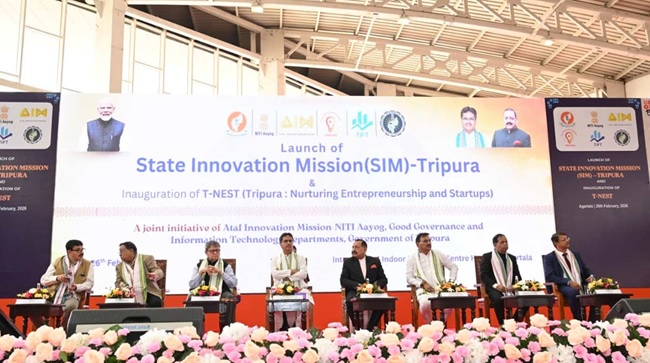
The State Innovation Mission (SIM) is part of the approved AIM 2.0 programme under the State Support Mission (SSM) framework of NITI Aayog.
It is conceived as a long-term institutional mechanism to support States and Union Territories in:
Tripura has become the first state to operationalise this model.
Under SIM, AIM will collaborate closely with the Government of Tripura to:
1. Design a Long-Term Innovation Strategy
Creating a roadmap tailored to the state’s economic structure, demographic profile, and sectoral strengths.
2. Strengthen Policy & Regulatory Frameworks
Ensuring conducive policies for startups, MSMEs, and research-driven enterprises.
3. Promote Multi-Stakeholder Partnerships
Facilitating collaboration between:
4. Enable Peer Learning
Creating platforms for cross-state knowledge exchange and best-practice adoption.
5. Support Startups
Providing:
The Mission spans the entire innovation lifecycle — from school-level creativity to advanced entrepreneurship.
The Atal Innovation Mission was established in 2016 as a flagship initiative under NITI Aayog.
Core Objective: To promote innovation and entrepreneurship across schools, universities, research institutions, industries, and MSMEs.
1. Promoting Entrepreneurship
Encouraging innovators to convert ideas into viable enterprises through funding and mentorship.
2. Promoting Innovation
Creating platforms that nurture creative problem-solving and technological solutions.
SIM represents the next phase — shifting from centralised innovation support to state-driven innovation governance.
1. Regional Diversity
India’s states differ widely in economic structures, resource bases, and innovation capacities.
2. Decentralised Governance
Innovation ecosystems function best when tailored to local industries and demographic realities.
3. Balanced Development
Bridging regional disparities, particularly in Northeast and aspirational districts.
4. Strengthening Startup India
State-level innovation missions complement national startup initiatives.
5. Capacity Building
Building institutional capacity within state governments to manage innovation policy effectively.
1. Deepening Cooperative Federalism
SIM embodies Centre-State collaboration in innovation governance.
2. Empowering Smaller States
Tripura’s selection signals attention to Northeast India’s development.
3. Institutionalising Innovation
Moves beyond ad-hoc grants toward structured, long-term ecosystem development.
4. Inclusive Growth
Emphasises regional balance, youth empowerment, and local entrepreneurship.
5. Strengthening India’s Innovation Ranking
Robust state ecosystems contribute to improved performance in global innovation indices.
FAQsQ1. What is the State Innovation Mission (SIM)? It is a state-level institutional mechanism under AIM 2.0 to build and strengthen innovation ecosystems tailored to local needs. Q2. Why was Tripura chosen first? Tripura’s selection highlights the focus on regional balance and strengthening innovation in the Northeast. Q3. How is SIM different from existing AIM programmes? While AIM supports institutions like schools and incubators, SIM works at the state governance level to design systemic innovation strategies. Q4. What sectors can benefit from SIM? Startups, MSMEs, education institutions, research organisations, and local industries. Q5. How does SIM support cooperative federalism? It promotes structured collaboration between the Centre and States in innovation policy planning and execution. |

Our support team will be happy to assist you!


 Contact Us
  New Batch : 9555124124/ 7428085757
  Tech Support : 9555124124/ 7428085757