| Prelims: (International Relations + CA) Mains: (GS 3 – Economy, International Trade, Global Financial Architecture, Currency Dynamics) |
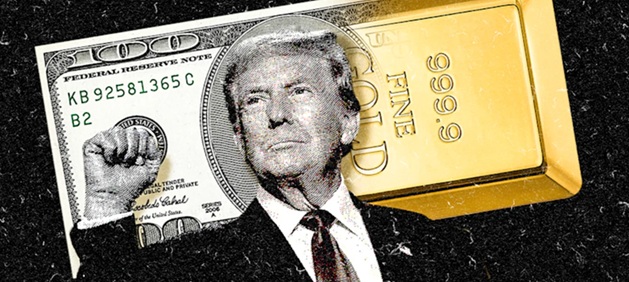
Gold prices have surged past the $5,000 per ounce mark for the first time, even as the US dollar slid to a four-month low. The rally is being driven not only by households but by aggressive buying from central banks worldwide.
Major central banks have emerged as key buyers of gold, signalling a strategic shift in reserve management. While households traditionally buy gold as a hedge, it is the actions of central banks that underline a deeper structural change in the global financial system.
The underlying driver of this trend is Donald Trump’s policy approach. His trade wars, sanctions-heavy foreign policy, and use of the US dollar as a geopolitical weapon have prompted many countries to reduce reliance on dollar-denominated assets. As trust in the dollar’s neutrality weakens, gold—being politically neutral and free from sanctions risk—has regained prominence as a reserve asset.
For decades, the US dollar has been the backbone of the global monetary system, serving as:
However, growing geopolitical fragmentation, rising protectionism, and the strategic use of financial sanctions have begun to challenge this dominance. In response, countries are increasingly seeking diversification in reserve assets, particularly through gold and non-dollar currencies.
India’s central bank, the Reserve Bank of India (RBI), reported a sharp rise in foreign exchange reserves, with nearly one-third of the increase coming from gains in the value of its gold holdings.
Although the RBI added only a small quantity of gold, the 70% rise in gold prices over the past year significantly boosted the value of its reserves, far outpacing gains from foreign currency assets.
What matters more than absolute purchases is gold’s share in total reserves:
This reflects a strategic recalibration of reserve portfolios toward assets insulated from currency depreciation and geopolitical risk.
Experts attribute the move away from the dollar to a combination of:
US President Trump has repeatedly asserted the need to preserve the dollar’s global dominance, even threatening BRICS countries with punitive tariffs if they pursue alternatives to the dollar. Ironically, this aggressive use of tariffs, sanctions, and economic coercion has:
These dynamics have contributed to a sharp weakening of the US dollar—down about 9% in 2025, its steepest fall in nearly a decade.
De-dollarisation is most visible in commodities, with a growing share of global energy trade now priced in non-dollar contracts, weakening the dollar’s traditional dominance.
The trend is also evident in government bond holdings:
Concerns are no longer limited to states:
The European Union holds about $10.4 trillion in US portfolio assets, accounting for nearly 29% of foreign ownership. Trump has warned of “big retaliation” if Europe sells US bonds, underscoring how financial flows are becoming tools of geopolitical leverage.
De-dollarisation has been gradual but persistent:
This reflects steady diversification by central banks into gold and other currencies.
Despite these shifts, the US dollar remains overwhelmingly dominant, accounting for 89% of global over-the-counter foreign exchange turnover.
However, if current US policies and rhetoric continue—especially under the Trump administration—the pace of diversification away from the dollar could accelerate, leading to more visible structural change in the global monetary system.
FAQs1. Why are central banks buying more gold ? Because gold is politically neutral, free from sanctions risk, and acts as a hedge against currency depreciation and geopolitical uncertainty. 2. How has the RBI’s gold strategy affected India’s forex reserves ? Nearly one-third of the recent increase in India’s forex reserves came from gains in the value of gold holdings due to rising gold prices. 3. What is de-dollarisation ? It is the process by which countries reduce reliance on the US dollar in trade, reserves, and financial transactions. 4. How have US policies contributed to de-dollarisation ? Trade wars, sanctions, and economic coercion have weakened trust in the dollar’s neutrality, prompting countries to diversify away from dollar assets. 5. Will the US dollar lose its global dominance soon ? Not immediately—the dollar remains dominant in global markets, but ongoing policy trends could accelerate gradual diversification and weaken its long-term position. |
| Prelims: (Economics + CA) Mains: (GS 3 – Infrastructure, Road Safety, Technology in Governance, Sustainable Mobility) |
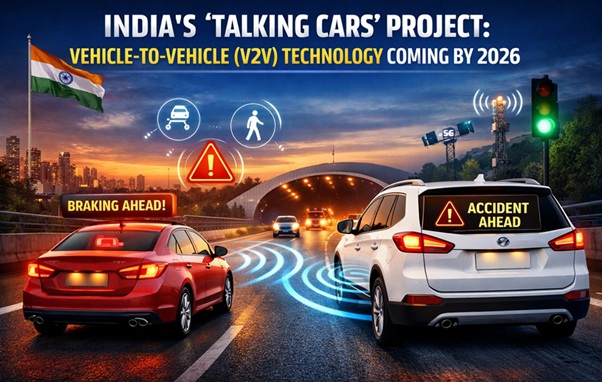
India records the highest number of road accident fatalities globally, far exceeding China and the United States. In this context, the Government of India, through the Ministry of Road Transport and Highways (MoRTH), is planning to introduce Vehicle-to-Vehicle (V2V) communication technology as part of its broader road safety and Intelligent Transport Systems (ITS) initiative.
The move aligns with India’s commitment to reduce road deaths and improve traffic management through technology-driven solutions.
India faces a persistent and severe road safety crisis:
This grim backdrop has intensified the search for technology-based interventions, of which V2V is a key component.
V2V is a wireless communication system that allows vehicles to exchange real-time data such as:
It is a subset of Vehicle-to-Everything (V2X) technology and forms a core part of the Intelligent Transport Systems (ITS) framework.
The system is inspired by aviation safety technologies, where aircraft continuously broadcast their position and speed to nearby aircraft and ground stations to prevent collisions.
India has initiated several steps to operationalise V2V technology:
On-board Unit (OBU):
Functional Benefits:
V2V systems can alert drivers about:
Illustrative Example:
If a vehicle brakes suddenly on a highway, surrounding vehicles receive an early warning, allowing them to slow down in advance and thereby preventing pile-ups and chain collisions.
The rollout of V2V in India is planned in a phased manner:
This phased approach aims to ensure affordability, technical readiness, and industry compliance.
Several countries have already made significant progress in V2V adoption:
Countries such as the UAE, Saudi Arabia, Brazil, and Mexico, like India, are currently in early pilot stages.
Examples of V2V-enabled vehicles:
raises concerns under data protection and privacy frameworks.
which could pose large-scale public safety and national security threats.
To ensure successful and safe adoption of V2V technology, India must focus on:
FAQs1. What is Vehicle-to-Vehicle (V2V) communication ? It is a wireless system that allows vehicles to exchange real-time information such as speed, location, and braking patterns to prevent accidents. 2. Why is India introducing V2V technology ? To reduce road accidents and fatalities by improving real-time communication between vehicles and strengthening road safety through technology. 3. How does V2V differ from traditional traffic management systems ? Unlike traditional systems that rely on static signals and enforcement, V2V enables dynamic, real-time, vehicle-level communication and alerts. 4. What are the main risks associated with V2V systems ? Key risks include cybersecurity threats, data privacy concerns, technological failures, and regulatory gaps. 5. How will V2V be implemented in India ? Through a phased rollout—mandatory installation in new vehicles, followed by retrofitting in older vehicles, supported by free spectrum allocation and regulatory standards. |
| Prelims: (Polity & Governance + CA) Mains: (GS 4 – Ethics, Integrity, Public Service, Human Values) |
The President of India has conferred the Jeevan Raksha Padak Series of Awards–2025 on 30 individuals for their exceptional acts of bravery in saving human lives, often at great personal risk.
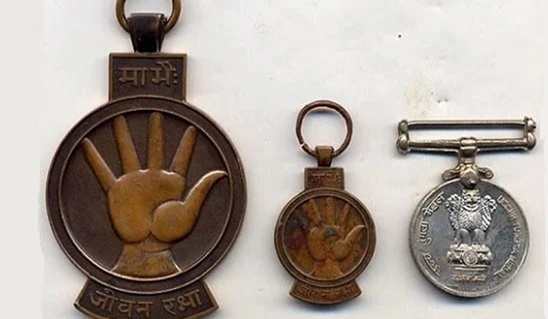
The Jeevan Raksha Padak Awards are among India’s highest civilian recognitions for life-saving acts. They honour individuals who display exceptional courage, presence of mind, and humanitarian spirit in rescuing others from life-threatening situations.
These awards celebrate not only bravery but also the ethical values of selflessness, duty, and compassion, reinforcing social responsibility and moral courage.
The awards are conferred in three categories, based on the degree of risk faced and the courage displayed:
Each award consists of:
The awardees are presented the decoration by the respective Union Ministry, Organisation, or State Government to which they belong.
Note: No additional facilities or concessions (e.g., railways, airfare) are provided by the government.
Significance of the Jeevan Raksha Padak Awards
FAQs1. What is the Jeevan Raksha Padak Award given for ? It is awarded for acts of bravery and humanitarian service in saving the life of another person. 2. Who can receive the Jeevan Raksha Padak ? Any individual, from any profession or background, including civilians and government employees. It can also be awarded posthumously. 3. What are the three categories of the award ? Sarvottam Jeevan Raksha Padak, Uttam Jeevan Raksha Padak, and Jeevan Raksha Padak, based on the level of risk and courage involved. 4. Who approves the Jeevan Raksha Padak Awards ? The final approval is given by the Prime Minister and the President of India. 5. What monetary benefits are associated with these awards ? ₹2 lakh (Sarvottam), ₹1.5 lakh (Uttam), and ₹1 lakh (Jeevan Raksha Padak), along with a medal and certificate. |
| Prelims: (Defence & Security + CA) Mains: (GS 3 – Defence, Security, Strategic Technologies, Indigenous R&D) |
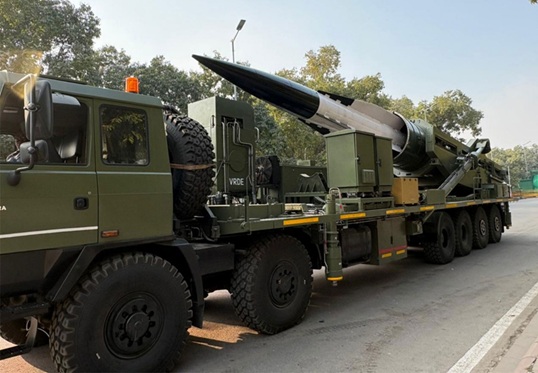
At the 77th Republic Day Parade on Kartavya Path, the Defence Research and Development Organisation (DRDO) unveiled the Long Range Anti-Ship Hypersonic Missile (LR-AShM) for the first time.
This has drawn attention to India’s expanding portfolio of hypersonic missile programmes, signalling a growing emphasis on next-generation strategic and tactical weaponry, particularly for maritime dominance and deterrence.
Hypersonic weapons—defined as systems travelling at speeds exceeding Mach 5—represent a transformative shift in modern warfare due to their:
Globally, only a few countries, including the United States, Russia, and China, have operational or near-operational hypersonic systems. India’s entry into this domain reflects its ambition to enhance credible deterrence, protect maritime interests, and strengthen indigenous defence capabilities.
The DRDO showcased the Long Range Anti-Ship Hypersonic Missile (LR-AShM) along with its launcher. The system is tailored to meet the Indian Navy’s coastal battery requirements and can engage both static and moving targets at ranges of up to 1,500 km, carrying multiple payload options.
The LR-AShM follows a quasi-ballistic trajectory, beginning like a ballistic missile but flying at lower altitudes and manoeuvring mid-course.
The missile uses a two-stage solid rocket motor:
At hypersonic speeds, the missile can cover a 1,500 km range in about 15 minutes, leaving minimal time for detection, tracking, and interception.
Extended-range variants of up to 3,500 km are already under development, which could significantly enhance India’s strategic reach and deterrence posture.
The missile can neutralise all classes of warships, including aircraft carriers, destroyers, and submarines operating near the surface. Current and future variants are expected to become a critical asset for sea denial operations, particularly in the strategically vital Indian Ocean Region (IOR), limiting adversaries’ military and commercial use of maritime spaces.
Beyond the Navy’s coastal batteries:
This multi-platform adaptability could firmly place India among a small group of nations with comprehensive hypersonic weapons capability.
The LR-AShM draws on key technologies from India’s existing missile programmes, including:
This reflects a convergence of proven propulsion, guidance, and control systems into a next-generation hypersonic platform.
Amid intense global competition, the DRDO is pursuing two parallel hypersonic paths:
The LR-AShM represents the glide vehicle track, showcasing major indigenous advances in materials science, thermal protection, and control systems for sustained hypersonic flight.
Earlier this month, DRDO achieved a major milestone by conducting ground tests of an Actively Cooled Scramjet Full-Scale Combustor, recording a run time of over 12 minutes.
This built on a successful subscale test conducted on April 25 last year, which ran for more than 1,000 seconds. DRDO had earlier demonstrated hypersonic air-breathing scramjet technology with the Hypersonic Technology Demonstration Vehicle (HSTDV) flight test in September 2020 from Dr APJ Abdul Kalam Launch Complex, marking a foundational step toward operational hypersonic cruise missiles.
FAQs1. What makes LR-AShM different from conventional missiles ? It combines hypersonic speed, high manoeuvrability, and low-altitude flight, making it extremely difficult to detect and intercept compared to conventional ballistic or cruise missiles. 2. What is a hypersonic glide vehicle (HGV) ? An HGV is launched by a rocket to high altitude and then glides unpowered through the atmosphere at speeds exceeding Mach 5, manoeuvring toward its target. 3. How does LR-AShM enhance India’s naval power ? It significantly boosts sea denial capabilities by enabling India to strike high-value naval targets at long ranges with minimal warning. 4. What is the difference between ramjets and scramjets ? Ramjets operate best at supersonic speeds but not hypersonic, while scramjets allow sustained powered flight at hypersonic speeds by maintaining supersonic airflow in the combustion chamber. 5. Why are hypersonic weapons strategically important ? They compress decision-making time, evade missile defences, and enhance deterrence by increasing the credibility of rapid and precise strike capabilities. |
| Prelims: (Polity & Governance + CA) Mains: (GS 2 – Governance, Freedom of Expression, Regulatory Institutions, Child Protection) |
The Union government has proposed the Draft IT (Digital Code) Rules, 2026, aimed at regulating obscenity and introducing mandatory age-based classification for all digital content across platforms.

India’s digital ecosystem has expanded rapidly with the growth of:
While this expansion has strengthened freedom of expression, it has also raised serious concerns regarding:
Online content regulation in India is currently governed by:
However, repeated controversies involving OTT shows and social media influencers have highlighted regulatory gaps, prompting:
In this context, the proposed Draft IT (Digital Code) Rules, 2026 seek to introduce a more detailed, standardised, and enforceable framework for digital content regulation.
The draft rules are proposed under:
The proposal follows a Supreme Court direction asking the government to strike a balance between:
The draft borrows substantially from the Programme Code under the Cable Television Networks Rules, 1994, defining obscene content as material that:
This aligns digital content standards with traditional broadcast norms.
The rules propose a broad set of prohibited content, including material that:
These provisions significantly widen the scope of content scrutiny and compliance obligations.
A major structural change proposed is the compulsory classification of all digital content, similar to film certification. The age categories include:
Each content item must display:
The draft mandates:
This places additional compliance obligations on:
Several concerns have been raised by OTT platforms, creators, and digital rights advocates:
These concerns highlight the tension between regulation, innovation, and freedom of expression in India’s digital economy.
The draft rules reflect the government’s attempt to:
From a governance perspective, the rules represent a shift toward a more formalised and enforceable digital media regulatory framework, with implications for democracy, digital rights, and platform governance.
FAQs1. What are the Draft IT (Digital Code) Rules, 2026 ? They are proposed regulations aimed at standardising and enforcing age-based classification and content norms for all digital platforms in India. 2. On what legal basis are these draft rules proposed ? They are proposed under Section 87(1) of the IT Act, 2000, read with Sections 67, 67A, and 67B, and guided by Supreme Court directions. 3. What is the mandatory age classification system introduced by the draft rules ? All digital content must be classified into categories such as U, 7+, 13+, 16+, adult-only, and professional categories, along with content descriptors. 4. What are the main concerns regarding the draft rules ? Concerns include reduced creative freedom, regulatory uncertainty, blurred distinctions between TV and OTT platforms, and potential chilling effects on expression. 5. Why are these rules significant for digital governance in India ? They aim to protect children, standardise content regulation, address judicial concerns, and strengthen accountability in India’s rapidly expanding digital ecosystem. |
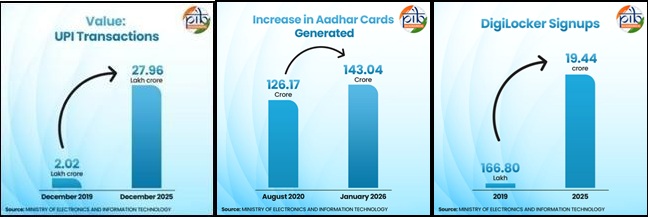
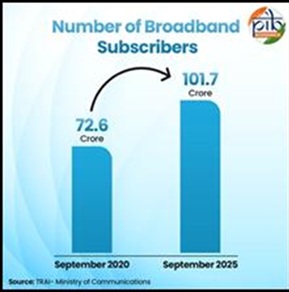
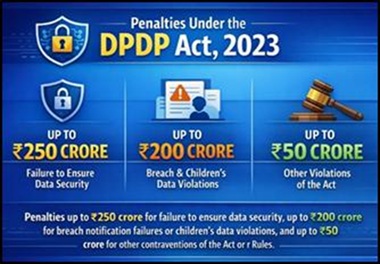
Data Privacy Day is celebrated internationally every year on January 28th.

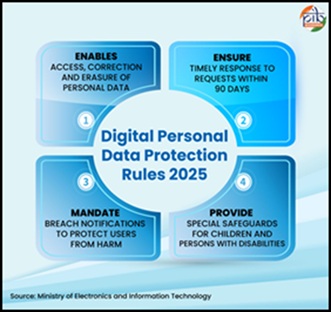
On 24 January, Judge Sachin Mittal of the Saket District Court, Delhi imposed a temporary ban on a video uploaded on a YouTube channel.

The court issued an Ad-Interim Ex-Parte John Doe Injunction, meaning the order was passed without hearing the other party, to prevent immediate harm.
A John Doe Injunction is a court order that applies to both:
When the identity of the wrongdoer is unknown, the court issues the order against a fictional name called “John Doe.”
If harm is certain or likely but the offender cannot be identified, the court can restrain unknown persons from continuing the harmful activity.
The main purposes are:
A John Doe Injunction is issued when:
When a person, company, or institution files a petition claiming:
The court may direct:
to remove, block, or stop the circulation of the harmful content.
A film producer fears that a movie may be leaked on pirate websites before release.
The producer obtains a John Doe Injunction.
Result:
A fake and defamatory video about a person goes viral online.
The uploader is unknown.
Result:
Commonly used in:
Famous cases include:
John Doe Injunctions are supported by:
Therefore, courts now emphasize balanced and limited use of such orders.
Under the Indian Constitution:
Courts can impose restrictions in cases involving defamation, public order, morality, etc.

Symptoms are generally classified into three categories:

Our support team will be happy to assist you!


 Contact Us
  New Batch : 9555124124/ 7428085757
  Tech Support : 9555124124/ 7428085757