New
Hindi Medium: (Delhi) - GS Foundation (P+M) : 8th June 2026, 6:30 PM Hindi Medium: (Prayagraj) - GS Foundation (P+M) : 1st June 2026, 5:30 PM English Medium: (Prayagraj) - GS Foundation (P+M) : 7th June 2026, 8:00 AM Hindi Medium: (Delhi) - GS Foundation (P+M) : 8th June 2026, 6:30 PM Hindi Medium: (Prayagraj) - GS Foundation (P+M) : 1st June 2026, 5:30 PM English Medium: (Prayagraj) - GS Foundation (P+M) : 7th June 2026, 8:00 AM

Current Affairs for 28 May 2026

Supreme Court Upholds 28% GST on Online Gaming and Validates State Restrictions

Why in the News ?

  • Recently, the Supreme Court upheld the levy of 28% GST on the full face value of bets placed in online gaming
  • The Court also validated state laws that prohibit online betting and gambling. 
  • The ruling could result in a potential tax liability of around ₹2.5 lakh crore for the gaming industry. 

Organised Online Gaming

  • Online gaming refers to digital games played over the internet, often involving real money participation

Major Categories

  • Fantasy SportsPlatforms such as Dream11, where users create virtual teams based on real-life players. 
  • Real Money Games (RMGs) Such as rummy and poker. 
  • Casino-Style GamesOnline casino-based gaming activities. 
  • Skill-Based GamesGames where strategy, knowledge, and decision-making play a significant role. 
  • Esports and Casual Gaming Competitive video gaming and recreational online games. 

Difference Between Skill-Based and Chance-Based Games

Games of Skill

  • Outcomes depend primarily on a player's ability, knowledge, and strategy. 
  • Examples: Rummy, Poker, Fantasy Sports. 

Games of Chance

  • Outcomes depend primarily on luck or random factors. 
  • Examples: Lottery, dice-based games. 

However, when money is wagered on these games, the distinction between skill and chance becomes less clear.

Regulation of Online Gaming in India

Constitutional Provisions

  • Entry 34 of the State List – Empowers states to legislate on betting and gambling. 
  • Entry 62 of the State List – Empowers states to levy taxes on betting and gambling. 

Major Laws

  • Promotion and Regulation of Online Gaming Act, 2025 – A central law intended to regulate and prohibit money-based online gaming (notification pending). 
  • State Laws – States such as Tamil Nadu, Karnataka, Telangana, and Andhra Pradesh have enacted restrictions on money-based online gaming. 
  • IT Rules, 2023 – Amended rules governing online gaming platforms. 

GST Regime

In October 2023, the GST Council imposed 28% GST on:

  • Online Gaming 
  • Lottery 
  • Casinos 
  • Horse Racing 

Industry’s Argument

  • GST should be levied only on Gross Gaming Revenue (GGR), i.e., the commission earned by gaming platforms. 

Government’s Argument

  • GST should be levied on the entire face value of the stake/bet amount

Background of the Case

Tamil Nadu Law

  • Through a 2020 ordinance and a subsequent 2021 amendment, money-based online gaming was declared an offence. 

Karnataka Law

  • The Karnataka Police (Amendment) Act, 2021 prohibited most forms of online betting activities. 

High Court Decisions

  • The Madras High Court struck down the Tamil Nadu law. 
  • The Karnataka High Court declared certain provisions of the 2021 amendment unconstitutional. 

Appeals by States

  • Tamil Nadu and Karnataka challenged these decisions before the Supreme Court. 
  • The states cited social concerns such as gaming addiction, financial losses, and suicides linked to online gaming. 

Supreme Court’s Verdict

1. Upheld 28% GST

The Supreme Court held that:

  • The 28% GST on online gaming is constitutionally valid. 
  • GST can be imposed on the full face value of the stake/bet amount
  • The demand to levy tax only on GGR cannot be accepted. 

Court’s Observation: “Online games played on digital platforms involving money staked on uncertain outcomes fall within the category of betting and gambling for GST purposes.”

2. Approved State Restrictive Laws

  • The Court upheld the laws enacted by Tamil Nadu and Karnataka. 
  • It set aside the judgments of the Madras High Court and Karnataka High Court. 

3. Rejected the Skill vs Chance Distinction

  • The Court observed that when money is wagered on a game, the mere presence of skill does not automatically provide special protection. 
  • If an activity involves uncertainty of outcome and financial risk, it may assume the nature of betting or gambling. 

4. No Fundamental Right to Online Gambling

  • According to the Court, betting and gambling are not protected trades or businesses under Article 19(1)(g) of the Constitution. 
  • States can prohibit such activities in the interest of public welfare and social well-being. 

5. Public Health and Social Interest

  • The Court recognized online betting addiction as a serious social concern. 
  • It noted that such activities can lead to financial losses, mental stress, and social instability. 
  • Protecting citizens’ health and welfare is a legitimate responsibility of the State. 

Key Implications of the Judgment

Impact on the Gaming Industry

  • Potential tax liability of approximately ₹2.5 lakh crore
  • Greater certainty regarding the taxation framework for the industry. 

Strengthening of State Powers

  • States now have stronger legal backing to regulate or prohibit online betting and money-based gaming activities. 

Impact on Skill-Based Games

  • Money-based skill games may face stricter regulatory scrutiny in the future. 

Impact on the Central Law of 2025

  • The judgment is likely to strengthen the constitutional validity of the Promotion and Regulation of Online Gaming Act, 2025
  • The Union Government argues that unregulated online gaming is linked to challenges such as money laundering, terror financing, financial fraud, and risks to young users. 

Conclusion

  • The Supreme Court’s ruling marks a significant turning point for India’s online gaming industry. 
  • The Court has clarified that when online games involve wagering money, they cannot claim exemption from taxation or regulation merely by being classified as “games of skill.” 
  • The judgment reinforces the importance of taxation, state regulation, and public interest considerations in the governance of online gaming activities in India.

Delhi Gymkhana Club Dispute – Government Land, Perpetual Lease and the Legal Question of Public Purpose

Why in News ?

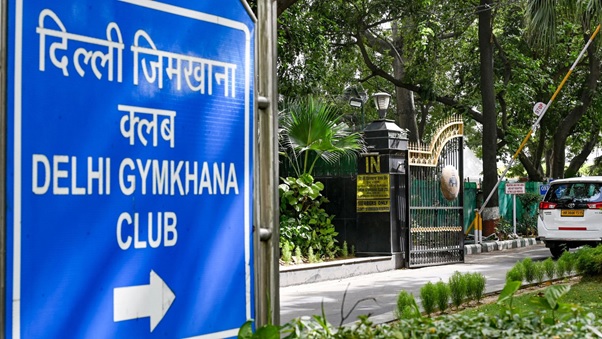
  • The Land & Development Office (L&DO), under the Ministry of Housing and Urban Affairs, has directed the Delhi Gymkhana Club to vacate its 27.3-acre leased premises on Safdarjung Road, New Delhi, by June 5, 2026. 
  • The government has stated that the land is required for strengthening defence infrastructure, enhancing national security, and fulfilling other important public purposes. 
  • Petitions challenging this decision have been filed before the Delhi High Court. The Court has, for the time being, recorded the government's assurance that any eviction process will follow the due procedure established by law. 

History of Delhi Gymkhana Club

  • The Delhi Gymkhana Club was established in July 1913 after the British Government decided in 1911 to shift the capital of India from Calcutta to Delhi. With the construction of the new capital, the need for an exclusive social and recreational centre for British officials and the administrative elite led to the establishment of the club. 
  • In February 1928, the British Indian Government granted land to the club on lease in a prime area of New Delhi. At that time, it was known as the Imperial Delhi Gymkhana Club, and its buildings were constructed during the 1930s. 
  • The club was designed by renowned architect Robert Tor Russell, who also planned prominent landmarks such as Connaught Place and Teen Murti Bhavan. Consequently, the club is regarded as significant not only socially but also from architectural and heritage perspectives. 
  • The land was granted under a perpetual lease, meaning it had no fixed expiry date, although it remained subject to various legal and administrative conditions. 
  • After Independence, the club was renamed Delhi Gymkhana Club and became a major social institution frequented by Indian bureaucrats, judges, diplomats, and senior military officers. It is presently located at 2, Safdarjung Road, New Delhi, near the Prime Minister’s residential complex, an area considered highly sensitive from a security perspective. 
  • Since 2022, the club has been administered by a government-appointed General Committee under the directions of the National Company Law Tribunal (NCLT). This intervention followed allegations of administrative irregularities and mismanagement raised by the Ministry of Corporate Affairs. The club is a company registered under the Companies Act, 1956. 

Land Administration System in Delhi

  • Since Independence, a significant portion of government land in New Delhi has been administered by the Central Government through the Land & Development Office (L&DO), functioning under the Ministry of Housing and Urban Affairs. 
  • The primary responsibilities of L&DO include allocation of government land, management of land leases, monitoring compliance with lease conditions, and administration of land-related matters involving institutions, clubs, political parties, and residential properties. 
  • Land in Delhi is generally allotted under two categories of leases. The first is a fixed-term lease, commonly for 99 years. The second is a perpetual lease, which has no predetermined expiry date but remains subject to conditions imposed by the government. 
  • Leaseholders are required to pay ground rent to the government, which may be revised periodically. Violation of lease conditions empowers the government to initiate appropriate action. 

Difference Between Leasehold and Freehold Ownership

  • Under a leasehold arrangement, the ownership of the land remains with the government, while the individual or institution is granted only the right to use the property. Such use must conform to the lease conditions, and the government may intervene when necessary. 
  • In contrast, under a freehold arrangement, the owner enjoys complete ownership rights over both the land and the building. The property may be sold, transferred, or inherited, with comparatively limited governmental control. 
  • According to the 2021 report of the Comptroller and Auditor General of India, out of approximately 60,000 properties under the jurisdiction of L&DO, nearly 35,000 had already been converted from leasehold to freehold status. 

The Present Dispute

  • In its notice, L&DO has invoked Clause 4 of the lease deed, under which the government reserves the right of re-entry upon the land for a public purpose. 
  • The government contends that the 27.3-acre land occupied by the Delhi Gymkhana Club is required for strengthening defence infrastructure, enhancing national security, and fulfilling other important public safety objectives. It further argues that the location is strategically sensitive and necessitates government repossession. 
  • On this basis, the government has announced the termination of the lease and issued an order for re-entry on behalf of the President of India, directing the club to vacate the premises within the stipulated period. 

Indications of a Broader Government Plan

  • The Delhi Gymkhana Club is situated near the Prime Minister’s residential complex, and the surrounding area is regarded as highly significant from a national security perspective. 
  • The L&DO communication also refers to efforts aimed at reclaiming nearby government land and removing encroachments. This suggests that the government may be pursuing a wider plan to reorganize the surrounding area for security, administrative, and defence infrastructure purposes rather than focusing solely on the club’s property. 

Possible Impact of the Eviction

  • The club’s General Committee has requested the government to reconsider the eviction decision. 
  • According to the committee, the move would directly affect nearly 14,000 members who regularly use the club’s facilities and pay membership fees. 
  • In addition, approximately 500 employees depend on the club for their livelihood. Any closure or relocation of the club could create serious employment-related challenges for them. 
  • The decision may also impact the club’s historical and architectural heritage, as it is widely regarded as an important component of New Delhi’s colonial-era legacy. 

Legal Position and Future Prospects

  • Multiple petitions challenging the eviction notice have been filed before the Delhi High Court. The Court has currently taken note of the government's assurance that due legal procedure will be followed and has kept the matter under consideration. 
  • The most significant legal question arising from the dispute is whether the government can terminate a perpetual lease on the grounds of public purpose. Another important issue is whether Clause 4 of the lease deed provides sufficient legal authority for such action. 
  • The Court is also likely to examine whether adequate notice has been provided to the club, whether compensation or alternative arrangements should be offered to affected parties, and how a balance can be maintained between public purpose and the rights of the leaseholder.

CPEC 2.0 to gain momentum: China and Pakistan agree on development of Gwadar port

Why in the news ?

  • Recently, China and Pakistan agreed to accelerate the next phase of the China-Pakistan Economic Corridor (CPEC), namely CPEC 2.0. Both countries have specifically emphasized the development of the Gwadar port, industrial cooperation, agricultural modernization, and strengthening regional connectivity.
  • This decision comes at a time when China is trying to re-energize key projects of its Belt and Road Initiative (BRI).

What is the China-Pakistan Economic Corridor (CPEC) ?

  • The China-Pakistan Economic Corridor (CPEC) is a major flagship project of China's Belt and Road Initiative (BRI), announced in 2015.
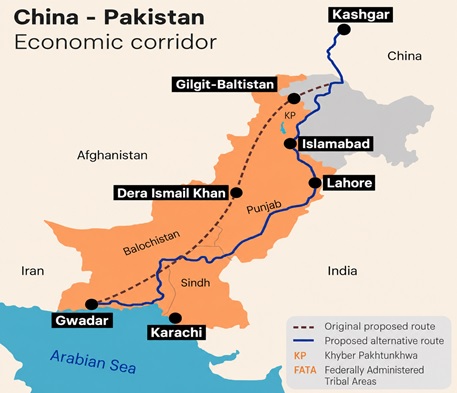
  • The project connects the Gwadar port in Pakistan's Balochistan province with Kashgar city in China's Xinjiang Uyghur Autonomous Region (XUAR).
  • It involves extensive development of road, rail, energy, port, telecommunications, and industrial infrastructure.

Why is Gwadar Port important ?

  • Located on the coast of the Arabian Sea, Gwadar Port is the centerpiece of CPEC. It was formally inaugurated in 2016.
  • The port is located near major maritime trade routes between West Asia, Africa, and the Indian Ocean region.
  • The port is important for China as an alternative route for energy supplies and trade, while Pakistan sees it as a key tool for economic development, attracting investment, and creating jobs.

Focus of CPEC 2.0

  • The first phase of CPEC focused primarily on energy and transportation infrastructure. CPEC 2.0 prioritizes industrial development, special economic zones (SEZs), agricultural cooperation, information technology, mining, digital connectivity, and green growth.
  • Its aim is to make Pakistan's economy more competitive and investment-friendly.

India's objections

  • India has consistently opposed CPEC because the project passes through the Gilgit-Baltistan region of Pakistan-occupied Kashmir (PoK).
  • India believes that this region is an integral part of its territory and that any third-country project in the region violates its sovereignty and territorial integrity.
  • For this reason, India has not participated in China's Belt and Road Initiative.

Strategic and Geopolitical Importance

  • CPEC is not seen solely as an economic project, but as an important pillar of the China-Pakistan strategic partnership.
  • The project strengthens China's presence in the Indian Ocean region and influences the geopolitical situation in South Asia.
  • Therefore, CPEC remains an important issue from the perspective of India-China relations, India-Pakistan relations, and regional security.

Conclusion

The decision to accelerate CPEC 2.0 reflects growing economic and strategic cooperation between China and Pakistan. While the project is a vehicle for development and connectivity for both countries, it remains a significant topic of discussion in international politics and diplomacy due to its implications for India's sovereignty and regional power balance.

« »
  • SUN
  • MON
  • TUE
  • WED
  • THU
  • FRI
  • SAT
Have any Query?

Our support team will be happy to assist you!

OR