Delhi Gymkhana Club Dispute – Government Land, Perpetual Lease and the Legal Question of Public Purpose
Why in News ?
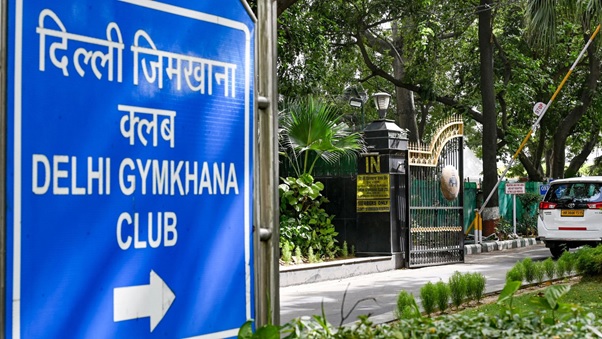
The Land & Development Office (L&DO), under the Ministry of Housing and Urban Affairs, has directed the Delhi Gymkhana Club to vacate its 27.3-acre leased premises on Safdarjung Road, New Delhi, by June 5, 2026.
The government has stated that the land is required for strengthening defence infrastructure, enhancing national security, and fulfilling other important public purposes.
Petitions challenging this decision have been filed before the Delhi High Court. The Court has, for the time being, recorded the government's assurance that any eviction process will follow the due procedure established by law.
History of Delhi Gymkhana Club
The Delhi Gymkhana Club was established in July 1913 after the British Government decided in 1911 to shift the capital of India from Calcutta to Delhi. With the construction of the new capital, the need for an exclusive social and recreational centre for British officials and the administrative elite led to the establishment of the club.
In February 1928, the British Indian Government granted land to the club on lease in a prime area of New Delhi. At that time, it was known as the Imperial Delhi Gymkhana Club, and its buildings were constructed during the 1930s.
The club was designed by renowned architect Robert Tor Russell, who also planned prominent landmarks such as Connaught Place and Teen Murti Bhavan. Consequently, the club is regarded as significant not only socially but also from architectural and heritage perspectives.
The land was granted under a perpetual lease, meaning it had no fixed expiry date, although it remained subject to various legal and administrative conditions.
After Independence, the club was renamed Delhi Gymkhana Club and became a major social institution frequented by Indian bureaucrats, judges, diplomats, and senior military officers. It is presently located at 2, Safdarjung Road, New Delhi, near the Prime Minister’s residential complex, an area considered highly sensitive from a security perspective.
Since 2022, the club has been administered by a government-appointed General Committee under the directions of the National Company Law Tribunal (NCLT). This intervention followed allegations of administrative irregularities and mismanagement raised by the Ministry of Corporate Affairs. The club is a company registered under the Companies Act, 1956.
Land Administration System in Delhi
Since Independence, a significant portion of government land in New Delhi has been administered by the Central Government through the Land & Development Office (L&DO), functioning under the Ministry of Housing and Urban Affairs.
The primary responsibilities of L&DO include allocation of government land, management of land leases, monitoring compliance with lease conditions, and administration of land-related matters involving institutions, clubs, political parties, and residential properties.
Land in Delhi is generally allotted under two categories of leases. The first is a fixed-term lease, commonly for 99 years. The second is a perpetual lease, which has no predetermined expiry date but remains subject to conditions imposed by the government.
Leaseholders are required to pay ground rent to the government, which may be revised periodically. Violation of lease conditions empowers the government to initiate appropriate action.
Difference Between Leasehold and Freehold Ownership
Under a leasehold arrangement, the ownership of the land remains with the government, while the individual or institution is granted only the right to use the property. Such use must conform to the lease conditions, and the government may intervene when necessary.
In contrast, under a freehold arrangement, the owner enjoys complete ownership rights over both the land and the building. The property may be sold, transferred, or inherited, with comparatively limited governmental control.
According to the 2021 report of the Comptroller and Auditor General of India, out of approximately 60,000 properties under the jurisdiction of L&DO, nearly 35,000 had already been converted from leasehold to freehold status.
The Present Dispute
In its notice, L&DO has invoked Clause 4 of the lease deed, under which the government reserves the right of re-entry upon the land for a public purpose.
The government contends that the 27.3-acre land occupied by the Delhi Gymkhana Club is required for strengthening defence infrastructure, enhancing national security, and fulfilling other important public safety objectives. It further argues that the location is strategically sensitive and necessitates government repossession.
On this basis, the government has announced the termination of the lease and issued an order for re-entry on behalf of the President of India, directing the club to vacate the premises within the stipulated period.
Indications of a Broader Government Plan
The Delhi Gymkhana Club is situated near the Prime Minister’s residential complex, and the surrounding area is regarded as highly significant from a national security perspective.
The L&DO communication also refers to efforts aimed at reclaiming nearby government land and removing encroachments. This suggests that the government may be pursuing a wider plan to reorganize the surrounding area for security, administrative, and defence infrastructure purposes rather than focusing solely on the club’s property.
Possible Impact of the Eviction
The club’s General Committee has requested the government to reconsider the eviction decision.
According to the committee, the move would directly affect nearly 14,000 members who regularly use the club’s facilities and pay membership fees.
In addition, approximately 500 employees depend on the club for their livelihood. Any closure or relocation of the club could create serious employment-related challenges for them.
The decision may also impact the club’s historical and architectural heritage, as it is widely regarded as an important component of New Delhi’s colonial-era legacy.
Legal Position and Future Prospects
Multiple petitions challenging the eviction notice have been filed before the Delhi High Court. The Court has currently taken note of the government's assurance that due legal procedure will be followed and has kept the matter under consideration.
The most significant legal question arising from the dispute is whether the government can terminate a perpetual lease on the grounds of public purpose. Another important issue is whether Clause 4 of the lease deed provides sufficient legal authority for such action.
The Court is also likely to examine whether adequate notice has been provided to the club, whether compensation or alternative arrangements should be offered to affected parties, and how a balance can be maintained between public purpose and the rights of the leaseholder.






 Contact Us
  New Batch : 9555124124/ 7428085757
  Tech Support : 9555124124/ 7428085757