
- UPSC Exam
- State PCS
- One Day Exam
- Current Affairs
- PT Quiz
- Downlaods
- About Coaching
- Blog
- Videos

| Prelims: Governance, Public Administration, Fiscal Discipline, Department of Expenditure Mains: GS Paper II – Government Policies & Interventions, Public Administration, And Good Governance Keywords: One Officer One Official Car Policy, Staff Car Rules 2026, Department of Expenditure, Ministry of Finance, Government Vehicles, Fiscal Discipline, Administrative Efficiency |
The Ministry of Finance, through the Department of Expenditure, has introduced a "One Officer, One Official Car" policy to reduce unnecessary government expenditure, prevent misuse of official vehicles, and improve accountability in the use of public resources.
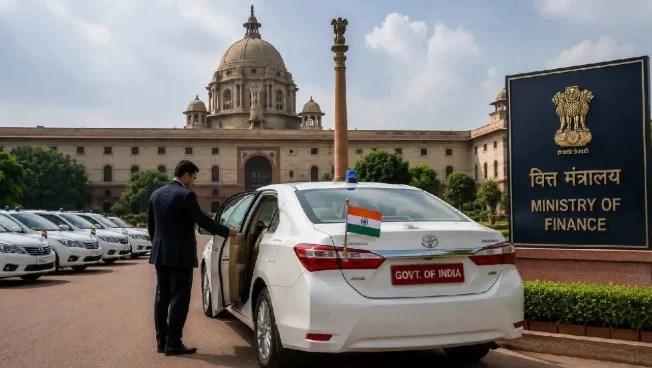
Under the new policy, an eligible Central Government officer can be allotted only one official staff car, even if the officer holds additional charge in another ministry, department, Public Sector Undertaking (PSU), autonomous body, or other government organisation. No additional government vehicle will be sanctioned for such officers.
The latest order supplements the Staff Car Guidelines issued in September 2022 by introducing stricter compliance measures. It specifically clarifies that officers holding multiple assignments cannot claim multiple official vehicles.
|
Particular |
Details |
|
Policy |
One Officer, One Official Car |
|
Issued By |
Department of Expenditure |
|
Ministry |
Ministry of Finance |
|
Objective |
Reduce expenditure and improve resource utilisation |
|
Applies To |
Eligible Central Government officers |
|
Additional Charge |
No additional official vehicle permitted |
|
Based On |
Staff Car Guidelines, 2022 |
Prelims MCQQ. With reference to the "One Officer, One Official Car" policy, consider the following statements:
Which of the statements given above is/are correct? A. 1 only Mains Practice Question"Efficient management of public resources is a key pillar of good governance." Discuss the significance of the 'One Officer, One Official Car' policy in promoting fiscal discipline, transparency, and administrative efficiency in India. |
Q1. What is the One Officer, One Official Car policy?It is a new Central Government policy allowing an eligible officer to use only one official vehicle, even while holding additional charge. It aims to prevent duplication and misuse of government resources. Q2. Why has the government introduced this policy?The policy seeks to reduce unnecessary government expenditure, strengthen fiscal discipline, and ensure efficient use of taxpayer-funded assets. Q3. Can officers use vehicles of PSUs or autonomous bodies?No. Central Government officers cannot use PSU or autonomous body vehicles except during authorised official duties or official tours. Q4. Which ministry issued the revised guidelines?The revised guidelines were issued by the Department of Expenditure under the Ministry of Finance through an Office Memorandum. Q5. Why is this policy important for UPSC?It is relevant for GS Paper II (Governance) and GS Paper III (Fiscal Management) as an example of administrative reforms, accountability, and efficient public resource management. |



Our support team will be happy to assist you!

 Contact Us
  New Batch : 9555124124/ 7428085757
  Tech Support : 9555124124/ 7428085757