- UPSC Exam
- State PCS
- One Day Exam
- Current Affairs
- PT Quiz
- Downlaods
- About Coaching
- Blog
- Videos

| (Prelims: Economic and Social Development) (Mains, General Studies Paper 3: Topics related to Indian economy and planning, resource mobilization, growth, development, and employment) |

Features of Unified Lending Interface (ULI)
|
This RBI report shows that the Indian banking system stands on a strong footing today, with minimal NPAs, strong capital, and a growing balance sheet. The key to sustainable success in the coming years lies in trust-based technology adoption, transparent customer protection, and balanced regulation.
| (Prelims: Current Events of National Importance, General Science) (Mains, General Studies Paper 3: Science and Technology—Developments and Applications and Their Impact on Everyday Life; Achievements of Indians in Science and Technology; Indigenous Technology Development and Development of New Technologies; Space, Computers, Robotics) |
The year 2025 marked a turning point for the Indian Space Research Organization (ISRO). The country is no longer merely a low-cost satellite launcher but has emerged as a sophisticated power on the global space stage. The successful launch of the 6,100-kilogram Bluebird Block-2 satellite by the LVM3-M6 rocket is not just a technological achievement but a clear declaration of India's space capabilities and readiness for future human missions.
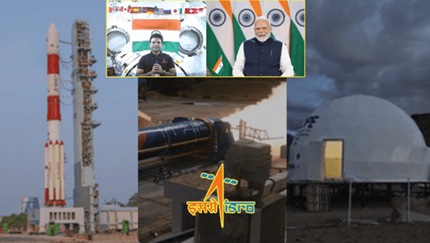
The success of LVM3 is a cornerstone for India's human spaceflight dreams.
ISRO's journey to 2025 demonstrates that India is no longer just an "affordable option," but an "innovation leader." With its massive payload capability, mastery of space docking, and private participation, India is well-positioned to lead this new era of space.
| Prelims: (Health + CA) Mains: (GS Paper 2 – Health Governance, Public Policy; GS Paper 3 – Pharmaceuticals, Regulatory Framework, Human Development) |
Health authorities in Australia, followed by the United Kingdom and the United States, have advised their citizens who received rabies vaccination in India to verify whether replacement doses are required, citing concerns over the circulation of counterfeit rabies vaccines.
The episode has raised serious questions about drug supply chain integrity, regulatory oversight, and public confidence in vaccines, particularly significant for India, which carries one of the highest rabies burdens globally and is also a major vaccine producer.
Rabies is a nearly 100% fatal disease once symptoms appear, making vaccine efficacy and timely administration a critical public health concern.
India occupies a paradoxical position:
Against this backdrop, international advisories regarding vaccines administered in India have domestic and global implications, extending beyond health outcomes to regulatory credibility and vaccine diplomacy.
Rabies is a viral zoonotic disease transmitted through the saliva of infected animals.
This makes vaccine quality, availability, and trust a matter of national public health importance.
International health advisories flagged the possibility that counterfeit rabies vaccines may have been administered in India since 2023.
Indian Immunologicals Limited (IIL) clarified that:
IIL stated that no other counterfeit batches have been identified so far.
Raids were conducted in Delhi, Mumbai, and Agra.
Public health experts in India sought to calm public fears:
The committee highlighted shortages of rabies immunoglobulin and vaccines as a critical challenge.
FAQs1. Why did foreign governments issue advisories on rabies vaccines in India ? Due to concerns about possible circulation of counterfeit rabies vaccine packaging. 2. Was the rabies vaccine itself found to be fake ? No. Tests showed the vaccine contents were genuine; the issue involved tampered packaging. 3. Why is rabies particularly dangerous ? Rabies is almost 100% fatal once symptoms develop. 4. What is Category-3 animal bite exposure ? Severe exposure involving deep bites, multiple wounds, or saliva contact with broken skin. 5. What does this episode reveal about health governance in India ? It highlights the need for stronger drug regulation, supply-chain monitoring, and public trust-building. |
| Prelims: (Defence Technology + CA) Mains: (GS 3 – Defence Technology, Internal & External Security, Indigenisation) |
The Defence Research and Development Organisation (DRDO) has successfully conducted the maiden flight test of the Pinaka Long Range Guided Rocket (LRGR-120) at the Integrated Test Range (ITR), Chandipur, marking a major step in strengthening India’s long-range precision artillery capability.
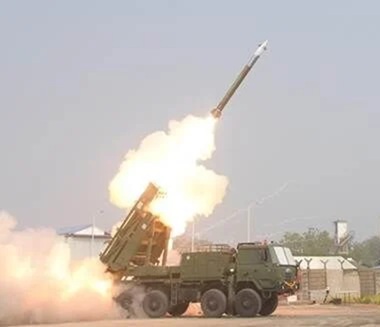
Modern battlefield dynamics increasingly demand long-range, high-precision, rapid-fire artillery systems capable of neutralising enemy assets deep inside hostile territory. For India, with diverse terrain ranging from mountainous borders to plains and deserts, accurate long-range rocket artillery is essential for deterrence and quick response.
The Pinaka Multiple Launch Rocket System (MLRS) has emerged as the backbone of India’s rocket artillery. The development of the Long Range Guided Rocket (LRGR-120) represents an evolution from area-saturation fire to precision-guided deep-strike capability, aligning with India’s push for indigenous, technology-intensive defence systems.
The Pinaka LRGR-120 is an extended-range, precision-guided rocket developed for deployment with the Pinaka Multiple Launch Rocket System (MLRS) of the Indian Army.
It is designed to:
The system has been developed by DRDO through coordinated efforts of multiple specialised laboratories:
This collaboration reflects India’s ecosystem-based defence innovation model.
FAQs1. What is the range of the Pinaka LRGR-120 ? It has a maximum strike range of approximately 120 kilometres. 2. Who developed the Pinaka Long Range Guided Rocket ? It was developed by DRDO, led by ARDE with support from HEMRL, RCI, and DRDL. 3. What is meant by backward compatibility in Pinaka LRGR ? It means the rocket can be fired from existing Pinaka launch systems without major modifications. 4. Why is guided rocket artillery important for India ? It provides long-range, high-precision firepower, crucial for deterrence and rapid response in diverse terrains. 5. How does Pinaka LRGR support Atmanirbhar Bharat ? It showcases indigenous design, development, and production of advanced artillery systems. |
| Prelims: (Polity + CA) Mains: (GS 2 – Governance, Constitution; GS 3 – Digital Economy) |
With the rapid expansion of digital content, AI-generated works, online education, and creative industries, the Copyright Act, 1957 continues to remain central to debates on creator rights, fair use, public access, and digital regulation in India.

Copyright law in India reflects the evolution from colonial legal frameworks to a modern intellectual property regime aligned with global standards.
The Copyright Act, 1957, which came into force on 21 January 1958, replaced the colonial-era Indian Copyright Act, 1914, and laid the foundation for protecting creators in a rapidly changing technological and cultural landscape.
Over time, multiple amendments—especially the 2012 Amendment—have adapted the law to:
The Act has been amended six times:
India is a member of:
India joined:
The Act protects original intellectual and creative works, regardless of artistic merit, provided they satisfy originality requirements.
To balance creator rights with public interest, the Act provides exceptions under Section 52 (Fair Dealing).
These provisions ensure cultural documentation and public expression.
|
Type of Work |
Duration |
|---|---|
|
Literary, dramatic, musical, artistic |
Author’s lifetime + 60 years |
|
Anonymous / pseudonymous works |
60 years from publication |
|
Cinematograph films |
60 years from publication |
|
Sound recordings |
60 years from publication |
|
Government works |
60 years from publication |
|
Public undertakings |
60 years from publication |
|
International agencies |
60 years from publication |
|
Photographs (post-1957) |
60 years from publication |
|
Foreign works |
Not exceeding country of origin |
FAQs1. When did the Copyright Act, 1957 come into force ? It came into force on 21 January 1958. 2. How long does copyright last in India ? Generally, lifetime of the author plus 60 years. 3. What is fair dealing under Indian law ? Limited use for education, research, criticism, review, and reporting. 4. Does India follow international copyright treaties ? Yes, including Berne Convention, TRIPS, WCT, and WPPT. 5. Can copyright be assigned indefinitely ? No. If duration is not specified, assignment lasts five years. |
| Prelims: (Defence Technology + CA) Mains: (GS 2 – International Relations, Strategic Stability; GS 3 – Defence Technology, Security Challenges) |
China recently released rare official footage showing the launch of the YJ-20 hypersonic anti-ship missile from a Type-055 Renhai-class destroyer, signalling a major advancement in its maritime strike and anti-access/area-denial (A2/AD) capabilities.
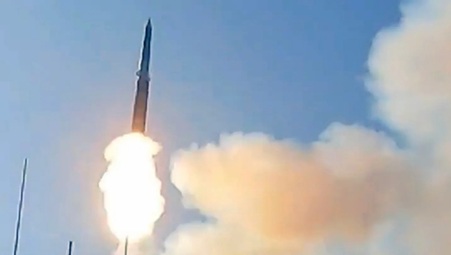
Hypersonic weapons—defined as systems capable of sustained flight at speeds greater than Mach 5—are reshaping modern warfare by compressing reaction time, evading missile defences, and blurring traditional deterrence thresholds.
China has emerged as one of the most aggressive developers of hypersonic technologies, integrating them into its broader strategy aimed at:
The unveiling of YJ-20 footage reflects Beijing’s intent to signal operational maturity rather than merely experimental capability.
The YJ-20 (Eagle Strike-20) is a hypersonic anti-ship missile developed by China to target high-value naval assets, including aircraft carriers and large surface combatants, at extended ranges. It represents an evolution from conventional anti-ship cruise missiles toward high-speed, manoeuvrable precision strike systems designed to defeat layered naval defences.
This multi-platform deployment enhances operational flexibility and survivability.
Frequently Asked Questions (FAQs)1. What is the YJ-20 missile ? It is a Chinese hypersonic anti-ship missile designed to strike high-value naval targets at long ranges. 2. What makes the YJ-20 difficult to intercept ? Its hypersonic speed, manoeuvrable glide phase, and steep terminal descent reduce reaction time and disrupt missile defence systems. 3. Which platforms can launch the YJ-20 ? Type-055 Renhai-class destroyers and H-6K strategic bombers. 4. Why is hypersonic technology strategically important ? It alters deterrence dynamics by enabling rapid, hard-to-defend precision strikes. 5. How does YJ-20 affect regional security ? It strengthens China’s A2/AD posture and intensifies strategic competition in the Indo-Pacific. |
| Prelims: (History & Culture + CA) Mains: (GS 1 – History, Indian Culture, Society; GS 2 – Social Justice, Cultural Preservation) |
The President of India recently attended the Centenary celebrations of the Ol Chiki script of the Santhali language in Jamshedpur, Jharkhand, marking 100 years since the invention of the script.
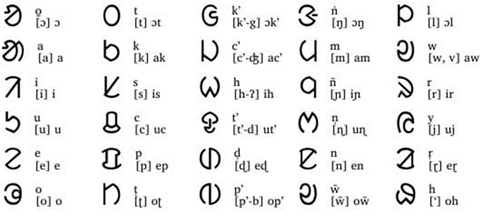
India’s linguistic diversity includes several indigenous and tribal languages that historically relied on oral traditions. The absence of a dedicated script often limited their literary development and official recognition.
The creation of Ol Chiki in the early 20th century was a landmark moment in India’s cultural history, as it:
The centenary celebrations underscore India’s growing emphasis on preserving indigenous languages and scripts as part of its intangible cultural heritage.
Ol Chiki is the indigenous script of the Santhali language, designed specifically to reflect its phonetic and grammatical structure.
The script is uniquely tailored to Santhali, unlike earlier attempts to write the language using Bengali, Devanagari, or Roman scripts.
This linguistic precision made Ol Chiki an effective tool for education, literature, and cultural transmission.
Pandit Raghunath Murmu was a:
He authored and published numerous works in Ol Chiki, including:
His efforts transformed Santhali from a largely oral language into a written literary tradition, strengthening cultural pride among Santhal communities.
FAQs1. Who invented the Ol Chiki script ? Pandit Raghunath Murmu invented Ol Chiki in 1925. 2. Which language uses the Ol Chiki script ? The Santhali language uses the Ol Chiki script. 3. Why is Ol Chiki significant ? It gave Santhali a dedicated written script, enabling literary growth and cultural preservation. 4. When was Santali included in the Eighth Schedule ? In 2003, with Ol Chiki recognised as its official script. 5. Which language family does Santali belong to ? The Austroasiatic language family, Munda branch. |

Our support team will be happy to assist you!

 Contact Us
  New Batch : 9555124124/ 7428085757
  Tech Support : 9555124124/ 7428085757