Prelims: DRDO, Transfer of Technology (ToT), Defence Manufacturing, Conventional Missiles, Aatmanirbhar Bharat, MSMEs, Defence Industry
Mains: GS Paper II: Government Policies and Interventions, Aatmanirbhar Bharat
GS Paper III: Defence Technology, Indigenisation of Defence, Security Challenges, Defence Manufacturing
Keywords: DRDO, Transfer of Technology, ToT, Conventional Missile Systems, Defence Industry, Indigenous Manufacturing, Private Sector, MSMEs, Aatmanirbhar Bharat, Defence Indigenisation, Technology Absorption |
Why in News?
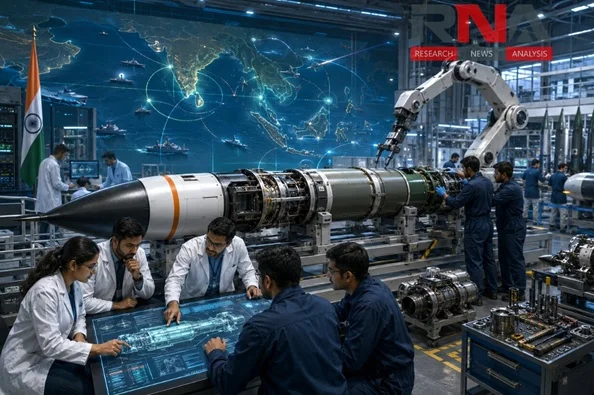
Union Defence Minister Rajnath Singh approved the Transfer of Technology (ToT) for all conventional missile systems developed by the Defence Research and Development Organisation (DRDO) to eligible Indian defence industries on 25 August 2026.
Important Points
- The policy covers conventional, or non-nuclear, missile systems developed by DRDO.
- Eligible Indian defence companies will be able to manufacture these missile systems after fulfilling prescribed qualification, certification and regulatory requirements.
- The move is expected to increase domestic value addition and reduce India's dependence on imported defence equipment and technologies.
- DRDO will continue to support public and private sector companies in technology transfer and technology absorption.
- The policy can also create opportunities for MSMEs and other technology partners involved in components, sub-systems, fabrication, testing and maintenance.
What is Transfer of Technology (ToT)?
Transfer of Technology (ToT) refers to the process through which the developer of a technology transfers the necessary technical knowledge and know-how to another organisation for its production and use.
In defence manufacturing, this may include:
- Design and technical know-how
- Manufacturing processes
- Testing procedures
- System integration
- Quality-control requirements
- Production-related technical documentation
In simple terms, DRDO develops the technology, while qualified Indian industries can use the transferred know-how to manufacture the system at scale.
What are Conventional Missile Systems?
Conventional missile systems are non-nuclear missile platforms designed to perform military roles such as:
- Tactical strikes
- Air defence
- Battlefield operations
- Precision engagement of targets
DRDO develops missile technologies through its specialised laboratories, research facilities and testing infrastructure under the Ministry of Defence.
Industrial and Policy Framework
- The new policy is intended to strengthen the transition from research and development to industrial-scale manufacturing.
- Indian companies receiving the technology will have to comply with the necessary qualification, certification, security and regulatory requirements before undertaking production.
- This approach can allow India's defence industry to develop stronger capabilities in the manufacturing, integration, testing and life-cycle support of sophisticated missile systems.
Role of Private Sector and MSMEs
The decision could expand the role of India's private defence industry and Micro, Small and Medium Enterprises (MSMEs) in missile manufacturing.
MSMEs and specialised firms can become part of the wider supply chain by providing:
- Missile components
- Electronic and mechanical sub-systems
- Precision fabrication
- Testing services
- Maintenance and life-cycle support
This can help create a broader domestic ecosystem rather than concentrating missile production capabilities within a limited number of organisations.
Link with Aatmanirbhar Bharat
The decision is aligned with the government's Aatmanirbhar Bharat approach, which seeks to strengthen domestic capabilities and reduce dependence on imports in strategic sectors.
In the defence sector, self-reliance involves developing domestic capabilities across the complete equipment cycle:
Design → Development → Testing → Manufacturing → Maintenance → Upgradation
Therefore, transferring DRDO technologies to Indian industry can help convert indigenous research capabilities into large-scale domestic production capacity.
What is Technology Absorption?
- Technology transfer alone does not guarantee successful manufacturing.
- Technology absorption refers to the ability of the receiving industry to understand, assimilate and effectively use the transferred technical knowledge.
- A company receiving DRDO technology therefore needs the required infrastructure, skilled manpower, quality-control systems and manufacturing capabilities to successfully produce the missile system.
Significance for India
- Defence Indigenisation: Greater domestic production can reduce dependence on imported missile systems and critical technologies.
- Faster Industrial Production: Technologies developed by DRDO can move more efficiently from laboratories to production lines.
- Stronger Private Defence Industry: Private companies can play a larger role in manufacturing sophisticated defence systems.
- MSME Opportunities: A wider missile-production ecosystem can generate demand for components, electronics, materials, fabrication and testing services.
- Strategic Autonomy: Domestic manufacturing capacity can improve India's ability to maintain defence preparedness without excessive dependence on foreign suppliers.
- Innovation Ecosystem: Closer interaction between DRDO and industry can strengthen technological capabilities and manufacturing expertise within the country.
- Export Potential: A stronger domestic missile manufacturing ecosystem may also support India's long-term ambition to expand defence exports, subject to government approvals and export-control regulations.
Challenges
- Protection of sensitive and classified defence technologies
- Maintaining consistent quality standards across manufacturers
- Developing specialised manufacturing infrastructure
- Ensuring effective technology absorption
- Availability of skilled technical manpower
- Securing critical components and materials
- Maintaining strict testing and certification standards
Way Forward
- India needs to complement technology transfer with investment in advanced manufacturing, skilled manpower, testing facilities, quality assurance and secure defence supply chains.
- DRDO–industry collaboration should also focus on continuous technological upgrades so that Indian companies gradually move beyond licensed production towards stronger capabilities in indigenous design, innovation and development.
Prelims MCQs
Q1. With reference to Transfer of Technology (ToT) in defence manufacturing, consider the following statements:
- It can involve transfer of manufacturing and testing know-how.
- It can help move technologies from research institutions to industrial production.
- It necessarily transfers ownership of the original research organisation to the receiving company.
Which of the statements given above are correct?
A. 1 only
B. 1 and 2 only
C. 2 and 3 only
D. 1, 2 and 3
Mains Practice Question
“Transfer of defence technologies from research institutions to domestic industry can play an important role in achieving strategic autonomy.” Discuss in the context of India's defence indigenisation efforts.
|
FAQs
1. What is DRDO?
DRDO is India’s premier defence research organisation under the Ministry of Defence.
2. What is Transfer of Technology (ToT)?
ToT is the transfer of technical know-how from a developer to an industry for production.
3. What has the government approved?
The government approved ToT of DRDO-developed conventional missile systems to eligible Indian defence industries.
4. What are conventional missiles?
Conventional missiles are non-nuclear missile systems used for strike, air defence and tactical roles.
5. How will this decision benefit India?
It will boost indigenous defence production and reduce dependence on defence imports.
|






 Contact Us
  New Batch : 9555124124/ 7428085757
  Tech Support : 9555124124/ 7428085757