India’s electronics manufacturing sector has emerged as a high-growth strategic sector.
- A multi-fold increase in the value of domestic production has enabled India to move beyond being merely an electronics assembly hub toward greater value addition.
- India’s participation has expanded across mobile phones, consumer electronics, IT hardware, and automotive electronics.
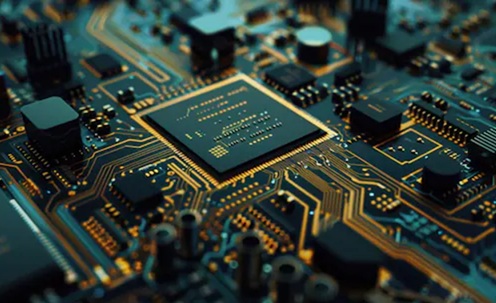
Today, India is no longer just an import-dependent consumer; rather—
- It is emerging as a manufacturing and export hub within the Global Value Chain (GVC) for electronics.
- Under the China+1 strategy, India has positioned itself as an alternative destination for multinational companies.
Central Importance of Semiconductors
Semiconductors are the backbone of the modern digital economy:
- Consumer sector: Smartphones, computers, televisions, smart home devices
- Digital infrastructure: Data centers, cloud computing, 5G/6G networks
- Strategic sectors: Automobiles, electric vehicles (EVs), defence equipment, space and satellite systems
Without semiconductors, the vision of Digital India, Industry 4.0, and Atmanirbhar Bharat (Self-Reliant India) cannot be realized.
Importance of the Indigenous Semiconductor Industry
(a) Economic Sovereignty
- Reduced dependence on imported chips leads to significant savings in foreign exchange.
- Protection from global supply-chain disruptions (such as pandemics or geopolitical tensions).
- Ensures a stable supply of critical inputs for domestic MSMEs and large electronics manufacturers.
This provides India with Strategic Autonomy.
(b) Technological Foundation
- Semiconductors are the core enabling technology of the modern digital society.
- Technologies such as AI, ML, IoT, robotics, automation, big data, and digitalization are built on semiconductors.
- Smartphones, computers, automobile ECUs, industrial machinery, and smart factories all depend on them.
Indigenous semiconductors mean control over technology, not mere consumption.
(c) Cross-Sectoral Impact
Healthcare
- Medical imaging (MRI, CT scans)
- Real-time patient monitoring and telemedicine
Logistics and Transportation
- Smart tracking and GPS-based fleet management
- Energy-efficient shipping and warehouse automation
Defence and Security
- Radar systems and missile guidance
- Secure communication, cyber and electronic warfare
The semiconductor industry strengthens Comprehensive National Power.
(d) Green Energy and Global Standing
- Electric vehicles (EVs), charging infrastructure, and battery management systems
- Advanced vehicle safety systems such as ADAS
- Renewable energy grids, smart meters, and energy-efficiency solutions
Through these, India:
- Moves closer to its Net Zero climate goals
- Establishes itself as a reliable and responsible technology power on the global stage
Major Government Initiatives
(a) PLI – Large-Scale Electronics Manufacturing
Production Linked Incentive (PLI) Scheme
The PLI scheme has been the most significant policy for expanding electronics manufacturing in India. Its objective is not limited to assembly, but to promote value addition and export-oriented production.
Key Features
- Direct financial incentives based on production/sales
- Attraction of multinational companies to set up manufacturing units in India
- Support for domestic companies to become globally competitive
Impact and Achievements
- India has emerged among the leading countries in mobile phone manufacturing
- Significant growth in electronics exports
- Development of a component ecosystem (PCBs, camera modules, chargers, display parts)
- Large-scale job creation, especially for youth and women
- The PLI scheme has helped India move beyond an “assembly hub” towards becoming a “manufacturing + export hub”.
(b) India Semiconductor Mission (ISM)
- Launched: 2021
- Total Outlay: ₹76,000 crore
Objectives
- To develop a comprehensive ecosystem for semiconductor and display manufacturing in India
- To integrate fabs, display units, ATMP/OSAT, design, and R&D
- To provide up to 50% financial support of project cost, reducing the barrier of high capital investment
Strategic Importance
- Protection against situations like global chip shortages
- Secure supply for defence, space, and digital infrastructure
- Positioning India as a reliable partner in the global semiconductor value chain
- ISM forms the foundation of India’s strategic autonomy and technological sovereignty.
Recent Approvals (2024)
(a) India’s First Commercial Semiconductor Fab
- India’s first commercial semiconductor fabrication plant in Gujarat
- Lead: Tata Group
- A historic milestone for India, as the country did not previously have full-scale fab capability
Significance
- Formal entry of India into high-value semiconductor manufacturing
- Domestic supply of chips for automobiles, EVs, power electronics, and industrial applications
- Boost to skill development, research, and advanced engineering
(b) ATMP / OSAT Units
- Approval granted to two additional units
Functions
- Assembly
- Testing
- Marking and Packaging
Significance
- A critical stage of the semiconductor value chain
- Large-scale employment generation in a short time
- Moves India toward end-to-end capability: Chip Design → Fab → Packaging
- This marks India’s transition from being merely a chip consumer to moving toward becoming a full-fledged semiconductor manufacturing nation.
Schemes under the Semicon India Programme
The objective of the Semicon India Programme is to develop an end-to-end semiconductor value chain in India—from design to fabrication, packaging, and display manufacturing. The programme is implemented under the India Semiconductor Mission.
(1) Semiconductor Fab Establishment Scheme
Key Features
- Silicon CMOS (Complementary Metal-Oxide-Semiconductor)–based fabs
- Focus on manufacturing logic chips, memory, power, and automotive semiconductors
- Direct financial support up to 50% of project cost
Significance
- Fab construction is highly capital-intensive; government support reduces investment risk
- Enables India’s entry into high-end manufacturing and advanced engineering
- Ensures domestic chip supply for automobiles, EVs, defence, and industrial electronics
- This scheme is decisive in transforming India from a fab-less design hub into a fab-enabled manufacturing nation.
(2) Display Fab Establishment Scheme
Covered Technologies
- TFT-LCD
- AMOLED (advanced displays for mobiles, TVs, and wearables)
Incentive Structure
- Financial support of up to 50% of project cost
Significance
- Displays are the most expensive and import-dependent component of electronics
- Enhances domestic value addition in mobile phones, TVs, and laptops
- Reduces import bills and improves export competitiveness
- Display fabs move India toward a complete electronics ecosystem, beyond just final assembly.
(3) Compound Semiconductor and ATMP/OSAT Scheme
Covered Areas
- Compound Semiconductors (GaN, SiC, etc.)
- Silicon Photonics
- Sensors and Discrete Semiconductors
- ATMP / OSAT: Assembly, Testing, Marking & Packaging
Incentives
- Financial support of up to 50% of capital expenditure (CapEx)
Strategic Importance
- Compound semiconductors:
- Essential for EVs, 5G/6G, renewable energy, and power electronics
- ATMP/OSAT:
- The largest employment-generating stage of the semiconductor value chain
- Can become operational in a relatively short time
- This scheme strengthens India as a hub for design, packaging, and advanced applications.
(4) Design-Linked Incentive (DLI) Scheme
This scheme focuses on strengthening India’s chip design capabilities, enabling leadership not only in manufacturing but also in intellectual property (IP) creation.
(a) Product Design–Linked Incentive
- Incentive of up to 50% of eligible design expenditure
- Maximum cap: ₹15 crore per application
Benefits
- Encourages startups, MSMEs, and domestic companies
- Promotes indigenous design of ASICs, SoCs, AI, and IoT chips
(b) Production-Linked Incentive
- 6% to 4% of net sales over 5 years
- Maximum cap: ₹30 crore per application
Significance
- Supports the journey from design to market
- Practical implementation of Design in India → Make in India
- The DLI scheme has the potential to establish India as a global chip design hub.
Major Challenges
- Excessive Dependence on Imports: Despite progress in electronics assembly, India still relies heavily on foreign countries for high-value components—especially semiconductor chips—where China plays a dominant role in supply.
- Capital- and Resource-Intensive Nature: Setting up semiconductor fabrication (fab) units requires massive investment. It also demands critical resources such as ultra-pure water and uninterrupted, high-quality power supply.
- Weak Supporting Ecosystem: Industries that support chip manufacturing—such as specialty gases, chemicals, precision tools, and advanced machinery—are not yet sufficiently developed in India, leaving the overall supply chain fragile.
- Skill and Experience Gap: Although India has a strong base of semiconductor design engineers, there is a significant shortage of practical experience in actual chip manufacturing and highly specialized technical roles.
- Infrastructure Constraints: High investment requirements, lack of ancillary industries, and shortage of skilled human resources together limit the pace of growth of India’s semiconductor manufacturing sector.







 Contact Us
  New Batch : 9555124124/ 7428085757
  Tech Support : 9555124124/ 7428085757