
- UPSC Exam
- State PCS
- One Day Exam
- Current Affairs
- PT Quiz
- Downlaods
- About Coaching
- Blog
- Videos

| Prelims: (Social Issues + CA) Mains: (GS 2 – Health & Social Sector Policies; GS 3 – Human Resource Development & Non-Communicable Diseases) |
India has ranked second globally in the number of children living with overweight and obesity, according to the World Obesity Atlas 2026 released by the World Obesity Federation.
The report highlights that rising childhood obesity could significantly increase the burden of non-communicable diseases (NCDs) in India in the coming decades.
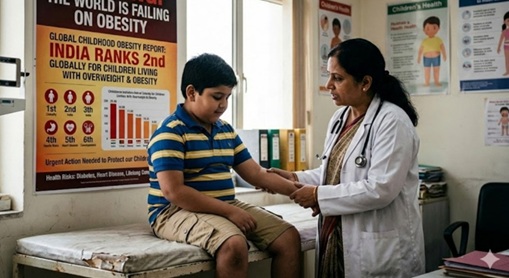
Childhood obesity has emerged as a major public health challenge worldwide over the past two decades.
Key global trends include:
The countries with the highest burden include:
According to projections by the World Obesity Federation, around 507 million children worldwide may be overweight or obese by 2040, indicating the need for urgent preventive strategies.
These patterns show that childhood obesity is no longer confined to high-income countries; it is rising rapidly in developing and middle-income economies due to lifestyle changes and urbanisation.
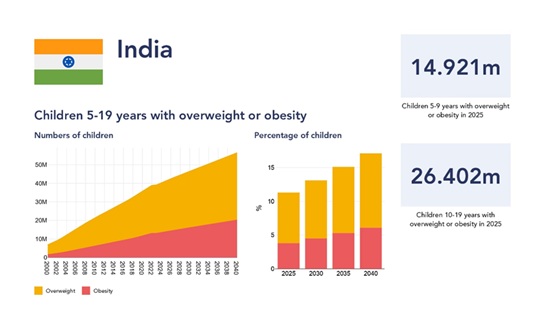
India now ranks second globally after China in terms of the number of children living with overweight and obesity.
Key Statistics for India
Age-wise estimates indicate:
Despite ranking second globally, experts note that India’s large population size significantly contributes to the high numbers. Within the World Health Organization, India has the highest number of children and adolescents affected by obesity.
The report presents alarming projections for the period 2025–2040.
Associated health complications are also expected to rise:
These projections suggest that childhood obesity could dramatically expand the future burden of NCDs in India.
Childhood obesity exposes young individuals to diseases traditionally associated with adulthood.
Major health risks include:
The report estimates that by 2040:
Another concern is that childhood obesity often persists into adulthood, increasing long-term health risks and healthcare costs. Thus, early intervention is essential to prevent a large-scale future health crisis.
The rise of obesity among children is driven by multiple lifestyle and socio-economic factors.
Approximately 74% of adolescents aged 11–17 years fail to meet recommended levels of physical activity.
Children increasingly consume:
These dietary changes contribute to higher caloric intake and weight gain.
Only 35.5% of school-age children receive school meals, indicating gaps in nutrition programmes.
About 32.6% of infants experience sub-optimal breastfeeding, which can increase obesity risk later in life.
Maternal health conditions also influence childhood obesity risk:
These factors highlight the role of family health and early childhood nutrition in shaping long-term weight outcomes.
The World Obesity Federation has emphasised the need for comprehensive policy interventions.
Key recommendations include:
1. Improving School Food Environments
Ensuring access to nutritious meals and reducing junk food availability in schools.
2. Regulating Food Marketing to Children
Restricting advertisements for unhealthy foods targeting children.
3. Taxation on Sugary Beverages
Imposing taxes to discourage excessive consumption of sugar-sweetened drinks.
4. Promoting Physical Activity
Encouraging sports and exercise through school curricula and community programmes.
5. Strengthening Early Nutrition Policies
Promoting breastfeeding and improving maternal nutrition programmes.
6. Integrating Obesity Prevention in Primary Healthcare
Early screening and counselling for children at risk.
1. Rising Non-Communicable Disease Burden
Childhood obesity could accelerate India’s growing NCD crisis.
2. Impact on Human Capital
Poor health during childhood affects productivity and long-term economic growth.
3. Health System Pressure
Increasing chronic diseases may strain healthcare infrastructure and resources.
4. Socio-economic Implications
Obesity is linked with lifestyle changes associated with urbanisation and economic transitions.
5. Importance of Preventive Healthcare
Addressing obesity early can reduce long-term health costs and improve quality of life.
FAQs1. What is childhood obesity ? Childhood obesity refers to excessive body fat accumulation in children, typically measured using Body Mass Index (BMI) adjusted for age and sex. 2. Which report highlighted India’s global ranking in childhood obesity ? The World Obesity Atlas 2026 released by the World Obesity Federation. 3. Why is childhood obesity a serious concern ? It increases the risk of chronic diseases such as diabetes, hypertension, and cardiovascular disorders later in life. 4. What are the main causes of childhood obesity in India ? Low physical activity, unhealthy diets, limited nutrition programmes, poor breastfeeding practices, and maternal health conditions. 5. What measures can help reduce childhood obesity ? Healthier school food policies, promotion of physical activity, regulation of junk food marketing, taxation of sugary drinks, and early health screening. |



Our support team will be happy to assist you!

 Contact Us
  New Batch : 9555124124/ 7428085757
  Tech Support : 9555124124/ 7428085757