
- UPSC Exam
- State PCS
- One Day Exam
- Current Affairs
- PT Quiz
- Downlaods
- About Coaching
- Blog
- Videos

| Prelims: Project Cheetah; Gandhi Sagar Wildlife Sanctuary; Kuno National Park; conservation translocation; genetic diversity. Mains: GS Paper III—Biodiversity conservation, species reintroduction and wildlife management. |
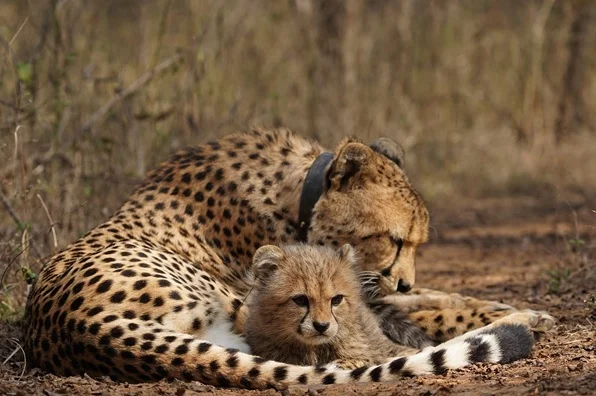
|
Cheetah |
Sex |
Country of origin |
Transfer to Gandhi Sagar |
|
Prabhas |
Male |
South Africa |
April 2025 |
|
Pawak |
Male |
South Africa |
April 2025 |
|
Dheera |
Female |
South Africa |
September 2025 |
|
Radha, formerly CCB-2 |
Female |
Botswana |
September 2026 |
Prabhas and Pawak form a male coalition, a social association in which male cheetahs live together. Dheera occupies a separate enclosure, while Radha has been placed in another enclosure away from the existing animals.
According to the September 2026 report supplied, India had 56 cheetahs following Radha’s transfer:
|
Site |
Reported number |
|
Kuno National Park |
52 |
|
Gandhi Sagar Wildlife Sanctuary |
4 |
|
Total |
56 |
The total includes African-origin animals and cubs born in India. Radha’s movement redistributed the existing population between sites; it did not itself increase the national total.
Veerangana Durgavati Tiger Reserve, in Madhya Pradesh’s Bundelkhand region, reportedly has five secured enclosures prepared for cheetahs. Its inclusion would further expand the project’s geographical footprint. Prepared enclosures, however, are only one component of a suitable release site.
Maintaining cheetahs at multiple suitable sites can reduce the risk of a local disturbance affecting the entire introduced population. It also creates opportunities to compare survival, breeding and habitat use across landscapes.
A metapopulation consists of populations occupying separate habitat patches but linked through the movement of individuals. Where natural movement is limited, carefully planned transfers can help connect populations demographically and genetically.
This approach requires coordinated monitoring and decisions about which animals should move, when they should move and whether recipient sites can support them.
Cheetahs have unusually low genetic diversity, associated with historical population bottlenecks. Low diversity can contribute to reproductive difficulties and vulnerability to disease. Bringing together animals from different source populations may support genetic management. However, country of origin alone does not establish genetic unrelatedness. Breeding decisions should use genetic testing and pedigree records; animals from the same country need not be close relatives.
The presence of two males and two females creates opportunities for breeding at Gandhi Sagar. Successful population establishment will depend on compatibility, health, cub survival and the ability of subsequent generations to live independently.
These benefits depend on ecological outcomes and community participation rather than the number of animals transferred alone.
Suitable space must be supported by adequate wild prey, water and secure habitat. Enclosure readiness cannot substitute for a wider assessment of carrying capacity.
Translocated animals require careful monitoring during adaptation. Veterinary preparedness, disease surveillance and rapid responses to injuries remain essential.
A small population can be affected disproportionately by the loss of a breeding animal, reproductive failure or low cub survival. Genetic and demographic planning must therefore operate together.
A soft-release enclosure provides a controlled period of acclimatisation before possible release into the wider habitat. Long-term assessment should examine independent hunting, movement, survival and reproduction outside such enclosures.
Cheetah movement beyond protected areas could create livestock-related concerns. Local participation, clear communication and timely responses to losses are necessary to maintain support.
Prelims MCQsQ. Gandhi Sagar Wildlife Sanctuary, recently in the news under Project Cheetah, is located in: (a) Rajasthan Mains Practice Question“Expanding species reintroduction programmes across multiple habitats requires integrated ecological, genetic and community-based management.” Discuss with reference to Project Cheetah. |
1. Why is Gandhi Sagar Wildlife Sanctuary in the news?It received Radha, a female cheetah from Botswana transferred from Kuno, on 20 September 2026. Her arrival brought its cheetah population to four. 2. Who is Radha under Project Cheetah?Radha is a three-year-old Botswanan female previously identified as CCB-2. She was renamed before being released into a soft-release enclosure at Gandhi Sagar. 3. How many cheetahs were reported in India after this transfer?The September 2026 report put the total at 56: 52 at Kuno National Park and four at Gandhi Sagar Wildlife Sanctuary. This is a dated population figure. 4. Why is Project Cheetah expanding beyond Kuno?Multiple sites can reduce dependence on a single habitat and provide additional opportunities for breeding and coordinated population management. 5. Which site is being prepared as a third cheetah habitat?Veerangana Durgavati Tiger Reserve in Madhya Pradesh’s Bundelkhand region has reportedly prepared five secured enclosures to receive cheetahs. |

Our support team will be happy to assist you!

 Contact Us
  New Batch : 9555124124/ 7428085757
  Tech Support : 9555124124/ 7428085757