Prelims & Mains: (GS Paper III – Indian Economy, Infrastructure, Industrial Growth, Energy Security and Sustainable Development)
Keywords: Automobile Industry, Nitin Gadkari, Third-Largest Automobile Market, ₹22 Lakh Crore, Logistics Cost, National Green Hydrogen Mission, Electric Vehicles, Make in India, Automotive Exports |
Why in News?
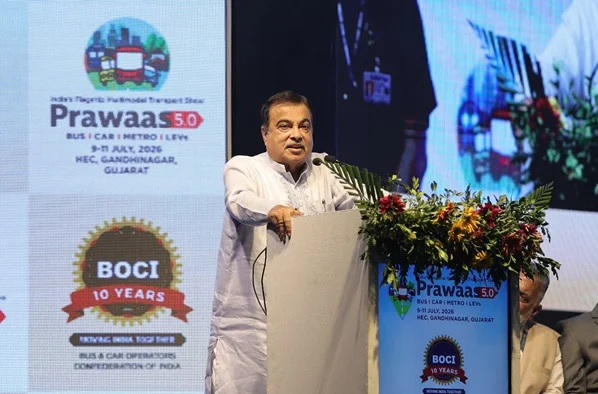
- Union Minister for Road Transport and Highways Nitin Gadkari has stated that India has overtaken Japan to become the world's third-largest automobile market, with the domestic automobile industry valued at approximately ₹22 lakh crore.
- Addressing a conclave in New Delhi, the Minister highlighted the contribution of highway development, improved logistics infrastructure and alternative energy sources to India's economic growth.
Key Highlights
- Global Position: India is the world's third-largest automobile market by new-vehicle sales, following China and the United States.
- Industry Size: The Minister cited an industry value of approximately ₹22 lakh crore.
- Infrastructure Development: Expansion of expressways and national highways is improving transport efficiency and regional connectivity.
- Logistics Cost: The Minister stated that improved road infrastructure has helped reduce India's logistics costs by 6%, although the precise measurement basis was not specified in the report.
- Energy Security: Greater use of hydrogen and other alternative fuels could reduce dependence on imported fossil fuels.
- Future Outlook: The government aims to strengthen India's position as a global automobile manufacturing and exporting hub.
Growth of India's Automobile Industry
- India's automobile industry has undergone significant transformation since the economic liberalisation of 1991.
- The removal of industrial licensing restrictions, greater foreign investment and growing domestic demand encouraged international automobile manufacturers to establish production facilities in India.
- Over time, the country developed a strong manufacturing ecosystem comprising passenger vehicles, commercial vehicles, two-wheelers, three-wheelers and automotive components.
- According to the Press Information Bureau, vehicle production increased from approximately 2 million units in 1991–92 to 28 million units in 2023–24.
- The automobile sector also contributes substantially to India's GDP, manufacturing activity and employment generation.
Importance of the Automobile Industry in the Indian Economy
|
Sector
|
Contribution
|
|
Economic Growth
|
Contributes approximately 6% to India's GDP, according to PIB's March 2025 assessment
|
|
Employment
|
Supports millions of direct and indirect jobs
|
|
Manufacturing
|
Promotes steel, rubber, electronics, glass and engineering industries
|
|
Exports
|
Strengthens India's presence in international automobile and auto-component markets
|
|
Technological Development
|
Encourages investment in electric vehicles, batteries, automation and advanced manufacturing
|
|
Investment
|
Attracts domestic and foreign investment into manufacturing infrastructure
|
The industry also plays an important role in the development of micro, small and medium enterprises (MSMEs), which supply automobile components and supporting services.
Role of Road Infrastructure in Automobile Industry Growth
The development of national highways, expressways and economic corridors has become an important factor supporting India's automobile sector.
Major benefits include:
- Lower Transportation Costs: Better roads can reduce fuel consumption, vehicle operating costs and goods transportation expenses.
- Improved Supply Chains: Faster connectivity between manufacturing units, ports, warehouses and markets can improve logistics efficiency.
- Industrial Development: Highway corridors encourage the establishment of industrial clusters, logistics parks and manufacturing facilities.
- Regional Economic Growth: Improved road connectivity supports investment, tourism, trade and employment opportunities in surrounding regions.
- Enhanced Export Competitiveness: Efficient transportation can reduce delivery times and improve the competitiveness of Indian automobile manufacturers in international markets.
Role of Hydrogen and Alternative Fuels
- Union Minister Nitin Gadkari also highlighted the growing importance of Indian farmers in producing alternative energy sources.
- The development of green hydrogen, biofuels and other renewable energy products could contribute to reducing India's dependence on imported fossil fuels.
Major Benefits
- Energy Security: Domestic production of clean fuels can reduce dependence on imported petroleum and other energy resources.
- Rural Economy: Biomass and agricultural residues can provide additional income opportunities for farmers.
- Environmental Protection: Green hydrogen and sustainable biofuels can contribute to reducing greenhouse gas emissions.
- Industrial Development: Hydrogen technologies can support the decarbonisation of industries and selected transport applications.
- Export Opportunities: India could potentially develop into an exporter of green hydrogen and its derivatives.
However, the future expansion of hydrogen-based transportation will depend on production costs, storage infrastructure, distribution networks and technological development.
Major Government Initiatives Supporting the Automobile Industry
|
Initiative
|
Objective
|
|
Make in India
|
Promote domestic manufacturing and investment
|
|
Production Linked Incentive (PLI) Scheme for Automobile and Auto Components
|
Encourage advanced automotive technology manufacturing
|
|
PLI Scheme for Advanced Chemistry Cell Batteries
|
Support domestic battery manufacturing
|
|
PM E-DRIVE Scheme
|
Promote electric mobility and charging infrastructure
|
|
National Green Hydrogen Mission
|
Develop India as a production, utilisation and export hub for green hydrogen
|
|
PM Gati Shakti National Master Plan
|
Improve integrated multimodal infrastructure planning
|
|
National Logistics Policy, 2022
|
Improve logistics efficiency and reduce associated costs
|
|
Vehicle Scrappage Policy
|
Encourage replacement of older, polluting vehicles and improve resource efficiency
|
Challenges Facing India's Automobile Industry
Despite significant growth, the Indian automobile sector faces several challenges:
- Dependence on Imports: Critical components, semiconductor chips, battery materials and advanced technologies remain areas of import dependence.
- Electric Vehicle Infrastructure: Inadequate charging infrastructure in several regions restricts the wider adoption of electric vehicles.
- High Manufacturing Costs: Energy prices, logistics expenses and technology costs can affect competitiveness.
- Environmental Concerns: Rising vehicle numbers contribute to air pollution, traffic congestion and greenhouse gas emissions.
- Global Competition: Indian manufacturers face competition from major automobile-producing economies such as China, Japan, Germany and South Korea.
Way Forward
- Strengthen Domestic Manufacturing: Increase localisation of automobile components, battery systems and semiconductor technologies.
- Promote Electric Mobility: Expand charging infrastructure, battery recycling and clean transportation systems.
- Enhance Research and Development: Encourage collaboration among automobile manufacturers, research institutions and technology companies.
- Improve Logistics Infrastructure: Develop efficient road, rail, port and multimodal transport networks.
- Diversify Export Markets: Expand automobile exports to emerging markets in Africa, Latin America and Southeast Asia.
- Encourage Sustainable Fuels: Support the development of green hydrogen, biofuels and other cleaner transport technologies.
Conclusion
- India's emergence as the world's third-largest automobile market reflects the growing strength of its manufacturing sector, domestic consumer demand and industrial infrastructure.
- The industry offers significant opportunities for employment generation, exports, technological innovation and economic development.
- The integration of industrial growth, sustainable mobility and energy security will be essential for strengthening India's position in the global automobile industry.
UPSC Prelims Practice MCQs
Q1. Consider the following statements regarding India's automobile industry:
- India is the world's third-largest automobile market by new-vehicle sales.
- China is the world's largest automobile market by new-vehicle sales.
- India is the world's largest producer of all categories of motor vehicles combined.
Which of the statements given above is/are correct?
(A) 1 and 2 only
(B) 2 and 3 only
(C) 1 and 3 only
(D) 1, 2 and 3
UPSC Mains Practice Question
Discuss the role of infrastructure development and technological innovation in making India a global automobile manufacturing hub. What are the major challenges facing the sector?
|
FAQs
1. What is India's rank in the global automobile market?
India ranks third globally in new motor vehicle sales, after China and the United States.
2. Which country did India overtake to become the third-largest automobile market?
India overtook Japan in vehicle market sales rankings.
3. How do highways contribute to automobile industry growth?
Highways improve supply-chain connectivity, reduce travel times, support industrial development and can lower vehicle transportation costs.
4. Which government schemes support the electric vehicle industry in India?
Major initiatives include the PM E-DRIVE Scheme, the PLI Scheme for Automobile and Auto Components, and the PLI Scheme for Advanced Chemistry Cell Batteries.
5. What is the role of green hydrogen in India's automobile sector?
Green hydrogen has potential applications in certain heavy-duty and commercial transportation segments, subject to technological feasibility, cost competitiveness and infrastructure availability.
|