New
Hindi Medium: (Delhi) - GS Foundation (P+M) : 6th July 2026, 6:00 PM Hindi Medium: (Prayagraj) - GS Foundation (P+M) : 5th July 2026, 8:00 AM English Medium: (Delhi) - GS Foundation (P+M) : 20th July 2026 English Medium: (Prayagraj) - GS Foundation (P+M) : 15th July 2026, 8:00 AM Hindi Medium: (Delhi) - GS Foundation (P+M) : 6th July 2026, 6:00 PM Hindi Medium: (Prayagraj) - GS Foundation (P+M) : 5th July 2026, 8:00 AM English Medium: (Delhi) - GS Foundation (P+M) : 20th July 2026 English Medium: (Prayagraj) - GS Foundation (P+M) : 15th July 2026, 8:00 AM

India–Japan UNICORN Project: Transforming Naval Defence Cooperation

Prelims

India–Japan Relations, Defence Technology, Maritime Security, Integrated Mast Systems, Indigenous Defence Manufacturing, Indo-Pacific Strategy

Mains

GS Paper II: India–Japan Bilateral Relations, International Relations, Indo-Pacific
GS Paper III: Defence Technology, Internal Security, Defence Indigenisation, Atmanirbhar Bharat

Why in the News ?

  • India and Japan have signed their first defence co-development project involving advanced naval technology.
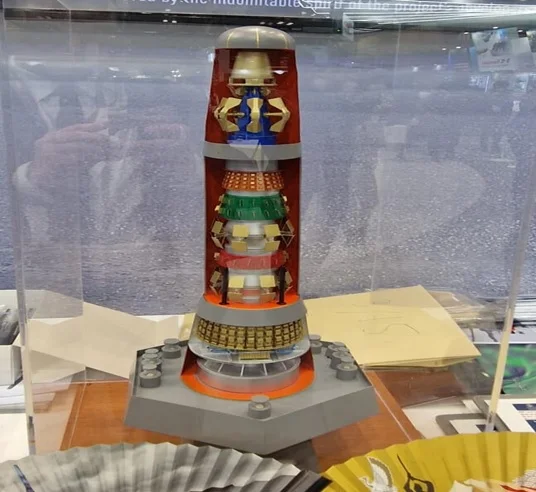
  • The collaboration focuses on the Unified Complex Radio Antenna (UNICORN), also known as NORA-50, an integrated naval mast system developed for modern warships.
  • The agreement was announced during the 16th India–Japan Annual Summit.
  • The project represents a major transition from conventional defence cooperation to joint research, development and technological collaboration.

What Is UNICORN

Parameter

Detail

Full Name

Unified Complex Radio Antenna

Alternative Name

NORA-50 (New Integrated Radio Antenna)

Type

Integrated Naval Mast System

Developed for

Modern Japanese Naval Warships

Primary Function

Integration of multiple communication antennas and electronic systems

Major Objective 

Improve stealth, communication efficiency and operational effectiveness

Strategic Importance 

Supports next-generation network-centric naval operations

How Does the UNICORN System Work ?

  • Traditional warships use several independent antennas for different purposes such as radar communication, satellite communication, electronic warfare, navigation, radio communication and tactical data links. Multiple exposed antennas increase the ship's radar signature and electromagnetic interference. 
  • The UNICORN mast integrates these functions into one compact mast, enabling the ship to perform all communication and surveillance functions while maintaining a much lower radar cross-section. This integrated design also simplifies maintenance, improves electromagnetic compatibility and reduces interference among on-board electronic systems.

Key Features of the UNICORN System

  • Stealth Enhancement: The integrated mast significantly reduces the radar cross-section (RCS) of a warship, making it harder for hostile radar systems to detect and track the vessel.
  • Integrated Communications: Multiple antennas are consolidated into a single mast, allowing seamless communication across different naval platforms.
  • Improved Electronic Warfare Capability: The system supports modern electronic surveillance and communication management while reducing signal interference.
  • Better Space Utilisation: Replacing multiple external antennas with one integrated mast improves the ship's design, reduces weight and enhances operational efficiency.

Why is UNICORN Important for India ?

  • Strengthens indigenous warship programmes
  • Improves naval survivability
  • Supports network-centric warfare
  • Enhances Indo-Pacific maritime capability
  • Deepens technological cooperation

Evolution of India–Japan Defence Relations

Year

Development

Significance

2000

Global Partnership established

Beginning of closer strategic engagement

2008

Joint Declaration on Security Cooperation

First comprehensive security framework between the two countries

2014

Special Strategic and Global Partnership

Defence and maritime cooperation significantly expanded

2015

Invitation to Japan as a permanent participant in Exercise Malabar

Enhanced trilateral naval cooperation with the United States

2020

Acquisition and Cross-Servicing Agreement (ACSA)

Facilitated reciprocal logistics support between the armed forces

2022

Defence cooperation strengthened under the 2+2 framework

Expanded cooperation in defence technology, cyber security and maritime security

2026

First-ever defence co-development project (UNICORN)

Marks the transition from defence cooperation to defence co-development

Significance for India–Japan Defence Relations

  • First Defence Co-development Project
  • Strengthening the Free and Open Indo-Pacific (FOIP)
  • Expanding Defence Industrial Cooperation
  • Complementing Existing Strategic Frameworks

Benefits for India's Defence Industry

Area 

Expected Benefit

Atmanirbhar Bharat

Enhances indigenous capability through technology absorption and domestic manufacturing.

Make in India

Creates opportunities for Indian industries to participate in production, integration and lifecycle support.

Technology Development

Facilitates access to advanced naval communication technologies and system integration expertise.

Employment Generation

Promotes high-skilled jobs in defence manufacturing, electronics and shipbuilding

Innovation Ecosystem

Encourages collaboration among DRDO, shipyards, private industries and academic institutions.

Export Potential

Strengthens India's long-term capability to participate in global defence supply chains.

Naval Modernisation

Supports development of next-generation indigenous warships equipped with advanced integrated mast systems.

Challenges

  • Technology Transfer Limitations: Advanced defence technologies often involve restrictions related to intellectual property, export controls and sensitive military technologies, which may limit the extent of technology sharing.
  • Integration with Indigenous Platforms: Adapting the UNICORN system to India's indigenous warship programmes will require compatibility with existing naval combat management systems, sensors and communication networks.
  • Cost and Production Complexity: Integrated mast systems involve sophisticated electronics, advanced materials and precision manufacturing, making large-scale production technically demanding and financially intensive.
  • Supply Chain Dependencies: Certain specialised electronic components may still require imports, creating vulnerabilities in the supply chain during geopolitical disruptions.
  • Rapid Technological Evolution: Communication technologies continue to evolve rapidly. Sustained investment in research and development will be necessary to ensure that the system remains operationally relevant throughout its service life.

Way Forward

  • Expand Joint Research and Development: Promote collaborative R&D in emerging defence technologies such as artificial intelligence, autonomous systems, cyber security and advanced naval electronics.
  • Strengthen Indigenous Manufacturing: Increase the participation of Indian public and private defence industries in production, integration and future upgrades under the Atmanirbhar Bharat initiative.
  • Develop Future Naval Platforms: Integrate advanced mast technologies into upcoming indigenous destroyers, frigates and other next-generation naval vessels.
  • Enhance Maritime Cooperation: Further expand bilateral naval exercises, information sharing and maritime domain awareness initiatives to improve interoperability between the two navies.
  • Institutionalise Defence Technology Collaboration: Establish long-term mechanisms for joint development, testing and innovation, enabling both countries to undertake future co-development projects in advanced defence technologies.

PYQs / Practice Questions

Prelims

Q. Which of the following correctly describes the significance of the India–Japan UNICORN agreement ?

  1. It is the first defence co-development project between India and Japan.
  2. It focuses on integrated naval communication technology.
  3. It is exclusively intended for submarine operations.

Select the correct answer using the code below:

(a) 1 only

(b) 1 and 2 only

(c) 2 and 3 only

(d) 1, 2 and 3

Mains

Q. “The India–Japan UNICORN project signifies a paradigm shift from defence cooperation to defence co-development." Discuss its significance for India's maritime security, defence indigenisation and the evolving strategic architecture of the Indo-Pacific.

FAQ’s 

Q1. What is UNICORN ?

Ans. UNICORN (Unified Complex Radio Antenna) is an advanced integrated naval mast system that combines multiple communication antennas and associated electronic systems into a single enclosed structure, improving stealth, communication efficiency and operational effectiveness. It is also known as NORA 50.

Q2. Why is the India–Japan UNICORN agreement significant ?

Ans. It is the first-ever defence co-development project between India and Japan, marking a shift from traditional defence cooperation to joint development of advanced military technologies.

Q3. How does UNICORN improve the stealth of a warship ?

Ans. By integrating multiple external communication antennas into a single enclosed mast, UNICORN significantly reduces the ship's Radar Cross Section (RCS), making it more difficult for hostile radar systems to detect and track the vessel.

Q4. What is meant by an Integrated Naval Mast ?

Ans. It is a single enclosed structure that houses multiple communication antennas, sensors and electronic systems, replacing numerous externally mounted antennas to improve stealth and operational efficiency.

Q5. Why is the UNICORN project considered a milestone in India–Japan relations ?

Ans. The project demonstrates deep strategic trust, expands defence industrial cooperation, promotes joint technological innovation and lays the foundation for future collaboration in advanced defence technologies.

Have any Query?

Our support team will be happy to assist you!

OR