
- UPSC Exam
- State PCS
- One Day Exam
- Current Affairs
- PT Quiz
- Downlaods
- About Coaching
- Blog
- Videos

| Prelims: (Defence + CA) Mains: (GS 1 – Ancient Maritime History; GS 3 – Defence, Maritime Security) |
The Indian Navy’s stitched sailing vessel INSV Kaundinya is set to undertake her maiden overseas voyage, marking a significant milestone in showcasing India’s ancient maritime traditions and seafaring heritage through a living naval experiment.
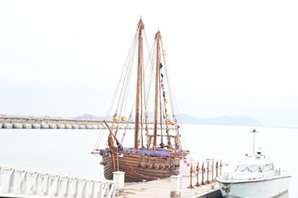
India has a long and rich history of maritime trade and cultural exchange, particularly with Southeast Asia, dating back over two millennia. Ancient Indian ships played a crucial role in the spread of commerce, religion, art, and political ideas across the Indian Ocean region.
Recent years have seen renewed efforts to highlight this heritage as part of India’s maritime diplomacy and cultural soft power, aligning with initiatives such as Project Mausam and the broader Indo-Pacific vision.
INSV Kaundinya represents a fusion of archaeology, traditional craftsmanship, and naval expertise, transforming historical knowledge into a functional seafaring vessel.
A stitched sailing vessel, inspired by a 5th-century ship depiction in Ajanta cave paintings
FAQsQ1. What is INSV Kaundinya ? A stitched sailing vessel of the Indian Navy inspired by ancient Indian shipbuilding traditions. Q2. Why is it called a stitched ship ? Because it is built using stitched joints with coir rope instead of metal nails. Q3. Which historical source inspired its design ? A 5th-century ship depiction from the Ajanta cave paintings. Q4. Who was Kaundinya ? A legendary Indian mariner who founded the Funan kingdom in Southeast Asia. Q5. Why is INSV Kaundinya significant for India ? It showcases India’s ancient maritime heritage and strengthens cultural and maritime diplomacy. |



Our support team will be happy to assist you!


 Contact Us
  New Batch : 9555124124/ 7428085757
  Tech Support : 9555124124/ 7428085757