New
Hindi Medium: (Delhi) - GS Foundation (P+M) : 10th Aug 2026, 3:00 PM Hindi Medium: (Prayagraj) - GS Foundation (P+M) : 18th Aug 2026, 8:00 AM English Medium: (Delhi) - GS Foundation (P+M) : 6th Aug 2026 English Medium: (Prayagraj) - GS Foundation (P+M) : 19th Aug 2026, 11:00 AM Hindi Medium: (Delhi) - GS Foundation (P+M) : 10th Aug 2026, 3:00 PM Hindi Medium: (Prayagraj) - GS Foundation (P+M) : 18th Aug 2026, 8:00 AM English Medium: (Delhi) - GS Foundation (P+M) : 6th Aug 2026 English Medium: (Prayagraj) - GS Foundation (P+M) : 19th Aug 2026, 11:00 AM

ISRO EOS-05 Mission 2026: GSLV-F17, Key Features, Applications and Significance

Prelims : ISRO, EOS-05, GISAT-1A, Earth Observation Satellite, GSLV-F17, Geosynchronous Orbit, Cryogenic Upper Stage, Satish Dhawan Space Centre, Sriharikota, Disaster Management, Remote Sensing.
Mains – GS Paper III: Space Technology, Earth Observation, Remote Sensing, Disaster Management, Environmental Monitoring, Indigenous Space Technology, Geospatial Technology, Space-based Applications, Science and Technology, ISRO.
Keywords: ISRO EOS-05, GISAT-1A, GSLV-F17, EOS-05 Launch 2026, Earth Observation Satellite, Geosynchronous Orbit, Cryogenic Upper Stage, Sriharikota, Satish Dhawan Space Centre, Remote Sensing, Disaster Management, Environmental Monitoring, Space Technology, ISRO Mission 2026.

Why in News?

  • ISRO is set to launch the EOS-05 (GISAT-1A) Earth Observation Satellite aboard the GSLV-F17 rocket on September 4, 2026. 

Key Points

  • The mission aims to strengthen India’s Earth-observation and high-resolution imaging capabilities. 
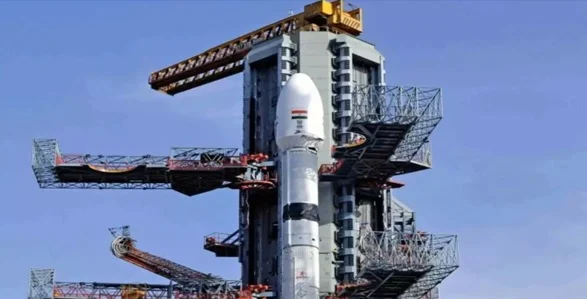
  • Ahead of the launch, GSLV-F17 has been moved to the Second Launch Pad at Satish Dhawan Space Centre, Sriharikota.
  • The launch schedule may change due to weather, technical checks or operational requirements

What is EOS-05?

  • EOS-05 (GISAT-1A) is an advanced Earth Observation Satellite developed by ISRO. 
  • It is designed to provide high-resolution images of the Indian subcontinent and surrounding regions. 
  • Its frequent imaging capability will help monitor rapidly changing events. 
  • It can support disaster management, environmental monitoring and Earth observation.

What is Special About EOS-05?

  • EOS-05 will be India’s first imaging satellite from geosynchronous orbit. 
  • It can provide frequent images of a large geographical area, especially the Indian subcontinent. 
  • This capability will help track rapidly changing events more effectively. 
  • It can be useful for monitoring cyclones, floods, forest fires and other disasters.

Major Applications of EOS-05

  • Disaster Management: Monitoring cyclones, floods and other natural disasters. 
  • Forest Fire Monitoring: Early observation and tracking of forest fires. 
  • Environmental Monitoring: Tracking environmental and ecological changes. 
  • Land & Vegetation: Observing changes in land use and vegetation. 
  • Rapid Event Monitoring: Providing frequent images to track quickly changing events over large areas. 

What is GSLV-F17?

  • GSLV-F17 is a mission of ISRO’s Geosynchronous Satellite Launch Vehicle (GSLV). 
  • It will be the 19th flight of GSLV
  • It will carry the EOS-05 (GISAT-1A) Earth Observation Satellite. 
  • The satellite will initially be placed into a Sub-Geosynchronous Transfer Orbit (Sub-GTO). 
  • GSLV uses an indigenously developed cryogenic upper stage, enabling India to launch heavier satellites into higher orbits.

What is a Geosynchronous Orbit?

  • A Geosynchronous Orbit (GSO) is an orbit where a satellite takes about 24 hours to complete one revolution around the Earth. 
  • Its orbital period is nearly equal to the Earth’s rotation period. 
  • This allows the satellite to frequently observe the same broad region of the Earth. 
  • It is useful for communication, weather monitoring and Earth observation.

GISAT-1 and EOS-05

  • GISAT-1, later renamed EOS-03, was an earlier ISRO Earth Observation mission. 
  • It was launched aboard GSLV-F10 in August 2021. 
  • The mission was unsuccessful because the cryogenic upper stage could not ignite due to a technical anomaly. 
  • EOS-05 (GISAT-1A) is a renewed effort to strengthen India’s geosynchronous Earth-imaging capability. 

Significance of EOS-05 Mission

  • Better Earth Observation: Provides frequent images of the Indian subcontinent. 
  • Disaster Management: Helps monitor cyclones, floods, forest fires and other disasters. 
  • Environmental Monitoring: Supports tracking of land, vegetation and environmental changes. 
  • Near-Real-Time Monitoring: Helps observe and track rapidly changing events. 
  • Space Capabilities: Strengthens India’s capabilities in satellite technology, Earth observation and space missions.

Conclusion

The EOS-05 (GISAT-1A) mission is an important step in strengthening India’s Earth-observation capabilities. Its frequent imaging can support disaster management, environmental monitoring and rapid observation of changing events. A successful GSLV-F17 launch will further enhance India’s indigenous space capabilities.

Prelims Practice Question

1. EOS-05, recently in the news, is related to which of the following?

A. Navigation
B. Earth Observation
C. Human Spaceflight
D. Lunar Exploration

Mains Practice Question

Discuss the importance of Earth Observation Satellites in disaster management, environmental monitoring and sustainable development in India.

FAQs

1. What is EOS-05?

EOS-05 is an Earth Observation Satellite developed by ISRO.

2. What is another name for EOS-05?

EOS-05 is also known as GISAT-1A.

3. When is EOS-05 scheduled to launch?

It is scheduled for September 4, 2026.

4. Which rocket will launch EOS-05?

The satellite will be launched aboard GSLV-F17.

5. Where will EOS-05 be launched from?

It will be launched from the Second Launch Pad at Satish Dhawan Space Centre, Sriharikota.

Have any Query?

Our support team will be happy to assist you!

OR