Prelims: (Polity + Geography + CA)
Mains: (GS 2 – Polity, Constitution; GS Paper 3 – Internal Security) |
Why in News ?
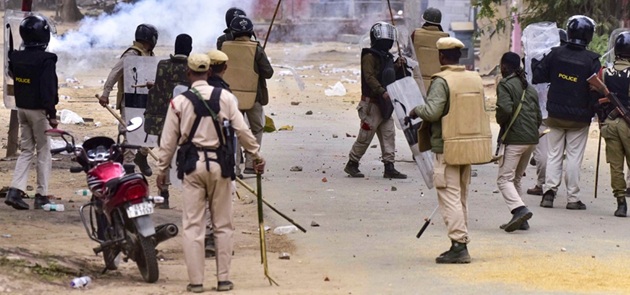
Fresh violence erupted in West Karbi Anglong district of Assam, resulting in two deaths, multiple injuries, arson of shops and markets, suspension of mobile internet services, and imposition of prohibitory orders.
The violence is rooted in long-standing land disputes, particularly over alleged encroachments on Professional Grazing Reserve (PGR) and Village Grazing Reserve (VGR) lands under the jurisdiction of the Karbi Anglong Autonomous Council (KAAC).
Background & Context
Karbi Anglong and West Karbi Anglong are tribal-majority hill districts governed under the Sixth Schedule of the Constitution, which provides autonomous councils to safeguard tribal identity, land, and customary practices.
Over decades, demographic pressures, migration, and weak land governance have created friction between indigenous Karbi tribes and non-tribal settlers, particularly over land reserved for traditional livelihoods.
The issue has periodically erupted into unrest, reflecting the structural challenges of balancing tribal autonomy with constitutional rights of settlers.
Immediate Trigger of the Violence
Hunger Strike Over Grazing Lands
- For over two weeks, nine Karbi protesters were on a fast unto death at Phelangpi in West Karbi Anglong.
- Demand:
- Eviction of alleged encroachers from PGR and VGR lands.
- Grazing reserves:
- Date back to colonial land policies.
- Are critical for livestock-based tribal livelihoods.
Perception of Arrest
- Protesters were shifted to Guwahati for medical treatment.
- Locals believed they had been arrested, triggering:
- Stone-pelting
- Arson
- Escalation into widespread ethnic violence
Sixth Schedule and Karbi Anglong Governance
- The Sixth Schedule provides autonomous governance to tribal areas in Assam, Meghalaya, Mizoram, and Tripura.
- Karbi Anglong Autonomous Council (KAAC) has powers over:
- Land management
- Forests (excluding reserved forests)
- Local governance and customary laws
- Objective:
- Protection of tribal land rights
- Preservation of ethnic identity and culture
History of Insurgency in Karbi Anglong
- Since the late 1980s, Karbi insurgent groups have operated in the region.
- Initial demand:
- Later moderated to:
- Greater autonomy and empowerment of KAAC
- Legacy of insurgency has:
- Deepened suspicion of “outsiders”
- Reinforced ethnic mobilisation around land and identity
The Land Question: PGR and VGR Lands
Encroachment vs Settlement Claims
- Karbi tribal bodies allege large-scale illegal settlements on grazing reserve lands.
- Settlers (including Biharis, Bengalis, Nepalis) claim:
- Residence for several decades
- Demand regularisation of land rights
Official Data
- KAAC identified:
- 1,983 encroaching families in Hawaipur mouza
- 103 families in Phuloni circle
Political Flashpoint
- Protests intensified after a Bihari Nonia community organisation submitted a memorandum to the President of India, seeking:
- Legalisation of settlers on grazing lands
- Karbi groups perceived this as:
- A dilution of Sixth Schedule protections
- A threat to tribal land security
Legal Constraints on Evictions
- KAAC issued 15-day eviction notices to alleged encroachers.
- Eviction drive stalled due to:
- A Public Interest Litigation (PIL) pending before the Gauhati High Court
- Authorities cited:
- Risk of contempt of court if evictions proceeded during judicial consideration
Challenges and Way Ahead
Key Challenges
- Conflict between:
- Customary tribal land rights
- Settlers’ claims of long-term residence
- Weak enforcement and legal ambiguity under the Sixth Schedule
- Judicial delays in land-related disputes
- Deep mistrust between:
- Local communities
- Autonomous councils
- State administration
- Risk of ethnic polarisation and spillover violence
Way Forward
- Transparent rehabilitation or relocation policy for long-settled non-tribal populations
- Legal clarity on:
- Status and protection of PGR and VGR lands
- Strengthening:
- Institutional capacity of KAAC
- Conflict resolution mechanisms
- Time-bound judicial resolution of PILs involving land disputes
- Dialogue-based approach involving:
- Tribal bodies
- Settler representatives
- State authorities
- Deployment of:
- Early warning systems
- Community policing to prevent escalation
FAQs
Q1. What triggered the recent violence in Karbi Anglong ?
The perceived arrest of hunger-striking protesters demanding eviction of encroachers from grazing reserve lands.
Q2. What is the Sixth Schedule of the Constitution ?
It provides autonomous governance to tribal areas to protect land, culture, and customary practices.
Q3. What are PGR and VGR lands ?
Professional and Village Grazing Reserves reserved for livestock grazing, especially for tribal livelihoods.
Q4. Why are evictions legally constrained ?
Due to a PIL pending in the Gauhati High Court, restricting administrative action.
Q5. Why is Karbi Anglong prone to ethnic tensions ?
Due to historical insurgency, land disputes, migration pressures, and weak land governance mechanisms.
|






 Contact Us
  New Batch : 9555124124/ 7428085757
  Tech Support : 9555124124/ 7428085757