Recently, Indian marine researchers discovered a new species of squat lobster near the Lakshadweep Islands coral reef ecosystem. The species has been scientifically named Leiogalathea samudragiri. This discovery is important because Lakshadweep is a sensitive and under-explored marine biodiversity hotspot, especially for reef-dwelling crustaceans.
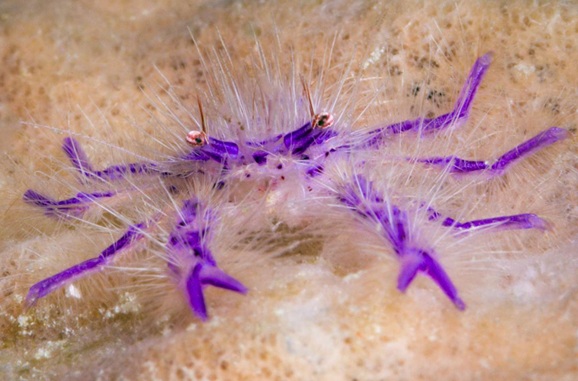
What is Leiogalathea samudragiri ?
Leiogalathea samudragiri is a new species of squat lobster, a marine crustacean that resembles a small lobster but is not a true lobster.
Key characteristics of the discovery
- Member of the squat lobster group (closer to hermit crabs than true lobsters)
- Found in Lakshadweep coastal coral reef region
- Lives in deep or reef-associated marine habitats
- Small sized, flattened body with large forward claws
- Adds a new species to India’s marine biodiversity record
- Indicates unexplored biodiversity in island ecosystems
What are Squat Lobsters ?
Squat lobsters are marine crustaceans that look like miniature lobsters, but biologically they belong to a different evolutionary branch.
Taxonomic relationship
- Closely related to: hermit crabs and porcelain crabs
- Distantly related to: true lobsters
Physical and Behavioral Features
- Abdomen folded beneath thorax → body looks short and thick
- Long front claws (chelae)
- Often bright red, orange, or spotted — camouflage among corals
- Escape by rapidly flicking tail backward
- Live under rocks, inside reefs, and on deep-sea floor
Distribution
- Found in all major oceans worldwide
- Occur from shallow reefs to deep sea
- Highest diversity in tropical waters
- Therefore, Lakshadweep reefs are significant biodiversity zones
Importance
Ecological importance
- Important component of marine food chains
- Indicator species for coral reef ecosystem health
- Help recycle organic matter on sea floor
Scientific importance
- Discovery of new species helps in:
- Climate change studies
- Marine conservation planning
- Understanding deep-sea biodiversity





 Contact Us
  New Batch : 9555124124/ 7428085757
  Tech Support : 9555124124/ 7428085757