
- UPSC Exam
- State PCS
- One Day Exam
- Current Affairs
- PT Quiz
- Downlaods
- About Coaching
- Blog
- Videos

| Prelims : (Economy + CA) Mains : (GS-3 – Indian Economy, Agriculture, Fiscal Policy, Banking Sector) |
The Government of Maharashtra recently announced a ₹35,000 crore farm loan waiver scheme, reviving concerns over its impact on credit discipline and state finances.
The scheme includes :
While the state government maintains that its fiscal position is strong enough to bear the cost, economists and institutions such as the Reserve Bank of India have warned that frequent farm loan waivers can weaken credit culture and strain public finances.
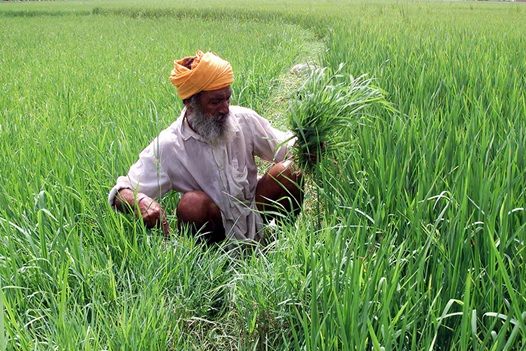
Farm loan waivers are government programmes that cancel or reduce the outstanding agricultural loans owed by farmers to financial institutions.
These measures are typically introduced during periods of :
The primary goal is to reduce farmers’ debt burden, enabling them to restart agricultural activities and restore financial stability.
However, over time, farm loan waivers have become controversial because of their fiscal costs and long-term impact on credit discipline.
Farm loan waivers have expanded significantly in recent decades, particularly since 2014–15, with several states introducing their own schemes.
According to estimates cited by the Reserve Bank of India, both the Central and State governments together have spent around ₹3 lakh crore on farm loan waivers over the past 35 years.
These programmes aim to provide temporary relief to farmers facing financial distress, but economists argue that they do not address the structural causes of agrarian crises.
Farm loan waivers are often associated with electoral politics.
An Internal Working Group (2019) of the Reserve Bank of India observed that many waivers were announced close to elections.
Examples include :
This trend has led to concerns that loan waivers may be used as short-term political tools rather than long-term agricultural reforms.
The first nationwide farm loan waiver programme was introduced in 1990.
Key features :
The scheme cost about ₹10,000 crore, equivalent to roughly ₹50,600 crore at 2016–17 prices.
The second nationwide farm loan waiver programme was launched in 2008.
The programme cost about ₹52,500 crore, equivalent to approximately ₹81,200 crore at 2016–17 prices.
Since 2014–15, several states have introduced major farm loan waiver schemes.
According to the Reserve Bank of India, about 10 states have collectively announced waivers worth ₹2.4 lakh crore, equivalent to around 1.4% of India’s GDP (2016–17 prices).
Some notable examples include :
These schemes have created significant fiscal obligations for state governments.
Farm loan waivers impose substantial financial burdens on state budgets.
Typically, the cost of waivers is spread over three to five years through :
The fiscal burden varies between states, ranging from 0.1% to 1.8% of Gross State Domestic Product (GSDP).
Such expenditures can limit fiscal space available for developmental programmes.
Research by the Reserve Bank of India indicates that farm loan waivers may temporarily slow the growth of agricultural credit.
However, repeated waivers may reduce incentives for farmers to repay loans regularly.
The Reserve Bank of India has consistently expressed concerns about loan waivers.
High levels of Non-Performing Assets (NPAs) in the agricultural sector reflect these issues.
Agricultural NPAs were estimated at around 8.44% as of March 2019.
Prominent economists and former RBI Governors have criticised the practice of frequent loan waivers.
He argued that loan waivers often benefit only those farmers who already have access to formal banking credit, leaving the most vulnerable farmers—who depend on informal lenders—outside the system.
He warned that repeated waivers undermine credit discipline and discourage borrowers from maintaining good repayment records.
One of the major criticisms of loan waivers is their opportunity cost.
Large public funds spent on waivers could instead be invested in :
Such investments may provide more sustainable long-term benefits for the agricultural sector.
According to a research report by State Bank of India, the impact of loan waivers has often been limited.
Key findings include :
Experts suggest that income support programmes may be more effective than loan waivers.
With an expenditure similar to waiver schemes (around ₹50,000 crore), income support programmes could benefit a larger number of farmers and provide stable financial assistance.
Policies should therefore focus on :
These measures could address the structural causes of agricultural distress more effectively.
Frequent loan waivers can strain government finances and increase fiscal deficits.
Repeated waivers may weaken repayment culture among borrowers and discourage banks from lending to the agricultural sector.
Loan waivers highlight the intersection of economic policy and electoral politics in India.
The debate underscores the need for long-term reforms to improve farmers’ incomes and resilience.
High agricultural NPAs and reduced credit flow can affect the health of the banking system.
FAQs1. What is a farm loan waiver ? A farm loan waiver is a government policy that cancels or reduces the outstanding agricultural loans owed by farmers to banks or financial institutions. 2. Which were the two nationwide farm loan waivers in India ? The two major national schemes were the Agriculture and Rural Debt Relief Scheme (1990) and the Agricultural Debt Waiver and Debt Relief Scheme (2008). 3. Why does the RBI oppose frequent loan waivers ? The Reserve Bank of India argues that waivers weaken credit discipline and encourage borrowers to delay repayments in expectation of future relief. 4. What is the fiscal impact of farm loan waivers ? Loan waivers impose large financial burdens on government budgets and may limit funds available for infrastructure and agricultural development. 5. What alternatives to farm loan waivers are suggested by experts ? Experts recommend income support schemes, agricultural infrastructure investments, improved irrigation, crop insurance, and better market access as more sustainable solutions to farmers’ distress. |



Our support team will be happy to assist you!

 Contact Us
  New Batch : 9555124124/ 7428085757
  Tech Support : 9555124124/ 7428085757