
- UPSC Exam
- State PCS
- One Day Exam
- Current Affairs
- PT Quiz
- Downlaods
- About Coaching
- Blog
- Videos

The Ministry of Home Affairs (MHA) has issued new national security guidelines for setting up solar, wind and hybrid renewable energy projects in border areas.
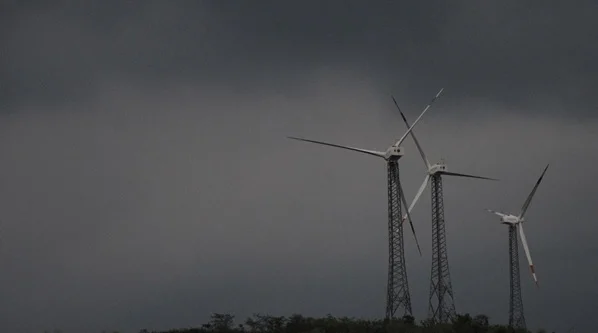
The first 1 kilometre from the International Border, LoC and LAC has been designated as a Restricted Area.
No project activity related to the following will be permitted in this zone:
The provision aims to prevent infrastructure development from creating potential security vulnerabilities close to sensitive borders.
All solar, wind and hybrid renewable energy projects proposed within 50 km of the International Border, LoC or LAC will require security clearance from the MHA.
|
Distance from Border |
Requirement |
|
0–1 km |
Project activity prohibited |
|
1–20 km |
MHA Security Clearance + MoD NOC |
|
20–50 km |
MHA Security Clearance |
|
Beyond 50 km |
No special clearance under these guidelines |
Projects proposed between 1 km and 20 km from the border will require:
Both approvals will be assessed on a case-by-case basis.
State Government
↓
In-principle Land Allotment
↓
Ministry of New and Renewable Energy (MNRE)
↓
MHA → Security Clearance
MoD → NOC, wherever applicable
Project developers will not be permitted to transfer project land to a foreign company without:
This provision is intended to safeguard strategic land and infrastructure in sensitive border regions.
Renewable energy projects in the regulated border zone will be required to establish comprehensive security infrastructure.
This includes anti-drone systems.
Such systems are expected to be operated by:
The cost of the security infrastructure will be borne by the project developer.
Developers will be required to ensure strict monitoring and verification of:
Foreign nationals entering project areas will also be monitored.Project personnel will have to comply with directions issued by local police and border security agencies.
Roads constructed within renewable energy project areas should be designed so that they can be used by:
Large solar and wind installations can become strategically important infrastructure. Their security is particularly important in border areas.
Restrictions on personnel from China, Pakistan and Bangladesh help regulate foreign access to sensitive infrastructure.
Drones can be used for surveillance, smuggling and hostile activities along border areas. Anti-drone systems can strengthen project security.
Designing project roads for possible use by defence and border forces creates dual-use infrastructure.
Restrictions on transferring project land to foreign companies help maintain government oversight over strategically sensitive land.
Prelims MCQsWith reference to India's new guidelines for renewable energy projects in border areas, consider the following statements:
Which of the statements given above are correct? A. Only 1 and 2 Mains Practice Question“The expansion of renewable energy infrastructure in border areas must be balanced with national security considerations.” Discuss in the context of the Ministry of Home Affairs’ new guidelines. |
1. Which ministry issued the new guidelines?The Ministry of Home Affairs (MHA) issued the national security guidelines for solar, wind 2. Within what distance are renewable energy projects prohibited?Project activity is prohibited within 1 km of the International Border, LoC and LAC. 3. Up to what distance is MHA security clearance required?Projects proposed within 50 km of the International Border, LoC and LAC require MHA security clearance. 4. What is the role of the Ministry of Defence?Projects located between 1 km and 20 km from the border require a MoD NOC, in addition to the applicable MHA security clearance. 5. Why are these guidelines important for UPSC?The issue connects Internal Security, Renewable Energy, Energy Security, Border Management, Critical Infrastructure and Infrastructure Planning, making it relevant to GS Paper II and GS Paper III, as well as Prelims. |

Our support team will be happy to assist you!

 Contact Us
  New Batch : 9555124124/ 7428085757
  Tech Support : 9555124124/ 7428085757