Dr. Ambareesh Ghosh of the Indian Institute of Science (IISc), Bengaluru, has been awarded the prestigious New York Academy of Sciences-Tata Sons Transformation Prize for the year 2025. He received this honor for developing magnetic nanobots for targeted cancer therapy, signaling the beginning of a new era in medicine.
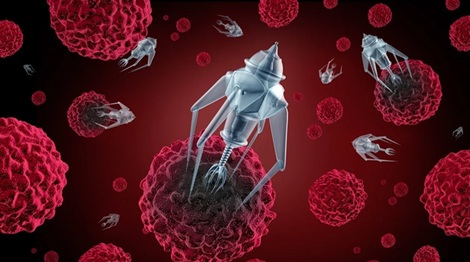
What are nanobots ?
- Nanobots are microscopic machines built on the nanometer scale, designed to reach areas within the human body that conventional drugs or surgical instruments cannot reach.
- They are particularly effective in diagnosing and treating internal tumors and hard-to-reach tissues.
Working Methods
- These nanobots are "nanoswimmers" with a bacterial-inspired helical structure that moves like a propeller or corkscrew.
- Their iron component allows them to be precisely guided through blood flow and dense tissues with the help of an external magnetic field.
- These nanobots are coated with drugs so they reach cancer cells directly without affecting healthy cells.
- These nanobots can generate localized heat of over 42°C under the influence of the magnetic field, killing cancer cells.
Key Features and Benefits
- This technology preferentially targets cancer cells, reducing the side effects of treatments like chemotherapy.
- These nanobots are able to reach dense tumors where blood vessels are scarce and are not visible in normal scans.
- They simultaneously function as drug carriers, treatment agents, and imaging beacons (for MRI).
- They are made of biocompatible materials such as silica and iron, which are considered safe for medical use.
- They have been successfully tested in the treatment of breast and ovarian cancer, as well as dental infections.
Challenges
- Currently, this technology has been successful primarily in lab (cell culture) and animal models; human clinical trials are awaited.
- Extensive validation and regulatory approval are needed to ensure complete safety for the human body.
- Its future success will depend on large-scale production costs, affordability, and acceptance by doctors.






 Contact Us
  New Batch : 9555124124/ 7428085757
  Tech Support : 9555124124/ 7428085757