New
Hindi Medium: (Delhi) - GS Foundation (P+M) : 21st Sept. 2026, 11:30 AM Hindi Medium: (Prayagraj) - GS Foundation (P+M) : 22nd Sept. 2026, 8:00 AM English Medium: (Delhi) - GS Foundation (P+M) : 6th Aug 2026 English Medium: (Prayagraj) - GS Foundation (P+M) : 19th Aug 2026, 11:00 AM Hindi Medium: (Delhi) - GS Foundation (P+M) : 21st Sept. 2026, 11:30 AM Hindi Medium: (Prayagraj) - GS Foundation (P+M) : 22nd Sept. 2026, 8:00 AM English Medium: (Delhi) - GS Foundation (P+M) : 6th Aug 2026 English Medium: (Prayagraj) - GS Foundation (P+M) : 19th Aug 2026, 11:00 AM

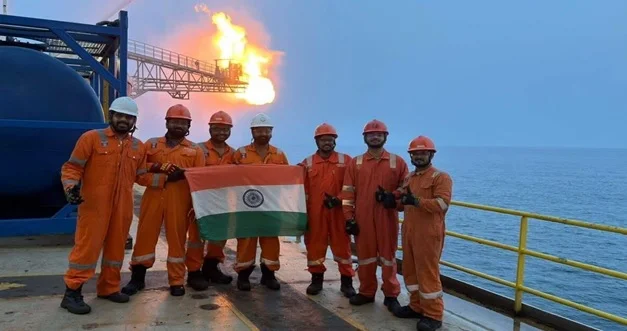
ONGC’s Mahanadi Gas Discovery: Key Details, Significance and India’s Energy Security

Prelims: Mahanadi Offshore Basin, ONGC, natural gas, Samudra Manthan initiative and offshore exploration.
Mains: GS Paper III—Energy infrastructure, resource mobilisation, domestic hydrocarbon production and environmental sustainability.

Why in News?

  • The Oil and Natural Gas Corporation (ONGC) discovered natural gas on September 18, 2026, in the MN-DW18-1-H-D exploratory well in the Mahanadi Offshore Basin, approximately 43 km off the Konark coast in Odisha.
  • The well has recorded encouraging gas flow and sustained reservoir pressure. However, further appraisal and commercial evaluation are required to establish the discovery’s size and economic viability.

Background

  • ONGC began deepwater exploration in the Mahanadi Basin’s MN-DWN-98/3 block in 2006. Subsequent exploration, including the Utkal and Konark discoveries, strengthened interest in the basin’s hydrocarbon potential.
  • The latest discovery comes from the maiden well of ONGC’s current deepwater campaign in the basin under the Samudra Manthan initiative. This should not be confused with ONGC’s first-ever exploratory well in the Mahanadi Basin.
  • The initiative supports exploration of offshore hydrocarbon resources to strengthen India’s domestic energy supply.

Key Points of the Discovery

Parameter

Details

Organisation

Oil and Natural Gas Corporation (ONGC)

Basin

Mahanadi Offshore Basin

Location

About 43 km off Konark, Odisha

Sea

Bay of Bengal

Exploratory well

MN-DW18-1-H-D

Discovery date

September 18, 2026

Reported target drilling depth

1,623 metres

Gas-bearing interval

1,441–1,452 metres

Drillship

Platinum Explorer

Current status

Gas discovered; appraisal and commercial evaluation pending

Drilling and Initial Results

  • The well was spudded, meaning drilling commenced, on July 25, 2026. It reached a reported target depth of 1,623 metres and encountered gas within an 11-metre interval.
  • These figures describe reported well depths; they should not be presented as the sea’s water depth. Initial gas flow and reservoir pressure are encouraging indicators, but they do not independently establish commercially recoverable reserves.

Potential for Shared Development

  • According to ONGC, the discovery could be evaluated alongside other nearby finds for development through shared facilities under the Petroleum and Natural Gas Rules, 2025.
  • Common production, processing and transportation infrastructure could reduce duplication and improve project economics. The actual development model will depend on appraisal results and technical feasibility.

About the Mahanadi Offshore Basin

  • The Mahanadi Offshore Basin lies along India’s eastern continental margin in the Bay of Bengal, off Odisha. It forms part of the sedimentary region associated with the Mahanadi river system.
  • Sedimentary basins can contain the geological conditions needed for hydrocarbons to form, migrate and accumulate. However, exploration must establish the presence of suitable reservoirs and commercially producible deposits.

Significance of the Discovery

  • Expands exploration prospects: The find strengthens evidence of gas potential in the Mahanadi Offshore Basin and can guide further exploration.
  • Possible development advantage: Relative proximity to the coast could support future gas transportation and onshore integration, subject to engineering and economic assessment.
  • Scope for coordinated development: Assessing nearby discoveries together could make shared infrastructure more practical.
  • Builds offshore capability: Exploration provides geological information and operational experience for future deepwater projects.

Relevance for India

  • Energy Security: If commercially developed, the discovery could supplement domestic gas production and reduce part of India’s requirement for imported liquefied natural gas. Its contribution cannot yet be quantified because recoverable volumes and production rates have not been established.
  • Industrial and Regional Development: Future production could support gas-consuming industries and energy infrastructure in eastern India. Potential benefits include demand for engineering, logistics and maintenance services, depending on the scale and design of development.
  • More Efficient Use of Infrastructure: Shared facilities can distribute development costs across several discoveries. This may improve the viability of deposits that would be expensive to develop independently.

Challenges

  1. Uncertain commercial viability: Appraisal must determine reservoir extent, gas quality, recoverable volumes and sustainable production rates.
  2. High development costs: Offshore drilling, subsea equipment, processing and transportation require substantial investment.
  3. Infrastructure requirements: Distance from shore alone does not guarantee rapid production; suitable landing points, pipelines and market connections are also necessary.
  4. Environmental and operational risks: Offshore development must address marine ecosystems, fisheries, severe weather and accident preparedness.
  5. Methane management: Gas projects require effective leak detection and control to limit their climate impact.

Way Forward

  • Complete appraisal: Undertake additional testing and geological assessment before estimating the discovery’s commercial value.
  • Evaluate integrated development: Compare standalone development with shared production, processing and transportation options.
  • Establish market connectivity: Assess pipeline requirements, potential buyers and demand before committing to production infrastructure.
  • Maintain environmental safeguards: Integrate marine protection, methane monitoring and emergency preparedness into project planning.
  • Communicate clearly: Distinguish between a gas discovery, estimated resources, commercially recoverable reserves and actual production.

Prelims Practice Questions

Q. The Mahanadi Offshore Basin, recently in the news for a natural gas discovery, is located in:

(a) Arabian Sea off Gujarat
(b) Bay of Bengal off Odisha
(c) Indian Ocean south of Kerala
(d) Gulf of Kachchh

Mains Practice Question

“Offshore hydrocarbon discoveries can strengthen India’s energy security, but converting geological potential into commercial production remains challenging.” Discuss with reference to ONGC’s Mahanadi Basin gas discovery.

Frequently Asked Questions (FAQs)

1. Where has ONGC discovered natural gas?

ONGC discovered gas in the Mahanadi Offshore Basin, approximately 43 km off the Konark coast in Odisha, in the Bay of Bengal.

2. Which well recorded the discovery?

The discovery was made in the MN-DW18-1-H-D exploratory well on September 18, 2026.

3. At what depth was gas encountered?

Gas was encountered in the reported well-depth interval of 1,441–1,452 metres. The well’s reported target depth was 1,623 metres.

4. Has commercial production started?

Commercial production has not been established in the reported announcement. ONGC must complete further appraisal and commercial evaluation before determining development prospects.

5. Why is the discovery important for India?

It strengthens the Mahanadi Basin’s exploration prospects and could contribute to domestic gas supply if commercially developed. Its eventual contribution will depend on recoverable volumes, costs and infrastructure.

Have any Query?

Our support team will be happy to assist you!

OR