Osteoporosis is a degenerative bone disorder in which bones become thin, weak, and fragile, increasing the risk of fractures even after minor injuries or falls. It is often called the “Silent Disease” because early stages usually show no obvious symptoms.
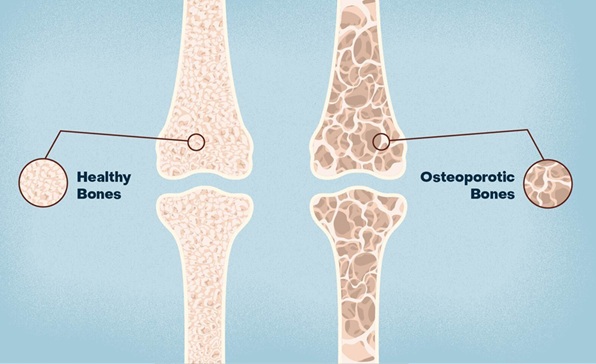
It occurs more commonly in:
- Elderly people
- Post-menopausal women
- Individuals with calcium and vitamin-D deficiency
With a rapidly ageing population, osteoporosis is becoming a major public-health concern in India and worldwide.
Normal Bone Remodeling
Bones are not static — they constantly break down and rebuild.
|
Cell Type
|
Function
|
|
Osteoclasts
|
Break down old bone
|
|
Osteoblasts
|
Form new bone
|
When bone breakdown exceeds bone formation, bone density decreases → Osteoporosis develops
Osteoporosis Causes
(A) Biological Causes
- Ageing
- Estrogen deficiency after menopause
- Hormonal imbalance (thyroid, parathyroid)
- Genetic predisposition
(B) Nutritional Causes
- Calcium deficiency
- Vitamin-D deficiency
- Protein deficiency
(C) Lifestyle Causes
- Smoking
- Alcohol consumption
- Physical inactivity
- Lack of sunlight exposure
(D) Medical Causes
- Long-term steroid use
- Kidney or liver disease
- Rheumatoid arthritis
Osteoporosis Symptoms
Usually absent in early stages. Later symptoms include:
- Chronic back pain (vertebral compression)
- Loss of height
- Stooped posture (Dowager’s hump)
- Fractures after minor trauma
Common fracture sites:
- Hip
- Spine (vertebrae)
- Wrist
Osteoporosis Diagnosis
|
Test
|
Purpose
|
|
DEXA Scan
|
Most reliable measurement of bone mineral density
|
|
X-ray
|
Detect fractures
|
|
Blood tests
|
Calcium & Vitamin-D levels
|
Osteoporosis Treatment
(i) Lifestyle Modification
- Regular weight-bearing exercise (walking, jogging, climbing stairs)
- Sunlight exposure
- Balanced diet
(ii) Nutrition
- Calcium supplements
- Vitamin-D supplementation
(iii) Medications
- Bisphosphonates (reduce bone breakdown)
- Hormone replacement therapy
- Monoclonal antibody – Denosumab
Latest Scientific Research: The “Exercise Sensor” Protein Piezo1
Scientists at the University of Hong Kong discovered how the body senses exercise and strengthens bones.
Study Basis
Research performed on Bone Marrow Mesenchymal Stem Cells (BMMSC)
These cells can become:
- Osteoblasts (bone-forming cells)
- Adipocytes (fat cells)
Role of Piezo1 Protein
- A mechanical sensor protein
- Detects movement and pressure on bones
When activated:
- Increases bone formation
- Reduces fat accumulation in bone marrow
Experimental Findings (in mice)
Removing Piezo1 resulted in:
- Reduced bone density
- Increased fat cells
- Loss of exercise benefits
Future Significance
Researchers believe future medicines may:
Mimic exercise signals in the body — potentially strengthening bones even without physical activity.
Socio-Economic Importance
- Rising elderly population
- Fractures → disability → healthcare burden
- Higher risk among women in India
- Linked with the concept of Healthy Ageing
Challenges
- Low awareness in rural populations
- Malnutrition
- Expensive diagnostic tests
- Safety concerns of new therapies (Piezo1 affects multiple body systems)






 Contact Us
  New Batch : 9555124124/ 7428085757
  Tech Support : 9555124124/ 7428085757