Prelims: (Art & Culture + International Relations + CA)
Mains: (GS 1 – Indian Culture; GS 2 – Bilateral Relations; GS 3 – Conservation of Heritage) |
Why in News ?
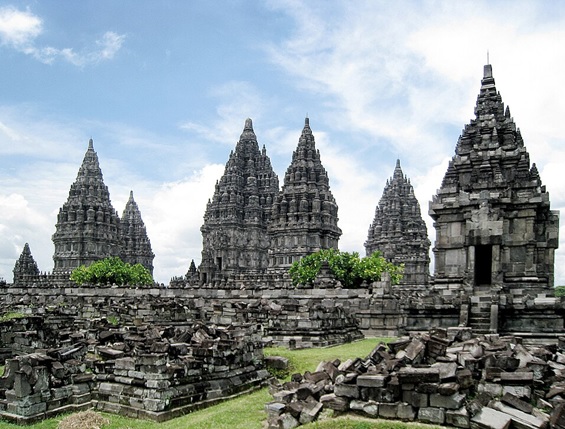
India and Indonesia have partnered for the restoration of the Prambanan Temple complex in the Special Region of Yogyakarta, highlighting shared cultural heritage and strengthening bilateral ties.
Background and Context
India and Southeast Asia share deep historical and cultural linkages rooted in ancient trade, religion, and cultural exchanges, particularly the spread of Hinduism and Buddhism.
Indonesia, despite being a Muslim-majority nation today, retains strong imprints of Indic civilisation, visible in its temples, art, and traditions.
In recent years, India has emphasised cultural diplomacy through initiatives like Act East Policy, aiming to strengthen ties with ASEAN countries.
The restoration of Prambanan Temple reflects:
- India’s role in global heritage conservation
- Revival of civilisational connections
- Promotion of soft power diplomacy
About Prambanan Temple
- Located in Sleman, Yogyakarta (Southern Java, Indonesia)
- Largest Hindu temple complex in Indonesia
- Locally known as Roro Jonggrang (Temple of the Slender Virgin)
- Built in the 9th century by the Sanjaya Dynasty
Religious Significance
- Dedicated to the Hindu Trimurti:
- Shiva (Destroyer)
- Vishnu (Preserver)
- Brahma (Creator)
- Central temple is dedicated to Lord Shiva, making it the most prominent structure
Architectural Features
- Built in classical Javanese Hindu architecture style
- Characterised by:
- Tall and pointed temple spires (shikharas)
- Intricate stone carvings depicting:
- Ramayana and other Hindu epics
- Temple complex consists of:
- Multiple shrines
- Mandapas and courtyards
Historical Evolution
1. Construction Phase (9th Century)
- Built during the rule of the Sanjaya dynasty
- Symbolised revival of Hinduism in Java
2. Decline and Abandonment
- Gradual decline due to:
- Political shifts
- Natural disasters (earthquakes, volcanic activity)
- Temple was eventually buried and forgotten
3. Rediscovery (19th Century)
- Rediscovered during colonial period
- Initial restoration efforts began
4. Global Recognition (1991)
- Declared a UNESCO World Heritage Site
- Recognised for:
- Cultural significance
- Architectural excellence
India–Indonesia Restoration Partnership
- Joint initiative for:
- Conservation and restoration of temple structures
- Preservation of carvings and heritage elements
- Focus areas:
- Structural stability
- Conservation of art and architecture
- Capacity building and knowledge exchange
- Reflects growing strategic and cultural cooperation between the two nations
Significance of the Initiative
1. Strengthening Bilateral Relations
- Enhances India–Indonesia ties through cultural diplomacy
- Reinforces shared civilisational heritage
2. Promotion of Cultural Diplomacy
- Expands India’s soft power influence globally
- Showcases India’s expertise in heritage conservation
3. Preservation of Global Heritage
- Protects a UNESCO World Heritage Site
- Ensures transmission of cultural legacy to future generations
4. Revival of Indic Cultural Linkages
- Highlights historical spread of Indian culture in Southeast Asia
- Reinforces people-to-people connections
5. Boost to Tourism and Economy
- Enhances heritage tourism in Indonesia
- Encourages academic and cultural exchanges
Way Forward
- Expand similar collaborations with other Southeast Asian heritage sites
- Promote joint research in archaeology and conservation science
- Strengthen ASEAN cultural partnerships under Act East Policy
- Encourage digital documentation and preservation technologies
- Involve local communities in sustainable heritage management
FAQs
1. Where is Prambanan Temple located ?
It is located in Yogyakarta, on the island of Java in Indonesia.
2. Which dynasty built the temple ?
It was built by the Sanjaya dynasty in the 9th century.
3. To whom is the temple dedicated ?
It is dedicated to the Hindu Trimurti—Brahma, Vishnu, and Shiva.
4. Why is Prambanan Temple significant ?
It is the largest Hindu temple complex in Indonesia and a UNESCO World Heritage Site.
5. What is the significance of India–Indonesia collaboration ?
It strengthens cultural ties, promotes heritage conservation, and enhances diplomatic relations.
|







 Contact Us
  New Batch : 9555124124/ 7428085757
  Tech Support : 9555124124/ 7428085757