Prelims: Rights of Persons with Disabilities (RPwD) Act, 2016, National Education Policy (NEP) 2020, Right to Education (RTE) Act, 2009, Unique Disability ID (UDID), PM-DAKSH Scheme.
Mains: GS Paper II – Issues Relating to Education, Government Policies and Interventions, Vulnerable Sections of Society, Inclusive Education and Social Justice.
Keywords: PRASHAST Screening Tool, Disability Identification, Inclusive Education, Early Intervention, Digital Education, Children with Disabilities, RPwD Act 2016, UDID Card, NEP 2020, Educational Accessibility. |
Why in News?
- The Ministry of Education (MoE) has trained approximately 72 lakh teachers across up to 60,000 schools to identify students with probable disabilities using PRASHAST, a digital school-based screening tool.
- The initiative aims to promote early identification of disability-related needs, facilitate referrals for professional assessment and improve access to educational support and government welfare schemes.
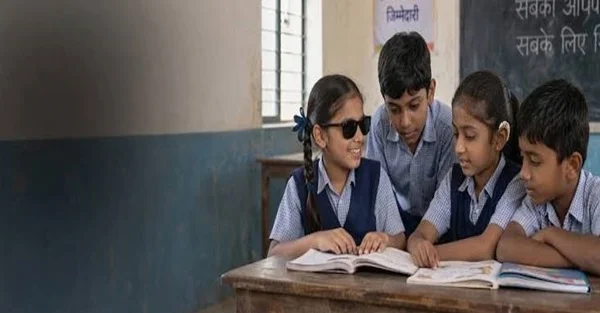
What is PRASHAST
- PRASHAST is a school-based digital screening tool designed to help identify children who may have disabilities covered under the Rights of Persons with Disabilities (RPwD) Act, 2016.
- Many disabilities, particularly specific learning disabilities, autism spectrum disorder and certain sensory or developmental conditions, may not be immediately visible. Without a systematic screening mechanism, students may remain unidentified and fail to receive timely educational support.
- PRASHAST seeks to use teachers’ regular interactions with students to recognise possible signs of disability and connect children with appropriate assessment and support services.
Features of the PRASHAST Screening Tool
The Ministry of Education has conducted sensitisation and training activities for general teachers to strengthen their understanding of inclusive education.
- Approximately 72 lakh teachers have been trained.
- The outreach covers up to 60,000 schools.
- The initiative promotes the systematic observation of students’ learning, communication, movement and social interaction.
- The training also encourages respectful and inclusive practices across school environments.
Identification Across 21 Disability Categories
PRASHAST is designed to support the identification of conditions associated with the 21 disability categories listed under the RPwD Act, 2016.
Examples include:
- Locomotor disability and cerebral palsy
- Blindness and low vision
- Hearing impairment
- Speech and language disability
- Specific learning disabilities
- Autism spectrum disorder
- Intellectual disability
- Multiple sclerosis and Parkinson’s disease
- Haemophilia and thalassemia
- Leprosy-cured persons and dwarfism
The legal categories also cover other specified disabilities under the Act. The purpose of screening is to identify potential support needs, rather than to label students solely on the basis of classroom observations.
How Does PRASHAST Work?
The process connects classroom observation with professional assessment and educational support.
Step 1: Teacher Training: Teachers and other school personnel receive sensitisation on disability awareness, screening indicators and inclusive practices.
Step 2: School-Based Screening: Teachers use the PRASHAST checklist to record observable indicators that may suggest a disability-related need.
Step 3: Review by Special Educators: Special educators examine the findings, help identify suspected disability categories and determine whether further assessment or referral is required.
Step 4: Professional Assessment and Certification: Where necessary, students are referred for medical or other authorised assessment. Disability certification is completed through the prescribed process.
Step 5: Access to Support and Welfare Schemes: Eligible students can be connected with relevant educational accommodations, scholarships and disability-related welfare schemes, subject to the applicable eligibility requirements.
Significance of the PRASHAST Initiative
- Early Identification of Disabilities: Early screening can help identify children whose needs may otherwise remain unnoticed. Timely recognition allows schools and families to seek professional guidance and appropriate support.
- Promoting Inclusive Education: The initiative supports an education system in which children with disabilities can participate in learning alongside their peers, with reasonable accommodations and suitable assistance.
- Reducing Misidentification and Stigma: A structured screening process can encourage evidence-based referrals instead of informal labelling. Appropriate assessment helps distinguish between different learning difficulties and other possible causes of a student's challenges.
- Improving Learning Outcomes: Students who receive suitable support at an early stage may be better equipped to participate in classroom activities, develop essential skills and continue their education.
- Strengthening Coordination: Linking screening with assessment, certification and support services can improve coordination between schools, special educators, health professionals and government agencies.
Connection with UDID and Welfare Schemes
- Screening findings are intended to support connections with disability certification and the Unique Disability ID (UDID) system, which helps persons with disabilities access relevant benefits and services.
- The information may also support access to schemes such as PM-DAKSH and scholarships through the National Scholarship Portal, where eligibility criteria are met. Screening alone does not automatically confer a disability certificate or entitlement to a scheme.
Implementation Roadmap
According to the plan described by the Ministry of Education:
- July–September: Completion of the required teacher training.
- October: Organisation of intervention camps for assessment and necessary support.
- December: Evaluation of outcomes based on student progress and interventions.
These timelines describe the announced implementation plan; actual completion and outcomes should be assessed against subsequent official updates.
Challenges in Implementation
- Shortage of Special Educators: Many schools may lack sufficient special educators to review screening results and support students identified through the tool.
- Risk of Incorrect Identification: Observable behaviours can have multiple explanations. For example, reading difficulties may arise from different learning needs, language barriers or inadequate instructional support. Screening must therefore be followed by appropriate assessment.
- Digital Accessibility and Infrastructure: Unequal access to devices, internet connectivity and digital literacy may affect implementation, particularly in remote and underserved areas.
- Social Stigma and Awareness: Negative attitudes towards disability can discourage families from seeking assessment or accepting support. Schools must communicate findings sensitively and protect students from discrimination.
- Data Privacy and Confidentiality: Disability-related information is sensitive. Its collection, storage, sharing and use must follow applicable privacy requirements and appropriate safeguards.
- Continuity of Support: Identification alone cannot ensure inclusion. Students also need accessible classrooms, assistive devices where appropriate, trained personnel, reasonable accommodations and continued academic support.
Way Forward
- Strengthen Special Educator Networks: Schools should have access to trained special educators through dedicated appointments, resource centres or shared specialist services.
- Ensure Timely Professional Assessment: Clear referral pathways should connect schools with authorised assessment facilities and relevant health professionals.
- Improve Teacher Capacity: Training should be supported by refresher courses, practical guidance and regular mentoring.
- Promote Accessible School Infrastructure: Schools should improve physical accessibility, learning materials, communication support and the availability of assistive technologies.
- Protect Student Privacy: Access to screening records should be restricted to authorised purposes, with safeguards against unauthorised disclosure and discriminatory use.
- Engage Parents and Communities: Families should receive clear information about screening, assessment, available services and their children’s educational rights.
- Monitor Outcomes: Evaluation should consider not only the number of students screened but also the time taken for assessment, access to support, attendance, participation and learning progress.
Conclusion
- PRASHAST represents an important step towards making schools more responsive to the needs of children with disabilities. By training teachers to recognise possible indicators and connecting screening with specialised assessment, the initiative can help reduce delays in identifying support needs.
- However, its long-term success will depend on adequate special educator capacity, reliable referral systems, privacy safeguards and accessible learning environments. The ultimate objective is not merely to identify disability, but to ensure that every child receives the support needed to learn, participate and progress with dignity.
Prelims Practice Question
Q. With reference to PRASHAST, consider the following statements:
- It is a school-based tool designed to support the early identification of children with probable disabilities.
- It is associated with the Rights of Persons with Disabilities Act, 2016.
- Screening through PRASHAST automatically grants a child a disability certificate and a UDID card.
Which of the statements given above is/are correct?
(a) 1 and 2 only
(b) 2 and 3 only
(c) 1 and 3 only
(d) 1, 2 and 3
Mains Practice Question
Q. Discuss the role of digital screening tools such as PRASHAST in promoting inclusive education in India. Examine the key challenges in their implementation and suggest measures to ensure effective support for children with disabilities. (250 words)
|
Frequently Asked Questions (FAQs)
Q1. What is PRASHAST?
PRASHAST is a school-based digital screening tool developed to help identify children who may have disabilities and require further assessment or educational support.
Q2. Which ministry is associated with the PRASHAST initiative?
The initiative is associated with the Ministry of Education, Government of India.
Q3. How many disability categories does PRASHAST cover?
It is designed to support screening for conditions associated with the 21 disability categories listed under the RPwD Act, 2016.
Q4. What is the role of special educators?
Special educators review screening findings, help identify suspected disability categories and facilitate referrals for further assessment.
Q5. How is PRASHAST related to inclusive education?
It can help schools identify students who need additional support and connect them with appropriate services, educational accommodations and learning interventions.
|






 Contact Us
  New Batch : 9555124124/ 7428085757
  Tech Support : 9555124124/ 7428085757