(Preliminary Examination: Current Events of National Importance, History of India)
(Mains Examination, General Studies Paper 1: Key Aspects of Art Forms, Literature, and Architecture in Indian Culture from Ancient to Modern Times) |
Context
The "Somnath Swabhiman Parv" is being organized in Somnath from January 8th to 11th. The Government of India has decided to celebrate the "Somnath Swabhiman Parv" to mark the 1,000th anniversary of the first attack on the Somnath Temple, in order to convey the message of the continuity and vitality of Sanatan culture to our future generations.
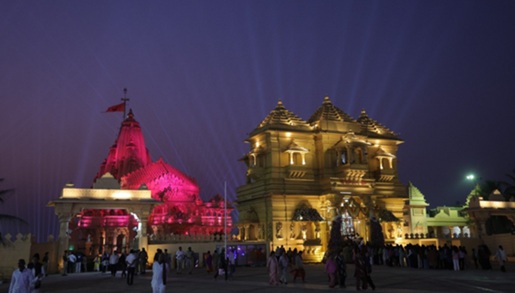
About the Somnath Temple
- The Somnath Temple is considered the first of the twelve sacred Jyotirlingas of Lord Shiva. This temple is not just a religious site but a symbol of faith, tolerance, and renaissance of Indian civilization. Its existence, despite repeated destruction and reconstruction, has earned it the status of an "eternal pilgrimage site."
- The Somnath Temple is located at the confluence of the Kapila, Hiran, and Saraswati rivers on the Arabian Sea coast near Veraval in Prabhas Patan, in the Saurashtra region of Gujarat.
Historical Background
- Ancient times: The Shiva Purana, other religious texts, and inscriptions indicate that the site has been a center of worship since ancient times.
- 1026 AD: Mahmud of Ghazni attacked, looted, and destroyed the temple, a tragedy considered a significant event in Indian history.
- Medieval period: The temple was rebuilt in the 12th century by rulers like Kumarapala and the Chudasama dynasty, but was again destroyed during the Sultanate period.
- Continuous destruction and reconstruction: Historical evidence suggests that the Somnath Temple was destroyed approximately six times and rebuilt each time, demonstrating its remarkable resilience.
Architectural Features
The temple is built in the Chalukya (Solanki) architectural style. It features a high spire, intricate stone carvings, and a magnificent sanctum containing the Jyotirlinga. According to a famous inscription, there is no landmass from the southern edge of the temple to the South Pole, symbolizing its cosmic alignment.
Modern Reconstruction
- After Independence (1947–1951): Sardar Vallabhbhai Patel initiated the reconstruction, considering it a national and cultural duty.
- Renowned architect Prabhashankar Sompura built the temple according to traditional architectural methods.
- Despite political differences, India's first President, Dr. Rajendra Prasad, inaugurated the temple on May 11, 1951.
- Currently, the temple is maintained by the Somnath Trust, headed by the Prime Minister of India.







 Contact Us
  New Batch : 9555124124/ 7428085757
  Tech Support : 9555124124/ 7428085757