Prelims: (Health + CA)
Mains: (GS 2 – Health, Governance; GS Paper 3 – Human Development) |
Why in News ?
India’s Malaria Elimination Technical Report, 2025 has flagged the growing threat of urban malaria, driven by the spread of the invasive mosquito Anopheles stephensi, which could undermine India’s goal of eliminating malaria by 2030, with an interim target of zero indigenous cases by 2027, aligned with the World Health Organisation (WHO) strategy.
Background & Context
India has historically battled malaria as a rural and forest-linked disease, with transmission concentrated in tribal, forested, and remote areas. Over the last decade, sustained public health interventions have pushed the country into the pre-elimination phase.
However, rapid urbanisation, unplanned construction, population mobility, and climate variability have altered malaria transmission dynamics. The emergence of Anopheles stephensi, an urban-adapted and globally recognised invasive vector, represents a structural shift in India’s malaria epidemiology—necessitating a reorientation of control strategies from rural to urban ecosystems.
Urban Malaria: A New Challenge
- Detection of Anopheles stephensi in cities such as Delhi indicates expanding urban transmission.
- Unlike traditional malaria vectors, it thrives in man-made water storage such as:
- Overhead tanks
- Tyres
- Construction sites
- It efficiently transmits both Plasmodium falciparum and Plasmodium vivax, complicating elimination efforts.
- Fragmented urban healthcare delivery and informal settlements increase vulnerability.
Why Anopheles stephensi Is a Serious Threat
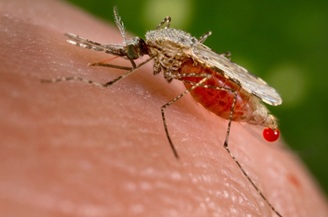
- Recognised globally as an invasive mosquito vector
- Highly adapted to:
- Dense populations
- Informal urban settlements
- Inconsistent water supply systems
- Requires urban-specific surveillance and vector control, unlike conventional rural-focused malaria programmes
- Raises the risk of re-establishment of malaria even in low-transmission urban areas
Persistent High-Burden Pockets in India
Although national incidence has declined sharply, malaria transmission is now geographically concentrated:
- High-burden districts persist in:
- Cross-border transmission from Myanmar and Bangladesh affects northeastern districts
Key Drivers of Continued Transmission
- Asymptomatic infections
- Difficult terrain and remote forest areas
- Migration and population mobility
- Occupational exposure
- Uneven access to healthcare services
India’s Progress So Far
- Malaria cases declined from 11.7 lakh (2015) to about 2.27 lakh (2024)
- Malaria-related deaths reduced by 78%
- Active surveillance intensified in:
- Tribal
- Forest
- Border
- Migrant-population settings
Health System Gaps Identified
- Inconsistent reporting from the private healthcare sector
- Limited entomological surveillance capacity
- Rising drug and insecticide resistance
- Operational gaps in remote tribal regions
- Occasional shortages of diagnostics and treatment supplies
Priority Actions and Research Areas
- Strengthening disease surveillance and vector monitoring
- Ensuring uninterrupted supply of diagnostics and medicines
- Focused operational research on:
- Asymptomatic malaria infections
- Ecology and control of Anopheles stephensi
- Drug and insecticide resistance
- Optimisation of P. vivax treatment regimens
Strategic Frameworks Guiding Elimination
India’s malaria elimination efforts are anchored in a strong policy architecture:
- National Framework for Malaria Elimination (NFME), 2016
- Zero indigenous cases by 2027
- National Strategic Plan for Malaria Elimination (2023–2027)
- Enhanced surveillance
- “Test–Treat–Track” approach
- Real-time monitoring via the Integrated Health Information Platform (IHIP)
Vector Control and Urban Malaria Management
Integrated Vector Management (IVM) remains central, including:
- Indoor Residual Spraying (IRS)
- Long-Lasting Insecticidal Nets (LLINs)
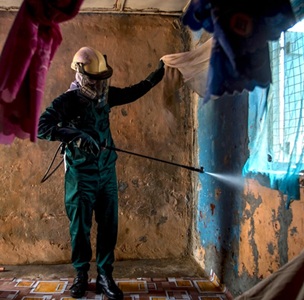
Special emphasis is placed on urban malaria control, targeting breeding sites of Anopheles stephensi through improved water management and municipal coordination.
Strengthening Diagnostics, Health Systems, and Communities
- National Reference Laboratories established under the National Centre of Vector Borne Diseases Control (NCVBDC)
- District-specific action plans for high-endemic and tribal areas
- Integration of malaria services into Ayushman Bharat, with:
- Community Health Officers
- Ayushman Arogya Mandirs delivering last-mile care
Capacity Building, Research, and Partnerships
- Over 850 health professionals trained in 2024 through national refresher programmes
- Evidence-based interventions guided by resistance monitoring
- Intensified Malaria Elimination Project–3 (IMEP-3):
- Covers 159 districts across 12 states
- Focus on vulnerable populations, LLIN distribution, entomological studies, and surveillance
The Road Ahead: Towards a Malaria-Free India by 2030
India remains firmly committed to achieving zero indigenous malaria cases by 2027 and complete elimination by 2030, with safeguards against re-establishment.
Addressing urban malaria through targeted vector control, strong surveillance, community participation, and sustained investment will be critical. Successfully tackling Anopheles stephensi could position India as a global model for malaria elimination in rapidly urbanising settings.
FAQs
Q1. Why is Anopheles stephensi a concern for India ?
It is an invasive mosquito adapted to urban environments and capable of sustaining malaria transmission in cities.
Q2. What is India’s malaria elimination target ?
Zero indigenous cases by 2027 and complete elimination by 2030.
Q3. Which regions still report high malaria burden ?
Parts of Odisha, Tripura, Mizoram, and northeastern border districts.
Q4. What role does urbanisation play in malaria spread ?
Unplanned growth creates breeding sites and weakens surveillance, aiding urban malaria transmission.
Q5. What is the IMEP-3 programme ?
A targeted malaria elimination initiative covering 159 high-risk districts across 12 states.
|






 Contact Us
  New Batch : 9555124124/ 7428085757
  Tech Support : 9555124124/ 7428085757