Recently, archaeologists in Mexico discovered a 1,400-year-old Zapotec tomb, bringing this ancient civilization back into global focus.
The tomb contains:
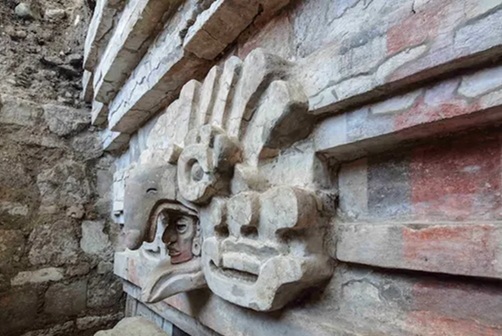
- A large-eyed owl sculpture with a human figure in its beak
- Polychrome wall murals
- Calendar-related carvings
These findings highlight the religious beliefs, artistic sophistication, and scientific understanding of the Zapotec people.
Introduction to the Zapotec Civilization
The Zapotec Civilization was one of the major ancient civilizations of Mesoamerica.
It developed primarily in the Oaxaca Valley in present-day southern Mexico.
The Zapotecs are well known for:
- An organized political system
- Strong religious institutions
- Early writing systems
- Advanced calendar knowledge
Geographical Setting
- The core region of Zapotec civilization was the Oaxaca Valley
- The valley lies at a high elevation
- Agriculture depended heavily on the Atoyac River and its tributaries
- Despite limited natural resources, the Zapotecs developed:
- Efficient irrigation systems
- Advanced land management techniques
From Hunter-Gatherers to an Agricultural Society
Initially, the Zapotecs lived as hunter-gatherers, but over time they transitioned to settled agriculture:
- Cultivated crops such as maize, beans, and squash
- Developed skills in:
- Weaving
- Pottery-making
- Stone masonry
- Established permanent settlements, which strengthened social organization and political control
Political Development and Monte Albán
By the Classic Period (around 200 BCE – 100 CE), the Zapotecs formed a highly centralized state. Their capital was: Monte Albán
Key features of Monte Albán:
- A planned city built on a hilltop
- Monumental pyramids, temples, plazas, and administrative buildings
- A powerful center of political, religious, and military authority
- A clear social hierarchy existed, separating:
- The elite and ruling class
- The common population
Social Structure and Religion
- Society included a professional priestly class
- Religion was state-sponsored
- Religious practices involved:
- Human sacrifice
- Complex ritual ceremonies
- Symbolic representations, such as the owl (associated with death and the underworld)
Religion was not only a matter of faith but also a tool to legitimize political authority.
Writing and Calendar Systems
The Zapotecs made major intellectual contributions to Mesoamerican culture:
- Developed a glyph-based writing system
- Created calendar systems used for:
- Religious rituals
- Agricultural cycles
- Scheduling state ceremonies
These innovations influenced later civilizations such as the Mixtecs and Mayans.
Historical Significance
- The Zapotec state was among the earliest examples of centralized governance in Mesoamerica
- It demonstrated that:
- Complex administration
- Organized religion
- Scientific and intellectual advancement could develop simultaneously
- Recent tomb discoveries confirm that Zapotec civilization was not only politically powerful, but also artistically and spiritually rich






 Contact Us
  New Batch : 9555124124/ 7428085757
  Tech Support : 9555124124/ 7428085757