Why in news?
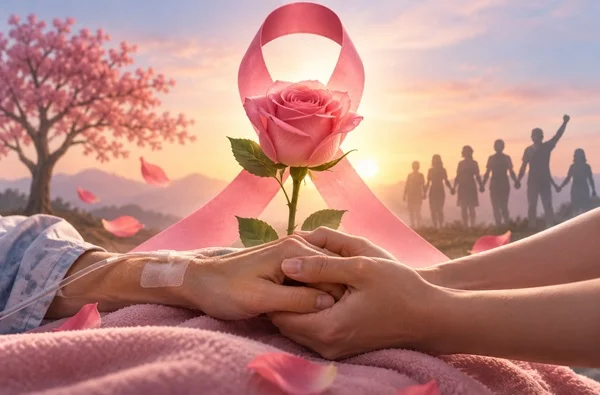
World Rose Day for Cancer Patients 2026 is observed on September 22 to express love, compassion and solidarity with people living with cancer.
Key Facts
|
Observance
|
World Rose Day for Cancer Patients
|
|
Date
|
22 September
|
|
Main objective
|
Supporting cancer patients and spreading awareness
|
|
Symbol
|
Rose — representing love, care and hope
|
|
Historical association
|
Melinda Rose, a young Canadian cancer patient
|
|
Focus areas
|
Emotional support, cancer awareness, early detection and compassionate care
|
History of World Rose Day
- World Rose Day is popularly associated with the story of Melinda Rose, a young Canadian girl. She was diagnosed with Askin's tumour, a rare malignant tumour belonging to the Ewing sarcoma family.
- Despite facing a serious illness, she reportedly continued to encourage other cancer patients through letters, poems and messages of hope.
- Her story became associated with the importance of kindness, emotional resilience and human connection during cancer treatment. September 22 is commonly described as the date of her death and is observed in her memory.
Why Is World Rose Day Celebrated?
- Cancer is not merely a physical disease. Its effects can extend to a person's emotional well-being, relationships, finances, education and professional life.
- A cancer diagnosis may bring uncertainty, fear, stress and changes in everyday routines. Treatment can also involve prolonged hospital visits, physical discomfort and financial pressure.
- The day’s principal objectives are:
- Emotional support: Encouraging patients through companionship, empathy and meaningful communication.
- Cancer awareness: Educating communities about risk factors, warning signs and timely diagnosis.
- Reducing stigma: Addressing misconceptions that can isolate people living with cancer.
- Supporting caregivers: Recognising the contribution of families, friends and healthcare workers.
- Improving access to care: Drawing attention to affordable treatment, counselling, rehabilitation and palliative care.
What Is Cancer?
- Cancer refers to a group of diseases characterised by the uncontrolled growth and division of abnormal cells.
- Normally, the human body regulates cell growth through biological mechanisms. Cancer develops when genetic changes disrupt these controls, allowing abnormal cells to multiply.
- Some cancers form solid tumours, while others, such as leukaemia, primarily affect the blood and bone marrow.
Major types of cancer
|
Cancer type
|
Affected organ or tissue
|
|
Breast cancer
|
Breast tissue
|
|
Lung cancer
|
Lungs
|
|
Colorectal cancer
|
Colon or rectum
|
|
Cervical cancer
|
Cervix
|
|
Oral cancer
|
Mouth and oral cavity
|
|
Leukaemia
|
Blood-forming tissues
|
|
Lymphoma
|
Lymphatic system
|
|
Prostate cancer
|
Prostate gland
|
Cancer Prevention and Early Detection
- A joint WHO–IARC analysis released in February 2026 estimated that approximately 37% of new cancer cases in 2022 were linked to preventable causes.
- Tobacco was the largest identified contributor, followed by cancer-causing infections and alcohol consumption.
|
Measure
|
Importance
|
|
Avoid tobacco
|
Reduces the risk of several cancers, including lung and oral cancer
|
|
Avoid alcohol
|
Reduces alcohol-associated cancer risks
|
|
Maintain a healthy weight
|
Helps lower the risk of certain cancers
|
|
Stay physically active
|
Supports long-term health and cancer risk reduction
|
|
HPV vaccination
|
Helps prevent HPV-associated cancers, particularly cervical cancer
|
|
Hepatitis B vaccination
|
Helps reduce hepatitis B-associated liver cancer risk
|
|
Appropriate screening
|
Can detect certain cancers or precancerous changes earlier
|
Cancer Care in India: Major Government Initiatives
- National Programme for Prevention and Control of Non-Communicable Diseases (NP-NCD): The programme, formerly known as NPCDCS, addresses major non-communicable diseases, including cancer. It includes population-based screening for oral, breast and cervical cancers among adults aged 30 years and above, alongside screening for diabetes and hypertension.
- Ayushman Arogya Mandir: These primary healthcare facilities aim to provide comprehensive services closer to communities, including NCD screening, health promotion, basic mental healthcare and palliative care.
- Ayushman Bharat-PM-JAY: Pradhan Mantri Jan Arogya Yojana provides eligible beneficiaries with annual health coverage of up to ₹5 lakh per family for specified secondary and tertiary hospitalisation services, including eligible cancer treatment packages.
Global Efforts to Fight Cancer
|
Organisation or initiative
|
Main role
|
|
World Health Organization (WHO)
|
Global cancer-control guidance and health-system support
|
|
International Agency for Research on Cancer (IARC)
|
Cancer research, surveillance and global statistics
|
|
WHO Global Breast Cancer Initiative
|
Improving breast cancer detection, diagnosis and treatment
|
|
WHO Cervical Cancer Elimination Initiative
|
Advancing HPV vaccination, screening and treatment
|
|
WHO Global Initiative for Childhood Cancer
|
Improving childhood cancer survival and care
|
|
International Atomic Energy Agency (IAEA)
|
Supporting safe access to radiation medicine and cancer care
|
How Is World Rose Day Celebrated?
- Rose and greeting-card distribution: Volunteers and families may give roses and personal messages to cancer patients, with their consent.
- Cancer awareness programmes: Hospitals, educational institutions and NGOs can organise discussions about prevention, screening and treatment.
- Patient and survivor interactions: Support groups may provide opportunities for patients and survivors to share experiences and access reliable information.
FAQs
When is World Rose Day 2026 celebrated?
World Rose Day is observed on 22 September every year.
Why is World Rose Day celebrated?
To spread hope, love and awareness among cancer patients.
Who is World Rose Day associated with?
Melinda Rose, a young Canadian cancer patient.
What does the rose symbolise on this day?
Love, hope, care and compassion.
What is the main objective of World Rose Day?
To provide emotional support to cancer patients.
|




 Contact Us
  New Batch : 9555124124/ 7428085757
  Tech Support : 9555124124/ 7428085757