Prelims: Science & Technology | Defence Technology | UAVs | Counter-Drone Systems
Mains: GS-III – Science & Technology | Defence Indigenisation | Emerging Technologies | Internal & External Security
Key Terms: Ahuti Mk II | Apollyon Dynamics | Multirotor UAV | Interceptor Drone | Counter-UAS | Loitering Munition | Shahed Drone | Defence Startup | BITS Pilani Hyderabad | Defence Indigenisation | Drone Warfare |
Why in News?
Hyderabad-based defence technology start up Apollyon Dynamics has developed the Ahuti Mk II, an electric multirotor interceptor drone that achieved a certified top speed of 498 kmph.
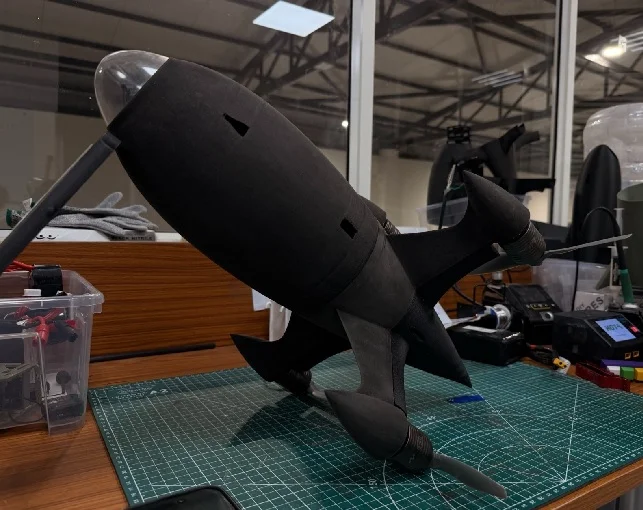
What is Ahuti Mk II?
- Ahuti Mk II is an electric multirotor unmanned aerial vehicle (UAV) developed by Hyderabad-based Apollyon Dynamics.
- Unlike conventional multirotor drones, which generally prioritise hovering, stability, surveillance and payload carrying, Ahuti Mk II has been optimised primarily for speed and aerial interception.
- Its key purpose is to rapidly approach an incoming aerial threat such as a hostile UAV or loitering munition.
Key Features
|
Feature
|
Details
|
|
Name
|
Ahuti Mk II
|
|
Developer
|
Apollyon Dynamics
|
|
Location
|
Hyderabad, Telangana
|
|
Incubation
|
BITS Pilani, Hyderabad Campus
|
|
Type
|
Electric Multirotor Interceptor UAV
|
|
Top Speed
|
498 kmph
|
|
Recognition
|
India Book of Records
|
|
Primary Role
|
High-speed aerial interception
|
|
Potential Targets
|
Hostile drones and loitering munitions
|
|
Power Requirement
|
Burst current of around 400 amperes
|
The company says the 498 kmph speed substantially exceeds the earlier recorded Indian benchmark of around 325 kmph.
What is an Interceptor Drone?
- An interceptor drone is a UAV designed primarily to detect, pursue and potentially neutralise another aerial platform.
- Its role can be understood through a simple sequence: Enemy Drone Detected → Interceptor Launched → Rapid Pursuit → Target Interception
- This is different from a conventional drone whose primary purpose may be photography, reconnaissance, mapping or payload delivery.
- For an interceptor, closing speed becomes particularly important. The faster the interceptor reaches the hostile drone, the smaller the reaction window available to the incoming threat.
Why Was Ahuti Mk II Developed?
The development reflects the changing nature of modern warfare.
Recent conflicts have demonstrated the growing battlefield importance of relatively inexpensive one-way attack drones, FPV drones and loitering munitions. Such systems can create a difficult cost equation for conventional air-defence networks.
Apollyon Dynamics has specifically pointed to the increasing use of Shahed-class drones in recent conflicts as one factor behind its focus on high-speed interception.
What is a Multirotor UAV?
A multirotor UAV is an unmanned aircraft that uses multiple rotors to generate lift and control its movement.
Common configurations include:
- 4 Rotors → Quadcopter
- 6 Rotors → Hexacopter
- 8 Rotors → Octocopter
- Multirotor drones are generally known for their ability to hover, take off and land vertically, and manoeuvre in confined areas.
- However, these advantages generally come with limitations in speed, range and endurance compared with some fixed-wing aircraft.
- Ahuti Mk II is therefore noteworthy because its design pushes a multirotor platform towards a specialised high-speed interception role.
Ahuti Mk II vs Conventional Multirotor Drone
|
Conventional Multirotor Drone
|
Ahuti Mk II
|
|
Stability-focused
|
Speed-focused
|
|
Hovering
|
Rapid pursuit
|
|
Photography/Mapping
|
Interception
|
|
Surveillance
|
Counter-UAS role
|
|
Payload delivery
|
Rapid closing of aerial threats
|
Thus, Ahuti Mk II represents a different design philosophy: “Not primarily to hover, but to intercept.”
What are Loitering Munitions?
- A loitering munition is a weapon system that can remain airborne over an area while searching for a target and then attack once a suitable target is identified.
- It combines some characteristics of a: Drone + Guided Munition
- Unlike a conventional missile that is generally launched toward a predetermined target or target area, a loitering munition can spend time searching or waiting before conducting its strike.
- The proliferation of such weapons has increased demand for Counter-Unmanned Aircraft Systems (C-UAS).
What are Shahed-Class Drones?
- Iranian-designed Shahed-series one-way attack UAVs have become prominent examples of relatively low-cost long-range attack drones in recent conflicts.
- Their battlefield significance lies not only in individual destructive capability but also in their potential use in larger numbers.
- A swarm or repeated waves of inexpensive drones can force defenders to expend expensive surface-to-air missiles or other air-defence resources.
What is Counter-Drone Technology?
Counter-drone or Counter-UAS (C-UAS) technology refers to systems designed to detect, track, identify and neutralise hostile or unauthorised drones.
Counter-drone systems can broadly use two approaches:
Soft Kill
The drone is disrupted without physically destroying it.
Examples include:
- Electronic jamming
- Communication disruption
- Navigation interference
- Cyber/electronic countermeasures
Hard Kill
The hostile drone is physically intercepted or destroyed.
Possible systems include:
- Air-defence missiles
- Guns
- Directed-energy systems
- Interceptor drones
Ahuti Mk II fits into the broader development of high-speed physical interception solutions.
Indian Army Connection
- Apollyon Dynamics has previously supplied high-speed kamikaze drones to the Indian Army, with earlier systems capable of reaching around 300 kmph, according to its founder.
- The company has also reportedly tested systems at military firing and operational ranges including Babina and Gopalpur, with support from the Indian Army for the trials.
Challenges
- Despite its record speed, a high-speed interceptor drone must solve several additional operational challenges before such technology can become a comprehensive battlefield solution.
- Detection and Tracking: The interceptor first needs reliable information about where the hostile drone is located.
- Guidance and Autonomy: At very high speeds, accurate navigation, target tracking and autonomous decision-making become technically demanding.
- Range and Endurance: Higher speed can increase power consumption, creating a trade-off between speed, range and endurance.
- Electronic Warfare: Modern battlefields contain heavy electronic interference and jamming.
- Mass Production: A successful counter-drone platform must ultimately be produced in sufficient numbers and at an affordable cost.
Way Forward
- India should continue integrating defence startups, universities, the armed forces and established defence manufacturers into a common innovation ecosystem.
- Greater emphasis should be placed on autonomous target recognition, AI-enabled tracking, electronic warfare resistance, swarm defence and affordable hard-kill interceptors.
- Equally important will be rapid testing, military certification and scalable domestic manufacturing.
- The long-term objective should be to create a layered indigenous counter-drone ecosystem capable of addressing threats ranging from small commercial drones to sophisticated loitering munitions.
Prelims MCQs
Q1. Ahuti Mk II, recently seen in news, is related to:
A. Hypersonic cruise missile
B. High-speed multirotor interceptor drone
C. Anti-satellite weapon
D. Autonomous underwater vehicle
Mains Question
“The proliferation of low-cost drones and loitering munitions is changing the economics of modern air defence.” Discuss the statement in the context of India's emerging indigenous counter-drone technologies.
|
FAQs
What is Ahuti Mk II?
Ahuti Mk II is a high-speed electric multirotor interceptor UAV developed by Hyderabad-based defence startup Apollyon Dynamics.
What is the maximum speed of Ahuti Mk II?
It has achieved a certified top speed of 498 kmph.
Who developed Ahuti Mk II?
It was developed by Apollyon Dynamics, a defence technology startup incubated at BITS Pilani Hyderabad Campus.
Why is Ahuti Mk II important?
It has been designed specifically for rapid interception of aerial threats such as hostile drones and loitering munitions, highlighting India's growing indigenous counter-drone capabilities.
Which record has Ahuti Mk II achieved?
Its 498 kmph performance has been recognised by the India Book of Records for maximum speed achieved by a multirotor UAV in India.
|






 Contact Us
  New Batch : 9555124124/ 7428085757
  Tech Support : 9555124124/ 7428085757