Why in News?
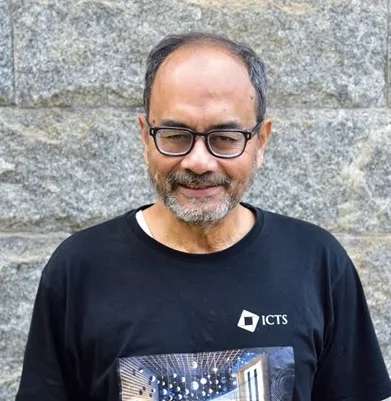
- Indian theoretical physicist Ashoke Sen has been awarded the prestigious Oskar Klein Medal 2026, becoming the first Indian physicist to receive this international honour. The award recognises his pioneering contributions to string theory, black hole entropy and string field theory.
- The International Centre for Theoretical Sciences (ICTS) announced the achievement on October 22, 2026.
About the Oskar Klein Medal
- Awarded by: Stockholm University and the Nobel Committee for Physics of the Royal Swedish Academy of Sciences.
- Established: 1988.
- Named after: Oskar Klein, a Swedish theoretical physicist.
- Purpose: To recognise outstanding contributions to physics.
- Notable previous recipients: Chen-Ning Yang, Steven Weinberg and Hans Bethe, all Nobel laureates.
Oskar Klein Memorial Lecture 2026
As part of the recognition, Ashoke Sen delivered the 2026 Oskar Klein Memorial Lecture at Stockholm University's AlbaNova Centre on October 22, 2026.
- Lecture title: “Gravity from Strings and Strings from Gravity”.
- Theme: The relationship between string theory and gravity.
- Significance: The lecture explored ideas central to understanding fundamental particles, forces and the structure of the universe.
Ashoke Sen’s Major Scientific Contributions
- String Theory: His research has helped advance the understanding of fundamental particles and forces and the relationship between quantum physics and gravity.
- S-Duality: His influential work on S-duality has contributed to understanding the mathematical relationships between different formulations of string theory.
- Black Hole Entropy: His research on the precise counting of black hole entropy has advanced efforts to explain black holes using quantum physics.
- String Field Theory: His contributions have helped develop the theoretical framework used to study string interactions.
Major Awards and Honours
- 1989: ICTP Prize.
- 1994: Shanti Swarup Bhatnagar Prize.
- 1998: Elected Fellow of the Royal Society.
- 2001: Padma Shri.
- 2009: Infosys Prize in Mathematical Sciences.
- 2012: Breakthrough Prize in Fundamental Physics.
- 2013: Padma Bhushan.
- 2014: Dirac Medal.
- 2026: Oskar Klein Medal.
Significance of the Achievement
- Ashoke Sen's recognition highlights India's contribution to fundamental theoretical physics and strengthens the international visibility of Indian scientific research.
- His work on string theory, quantum gravity and black hole entropy has contributed to efforts to address some of the most fundamental questions about the universe.
- ICTS Director Rajesh Gopakumar congratulated Sen, praising his association with the institution and his role in fostering a culture of scientific excellence.





 Contact Us
 New Batch : 9555124124/ 7428085757
 Tech Support : 9555124124/ 7428085757
