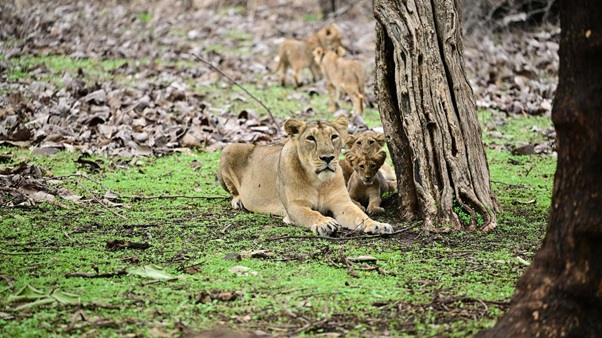
- Recently, two lion cubs died in the Gir National Park region of Gujarat due to a suspected Babesia infection.
- The incident has raised concerns about vector-borne diseases in the wildlife ecosystem, although the Forest Department has not yet confirmed any major outbreak. Other lion deaths have been attributed to natural causes and territorial conflicts.
- Gir National Park is an important protected habitat where such infections can spread through tick populations.
What is Babesia ?
- Babesia is a microscopic protozoan parasite that infects the red blood cells (RBCs) of humans and animals, causing a disease known as babesiosis.
- It is an important tick-borne zoonotic disease with implications for both wildlife and human health. It can lead to hemolytic anemia and other complications in the body.
Mode of transmission
- The Babesia parasite primarily spreads through the bite of infected ticks, especially Ixodes ticks (deer ticks), which are also known to transmit Lyme disease.
- When an infected tick feeds on the blood of a host (human or animal), the parasite enters the body.
Affected organisms
- Babesiosis can affect both animals and humans, but it is more commonly found in animals such as cattle, dogs, sheep, and wildlife species.
- Human infections are relatively rare but can be severe in some cases, especially in individuals with weakened immune systems.
Geographical distribution
Babesia infection is mainly found in the following regions:
- Northeastern United States
- Parts of Europe
- Some regions of Asia
Human infections are more commonly seen in areas with a high tick population.
Is it contagious ?
Babesiosis does not spread from person to person. It mainly spreads through tick bites. In very rare cases, it may spread through:
- Mother to fetus during pregnancy
- Infected blood transfusion
Treatment
Babesiosis is usually treated with combination therapy because it is a parasitic disease. This includes:
- Atovaquone (antiparasitic drug)
- Azithromycin (antibiotic, used in combination)
In severe cases, hospitalization and blood transfusion may be required.




 Contact Us
  New Batch : 9555124124/ 7428085757
  Tech Support : 9555124124/ 7428085757