New
GS Foundation (P+M) - Delhi : 19th Jan. 2026, 11:30 AM GS Foundation (P+M) - Prayagraj : 09th Jan. 2026, 11:00 AM GS Foundation (P+M) - Delhi : 19th Jan. 2026, 11:30 AM GS Foundation (P+M) - Prayagraj : 09th Jan. 2026, 11:00 AM

Battery Pack Aadhaar Number (BPAN)

(Prelims: Current Events of National Importance, General Science)
(Mains, General Studies Paper 3: Achievements of Indians in Science and Technology; Indigenous Technology Development and Development of New Technologies)

Context

  • The Ministry of Road Transport and Highways (MoRTH) has proposed a significant initiative to make India's rapidly growing electric vehicle (EV) ecosystem more transparent, sustainable, and regulatory-friendly.
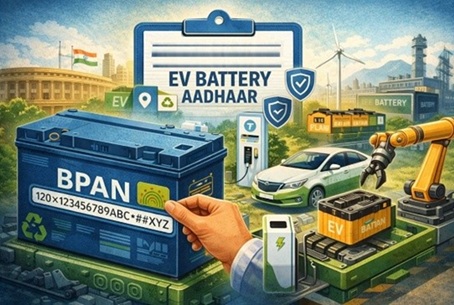
  • Under this initiative, it is planned to implement an Aadhaar-like unique identification system for batteries used in electric vehicles, called the Battery Pack Aadhaar Number (BPAN).
  • This proposed system will enable tracking of the entire lifecycle of batteries, from production to use, recycling, and final disposal.

What is BPAN ?

  • The Battery Pack Aadhaar Number (BPAN) will be a 21-digit/letter unique identification number assigned to every battery pack introduced in the Indian market, specifically electric vehicle batteries.
  • This number will serve as a digital identity for the battery, allowing it to track its entire journey from manufacture, use, and ultimately recycling or disposal.
  • This system will be formally implemented through the Automotive Industry Standards (AIS) pathway under the Automotive Industry Standards Committee (AISC).

Objectives

  • Ensuring complete traceability throughout the entire lifecycle of batteries
  • Encouraging recycling, secondary use (second-life applications), and safe disposal
  • Promoting transparency, accountability, and environmental sustainability in the battery ecosystem

Key Features of BPAN

  • Mandatory Unique Identification: Every battery manufacturer or importer will be required to issue a unique BPAN for every battery sold or used.
  • Lifecycle-based data tracking: Data related to raw material sourcing, manufacturing process, shelf life, performance, reuse, recycling, and final disposal will be recorded.
  • Dynamic update system: Any major technical or structural change to the battery will require a new BPAN.
  • Durable and clear marking: The BPAN will be imprinted on the battery in a location where it cannot be easily removed, erased, or damaged.
  • Integration with digital portal: Manufacturers and importers will be required to upload all battery-related information to the official BPAN portal.
  • Prioritization for EV batteries: EV batteries account for approximately 80–90% of India's total lithium-ion battery demand, so they will be included in the first phase. Industrial batteries with a capacity greater than 2 kilowatt-hours have also been recommended to be included in this scope.

Significance

  • This initiative will enable organized recycling and reuse of batteries.
  • It will reduce the environmental and safety risks posed by improper disposal of lithium-ion batteries.
  • It will strengthen the effective implementation of Extended Producer Responsibility (EPR).
Have any Query?

Our support team will be happy to assist you!

OR