
- UPSC Exam
- State PCS
- One Day Exam
- Current Affairs
- PT Quiz
- Downlaods
- About Coaching
- Blog
- Videos

|
Type |
Source |
Carbon Emissions |
|---|---|---|
|
Grey Hydrogen |
Natural Gas |
High |
|
Blue Hydrogen |
Natural Gas + Carbon Capture |
Moderate |
|
Green Hydrogen |
Renewable Energy + Electrolysis |
Nearly Zero |
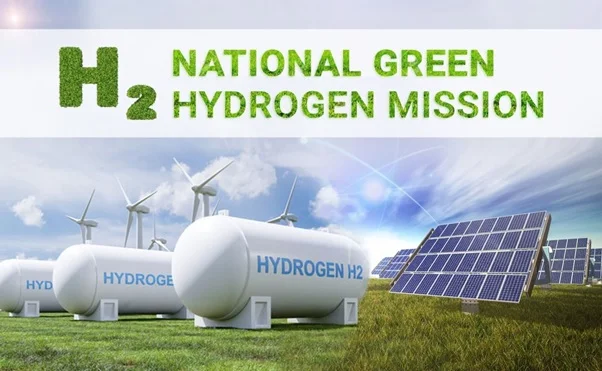
An electrolyser is a machine that uses electricity to split water into hydrogen and oxygen. When renewable electricity is used, the hydrogen produced is known as Green Hydrogen.
Important: The BHEL–thyssenkrupp nucera collaboration focuses on Alkaline Electrolysers, which are currently the preferred technology for large-scale green hydrogen production.
|
Particular |
Details |
|---|---|
|
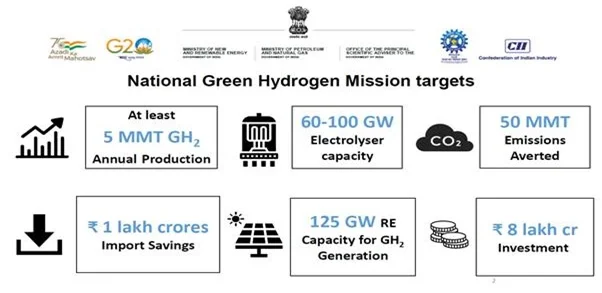
Launch Year |
2023 |
|
Total Outlay |
₹19,744 Crore |
|
Target |
5 Million Metric Tonnes (MMT) annually by 2030 |
|
Renewable Capacity Target |
Around 125 GW |
Under the Strategic Collaboration Agreement:
Germany is among the global leaders in hydrogen technologies and electrolyser manufacturing.
|
India Brings |
Germany Brings |
|---|---|
|
Low-cost renewable energy |
Advanced electrolyser technology |
|
Large domestic market |
Research & innovation |
|
Manufacturing capability |
Industrial expertise |
|
Export potential |
Global hydrogen ecosystem |
The partnership combines India's manufacturing strengths with Germany's technological expertise
India should strengthen domestic R&D, promote indigenous manufacturing of electrolysers, expand renewable energy capacity, improve hydrogen storage and transport infrastructure, and encourage private sector participation. Technology partnerships should gradually evolve into domestic innovation, making India a global leader in the hydrogen economy
The collaboration between BHEL and thyssenkrupp nucera India is a significant step toward building India's green hydrogen ecosystem. By combining advanced technology with domestic manufacturing, the partnership supports the National Green Hydrogen Mission, enhances energy security, reduces import dependence, and strengthens India's position in the global clean-energy transition
Prelims MCQsQ. With reference to Green Hydrogen, consider the following statements:
Which of the statements given above is/are correct? (a) 1 and 2 only
Mains Practice QuestionDiscuss the significance of the National Green Hydrogen Mission for India's energy security and clean energy transition. How does the BHEL–thyssenkrupp nucera India collaboration support this mission? |
FAQs (Frequently Asked Questions)Q1. What is Green Hydrogen?Answer: Green Hydrogen is hydrogen produced by splitting water through electrolysis using electricity generated entirely from renewable sources such as solar and wind energy. It produces almost zero carbon emissions. Q2. Why is the BHEL–thyssenkrupp nucera India collaboration important?Answer: The partnership will help manufacture advanced alkaline electrolysers in India, promote technology transfer, reduce import dependence, and support the National Green Hydrogen Mission. Q3. What is an Alkaline Electrolyser?Answer: An alkaline electrolyser is a mature and cost-effective technology that uses an alkaline solution to split water into hydrogen and oxygen, making it suitable for large-scale green hydrogen production. Q4. What are the targets of the National Green Hydrogen Mission?Answer: The mission aims to produce 5 Million Metric Tonnes (MMT) of Green Hydrogen annually by 2030, develop about 125 GW of renewable energy capacity, and make India a global hub for green hydrogen. Q5. Which sectors will benefit the most from Green Hydrogen?Answer: Green Hydrogen will primarily help decarbonise hard-to-abate sectors such as steel, fertilizers, refineries, chemicals, shipping, and heavy transportation, reducing dependence on fossil fuels and lowering carbon emissions. |


Our support team will be happy to assist you!

 Contact Us
  New Batch : 9555124124/ 7428085757
  Tech Support : 9555124124/ 7428085757