(Preliminary Examination: Current Events of National Importance, General Science)
(Mains Examination, General Studies Papers 2 and 3: Topics related to the development and management of social sectors/services related to health, education, human resources; achievements of Indians in science and technology; indigenous technology development, nanotechnology, biotechnology) |
Context
Union Home Minister Amit Shah laid the foundation stone of the country's first state-funded Bio-Safety Level-4 (BSL-4) containment laboratory in Gandhinagar. Describing it as a "health shield" for the nation, he said that this initiative will usher in a new chapter in India's health safety and biotechnology sectors.
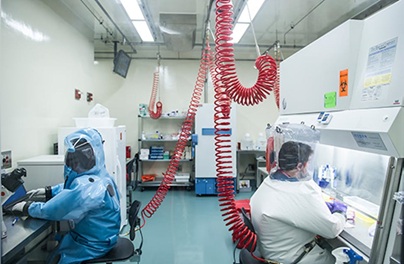
Introduction to the BSL-4 Facility
- A Bio-Safety Level-4 (BSL-4) laboratory is the highest level of biological safety, developed for the safe study of highly dangerous and highly infectious pathogens.
- Operating under stringent internationally established safety standards, these laboratories enable high-level research on deadly diseases, such as the development of testing methods, vaccines, and treatments, as well as rapid disease outbreak investigation and response.
- India's new BSL-4 laboratory, proposed in Gandhinagar, along with the Animal Bio-Safety Level (ABSL) facility, will be a vital national asset for research on highly lethal pathogens. This initiative will further strengthen the country's biosecurity and pandemic preparedness.
State-Funded BSL-4 Laboratory in Gujarat
- This BSL-4 laboratory being developed in Gandhinagar, Gujarat, will be India's first fully state-funded and state-controlled BSL-4 facility. It will also be the country's second civilian BSL-4 research laboratory.
- The project, spread over an area of approximately 11,000 square meters, has an estimated cost of ₹362 crore and is being implemented through the Gujarat State Biotechnology Mission.
Institutional Arrangements and Timeline
- This high-security facility will be operated under the Gujarat Biotechnology Research Centre, which already has a BSL-2+ laboratory. This institute played a key role in genome sequencing of the SARS-CoV-2 virus during the COVID-19 pandemic.
- The BSL-4 laboratory was planned for mid-2022, with its foundation stone laid on January 13, 2026.
Infrastructure and Safety Standards
- The complex will develop BSL-4, BSL-3, BSL-2, ABSL-4, and ABSL-3-class laboratories, along with state-of-the-art supporting systems and utilities.
- The entire project is being developed in accordance with international biosafety standards set by the CDC, NIH, the Department of Biotechnology (DBT), and the Indian Council of Medical Research (ICMR).
Contribution to Disease Control and Vaccine Research
- This laboratory will enable Gujarat, and the entire country, to respond quickly and effectively to outbreaks of deadly human diseases and zoonotic infections.
- It will also promote research on advanced diagnostic techniques, vaccines, and treatments.
- The ABSL-4 unit will enable research on animal diseases and vaccine development using antibodies derived from animals. This work previously relied on samples sent to the ICAR-National Institute of High Security Animal Diseases.
- The Department of Biotechnology has signed a Memorandum of Understanding (MoU) to elevate this laboratory to national facility status, providing guidance from leading specialized institutions across the country. This facility will play a crucial role in addressing the long-standing shortage of BSL-4 infrastructure in India.
Current BSL-4 and ABSL-4 Facilities in India
- Civilian BSL-4 Laboratories: Currently, India has only one operational civilian BSL-4 laboratory, located at the National Institute of Virology (NIV) in Pune, Maharashtra, conducting research on highly dangerous human pathogens.
- Defense Sector BSL-4 Facility: In late 2024, the Defence Research and Development Organisation (DRDO), under the Ministry of Defence, established a BSL-4 laboratory in Gwalior, Madhya Pradesh, enhancing the country's high-containment research capacity.
High-Security Animal Disease Research Laboratories
- India has two major institutions dedicated to the study of high-risk zoonotic diseases:
- The ICAR-National Institute of High Security Animal Diseases, Bhopal, is currently in the ABSL-3+ category and plans to upgrade to ABSL-4 level have been announced in June 2025.
- The ICAR-International Centre for Foot and Mouth Disease, Bhubaneswar (Odisha), operates according to the ABSL-3Ag standard.
Global Scenario
According to officials, approximately 69 BSL-4 laboratories are either operational or under construction worldwide, reflecting India's limited but gradually increasing participation in the field of high-security biological research.
India's Expanded Biosafety Laboratory Infrastructure
- By March 2025, the Department of Health Research, Ministry of Health and Family Welfare, has approved a total of 165 biosafety laboratories under the VRDL scheme.
- These include 154 BSL-2 and 11 BSL-3 laboratories aimed at strengthening pandemic response and disaster response capabilities.
- Facilities established by ICMR: In addition to the VRDL network, ICMR has developed 21 biosafety laboratories at various institutes, including 1 BSL-4, 8 BSL-3, and 12 BSL-2.
- Science and Technology-Supported Laboratories: The National Research Foundation, under the Department of Science and Technology, has provided financial support to 5 BSL/ABSL-3 laboratories through the IRHPA program.
Biotechnology, Agricultural and Industrial Research
- The Department of Biotechnology has established 26 biosafety laboratories.
- The Indian Council of Agricultural Research (ICAR) has established 9 biosafety laboratories.
- The Council of Scientific and Industrial Research (CSIR) has developed 11 biosafety laboratories at its institutions.
Holistic Approach
These efforts together demonstrate the significant expansion of biosafety infrastructure in India, with BSL-2 and BSL-3 capabilities serving as the foundation, and national preparedness for infectious diseases is being strengthened through targeted investments in high-containment laboratories.






 Contact Us
  New Batch : 9555124124/ 7428085757
  Tech Support : 9555124124/ 7428085757