New
GS Foundation (P+M) - Delhi : 05th Jan., 2026 Winter Sale offer UPTO 75% + 10% Off, Valid Till : 5th Dec., 2025 GS Foundation (P+M) - Prayagraj : 15th Dec., 11:00 AM Winter Sale offer UPTO 75% + 10% Off, Valid Till : 5th Dec., 2025 GS Foundation (P+M) - Delhi : 05th Jan., 2026 GS Foundation (P+M) - Prayagraj : 15th Dec., 11:00 AM

Black plastic: Its dangers and ways to avoid it.

Prelims: Use of Black plastic
Mains: General Studies Paper-3, Science and Technology- developments and applications and its impact on everyday life.

Why in the NEWS?

  • A study found that black plastic contains toxic chemicals that may pose health risks.

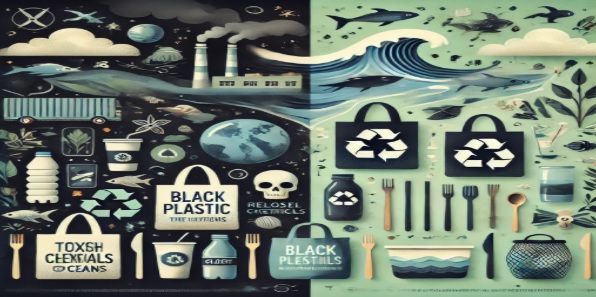
Black-plastic

Key Points:

  • A study claimed that black plastic contains toxic flame retardants that can leach into food and pose a health risk.
  • It is used in the manufacture of kitchen products such as spatulas, takeout boxes and kitchen peelers.
  • It was later found that the study had miscalculated the levels of toxic chemicals.
  • The researchers had to correct their calculations and the actual risk was found to be lower than previously thought.

What will you read next in this topic?

  • What did the study find?
  • What is black plastic?
  • Research error and correction
  • Toxic chemicals in black plastic
  • Are black plastic products safe?
  • Ways to avoid black plastic

What did the study find?

  • A study in October 2023 analysed 203 black plastic products (kitchen utensils, takeaway containers, toys).
  • These products were found to contain a flame-retardant chemical called decabromodiphenyl ether (BDE-209).
  • This chemical can leach into foods, possibly causing adverse health effects.
  • According to the study, some kitchen tools may result in up to 34,700 ng of BDE-209 entering the body per day.
  • The researchers warned that this level may be close to the US EPA's (Environmental Protection Agency) recommended safe limit.

What is black plastic?

  • Black plastic is usually made from recycling old electronic waste (computers, TVs, appliances, etc.).
  • It may contain flame retardants and heavy metals (lead, cadmium, mercury, bromine, antimony).
  • These chemicals are used to protect electronic devices from fire.
  • These toxic substances are banned in many countries, but some old plastics still make it into the recycling process.
  • This plastic is commonly used in cookware, takeout boxes, and other kitchen products, which can pose a risk of toxic chemicals leaching into food.

Research error and correction

  • The study miscalculated the EPA's (Environmental Protection Agency) reference dose by 10 times.
  • The corrected calculations showed that exposure from black plastic spatulas and spoons was 10 times lower than the EPA's recommended limit.
  • Scientists are still not sure about the "safe dose" of chemicals released from black plastic.
  • Questions have also been raised about how accurate and reliable the exposure limits given by the EPA are.

Toxic chemicals in black plastic

Decabromodiphenyl ether (BDE-209)

  • A flame retardant chemical added to electronics and plastic products to prevent fires.
  • May be linked to problems such as hormone imbalances, nervous system damage and cancer.

Bromine

  • A flame retardant element that comes from old electronic waste.
  • May cause thyroid hormone imbalances and reproductive problems.

Antimony

  • Used to strengthen plastics.
  • High levels of exposure can cause skin irritation, respiratory problems and an increased risk of cancer.

Lead

  • Heavy metal used in electronic devices.
  • May cause impaired brain development, high blood pressure and kidney problems.

Cadmium

  • Toxic metal element used in batteries and electronics.
  • It can weaken bones and damage kidneys and lungs.

Mercury

  • Can get into black plastic from old electronic waste during the recycling process.
  • It can damage the brain and nervous system, especially dangerous for children and pregnant women.

Are black plastic products safe?

  • There is still uncertainty about the use of black plastic. 
  • Even though studies have found that the levels of chemicals like BDE-209 in them are below the EPA's safe limit, scientists are still not sure whether there is a "safe dose" of these toxic substances.

Scientific approach and need for research

  • Black plastic is produced from electronic waste, which can contain a variety of toxic chemicals and heavy metals.
  • It is not yet clear what effects long-term exposure to these chemicals can have on human health.
  • Scientists believe that more research is needed to determine safe limits and health effects.

Avoiding black plastic altogether is not the solution

  • Completely throwing away all black plastic products is not a practical solution, as this will only add to the problem of plastic waste.
  • Instead, careful and limited use may be a better option.
  • If a product is worn out or has cracks, it is advisable to replace it, as in such a situation, toxic elements of plastic can get into the food.

Need to adopt safe alternatives

  • Stainless steel, silicone, wood or glass utensils and containers can be used instead of black plastic.
  • If plastic has to be used, give preference to BPA-free and food-grade plastic.
  • Promote recycling and avoid unnecessary use of black plastic.

Ways to avoid black plastic

  • Limit black plastic utensils and containers – Reuse spatulas, takeout boxes and other kitchen items only when there are no better options available.
  • Make safer choices – Use more kitchen tools and containers made of glass, stainless steel, silicone or wood.
  • Avoid hot and oily foods – Avoid storing hot or oily foods in black plastic containers, as toxic chemicals can leach into the food at high temperatures.
  • Avoid low-quality plastic products – Especially avoid products that are made of cheap, recycled or uncertified food-grade plastic.
  • Practice eco-friendly habits – Prefer sustainable and biodegradable alternatives to plastic and encourage plastic recycling.
  • Check before buying new black plastic products – If it is necessary to use a plastic product, choose BPA-free and food-grade plastic.
  • Spread knowledge and awareness – Educate family and friends about the dangers of black plastic and encourage them to adopt safer alternatives.

Q. According to scientists, what is needed to understand the long-term effects of black plastic?

(a) More research and testing

(b) Banning it altogether

(c) Using it more extensively

(d) Using it only for cold items

Have any Query?

Our support team will be happy to assist you!

OR