
- UPSC Exam
- State PCS
- One Day Exam
- Current Affairs
- PT Quiz
- Downlaods
- About Coaching
- Blog
- Videos

| Prelims: (International Relations + CA) Mains: (GS 2 – International Relations, India–US Relations, Multilateralism; GS 3 – External Sector & Strategic Interests) |
US President Donald Trump convened the first meeting of the “Board of Peace” in Washington to deliberate on Gaza’s reconstruction and broader global conflict issues. India participated in the meeting as an observer, signalling cautious engagement.
New Delhi stated that it supports diplomatic efforts aligned with United Nations Security Council Resolution 2803 and the broader Gaza Peace Plan. However, India chose not to become a formal member of the 27-country body.
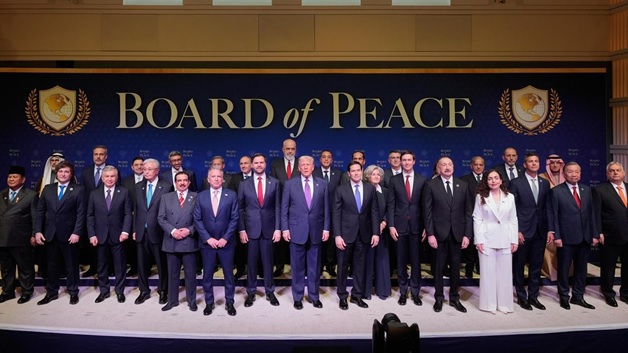
Origin of the Initiative
The Board of Peace was initially announced as a mechanism to end the Israel–Gaza conflict. Over time, its mandate expanded to include addressing “global conflict,” raising concerns about its scope and institutional legitimacy.
Multilateral Sensitivities
The initiative operates outside established UN frameworks. While President Trump indicated it would function “in conjunction with the UN,” critics argue that it could sideline formal multilateral institutions.
India’s Diplomatic Calculus
India initially refrained from joining when the initiative was unveiled in Davos, opting to evaluate its composition, durability, and geopolitical implications before engaging.
India–US Strategic Relations: Observer participation signals continued diplomatic engagement with Washington.
Multilateral Norms: India must balance support for new diplomatic platforms with its longstanding commitment to UN-centered multilateralism.
West Asia Stability: Peace in Gaza and the broader region has economic and strategic implications for India.
India–Pakistan Dimension: Pakistan’s membership in the board adds a sensitive bilateral layer.
Global Governance Debate: The development raises questions about parallel diplomatic mechanisms outside traditional UN frameworks.
The 27-member board includes key West Asian states such as:
Other members include Argentina, Hungary, Vietnam, Cambodia, and Pakistan, represented by Prime Minister Shehbaz Sharif.
Observer Participation
Twenty-two countries joined as observers, including:
India participated as an observer, represented by its Deputy Chief of Mission in Washington.
Member Contributions
Nine member countries collectively pledged $7 billion for Gaza’s relief and reconstruction.
US Commitment
The United States pledged an additional $10 billion, described as an investment in regional stability.
Specific allocation mechanisms remain unclear.
Preserving Flexibility
Observer status allows India to monitor developments without formal endorsement.
Legitimacy Concerns
The absence of permanent UN Security Council members such as Russia, China, France, and the UK raises questions about the board’s representativeness.
Durability Assessment
India views the initiative partly as a leadership-driven project whose long-term relevance may depend on political continuity in Washington.
India remains cautious about parallel platforms that may dilute the centrality of the UN system.
While the board claims to complement UN efforts, its broad and undefined mandate creates institutional ambiguity.
India continues to advocate a two-state solution consistent with established international norms.
Mediation Claims
President Trump reiterated claims of preventing escalation between India and Pakistan—assertions New Delhi has consistently rejected.
Strategic Monitoring
With Pakistan as a board member, India’s observer role enables vigilance against any attempt to internationalise bilateral issues.
Complete absence could risk exclusion from discussions affecting regional narratives.
West Asia Stability
Peace in Gaza aligns with India’s broader regional interests.
Economic Corridors
Regional stability would support initiatives such as the India–Middle East–Europe Economic Corridor (IMEC).
Trade and Strategic Cooperation
India is simultaneously working to stabilise trade ties with the US and advance technology cooperation initiatives.
Diplomatic Balancing Act: India seeks to maintain goodwill with Washington without fully endorsing a controversial initiative.
Strategic Autonomy: Observer participation reflects calibrated engagement consistent with India’s multi-alignment approach.
Regional Stability Interests: Peace in West Asia is crucial for India’s energy security and diaspora welfare.
Multilateral Norm Debate: The emergence of alternative diplomatic forums challenges traditional UN-based processes.
Domestic Political Sensitivities: Engagement must align with India’s stated positions on Palestine and international mediation.
Maintain UN-Centric Diplomacy: Reaffirm commitment to established multilateral institutions.
Preserve Strategic Autonomy: Avoid entanglement in initiatives lacking broad legitimacy.
Enhance Regional Outreach: Deepen engagement with West Asian partners bilaterally.
Monitor Geopolitical Spillovers: Remain vigilant about India–Pakistan narratives.
Balance US Relations Carefully: Engage constructively while safeguarding independent foreign policy principles.
FAQs1. What is the Board of Peace? It is a US-led diplomatic initiative aimed initially at Gaza reconstruction, with an expanded mandate to address global conflicts. 2. Why did India join as an observer rather than a member? To maintain diplomatic engagement while preserving flexibility and avoiding full endorsement. 3. Why is the board controversial? Its broad mandate and absence of key UN Security Council members raise concerns about legitimacy. 4. How does Pakistan’s membership affect India? India seeks to prevent any attempt to internationalise bilateral issues by remaining engaged as an observer. 5. What are India’s broader interests in West Asia? Energy security, diaspora welfare, economic corridors, and support for a two-state solution. |



Our support team will be happy to assist you!

 Contact Us
  New Batch : 9555124124/ 7428085757
  Tech Support : 9555124124/ 7428085757