Recently, the Charaideo Moidams of Assam have been officially included in the UNESCO World Heritage List (Cultural Category). This decision was taken during the 46th Session of the World Heritage Committee (WHC) held in New Delhi. It is the first cultural site from Northeast India to receive the World Heritage tag. With this, India now has a total of 44 World Heritage Sites.
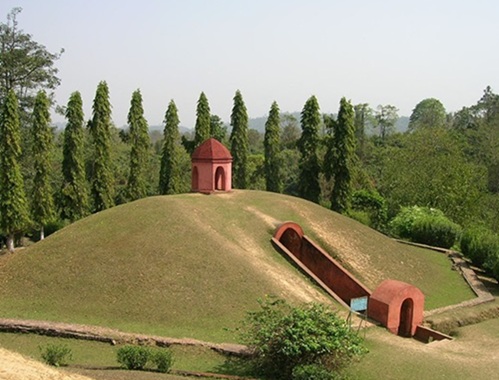
What are Charaideo Moidams ?
- Moidam means “the house of the soul”.
- These are the royal burial mounds of the Tai-Ahom dynasty (13th–19th century).
- They are often compared to the Egyptian Pyramids due to their massive earthen mounds and complex funerary architecture.
Location
- Eastern Assam, at the foothills of the Patkai mountain range, in the Charaideo district.
Architectural Features
Each Moidam is an elaborate funerary complex consisting of:
- A hemispherical earthen mound (Ga-Moidam)
- A temple-like structure on the top called Chaow-Chali
- An octagonal boundary wall (Gorh) – symbolizing the Tai cosmology
- A brick-stone vaulted chamber
- The royal burial chamber inside the vault (Gorbhwa)
- Nearby features, such as:
- Banyan trees
- Trees providing bark for making coffins
- Water tanks/ponds
Cultural and Religious Importance
Belief in Rebirth
Along with the deceased Ahom kings, items considered necessary for the afterlife were buried, including:
- Food
- Weapons
- Horses/elephants
- Servants (in some early cases)
Burial Practice
- Before the 17th century: Bodies were preserved using gelatin/herbal substances and then buried.
- After the 17th century: Cremation became common, and the ashes were interred in the Moidams.
This reflects the adoption of local Indian religious traditions by the Tai-Ahoms.
Cultural Continuity
Ancestor-worship rituals such as Mi-Dam-Mi-Phi and Tarpan continue even today—an unbroken tradition of over 600 years.
Administration and Security
- In the Ahom period, special officers known as Moidam Phukan were appointed to protect the burial sites.
- The group of guardians was called Moidamiya.
Discovery and Historical Sources
- The first scientific account was published in 1848 by Sergeant C. Clayton in the Journal of the Asiatic Society of Bengal.
- The Buranjis—the official historical chronicles of the Ahom state—are the most authentic sources of information about the Moidams.
UNESCO World Heritage Committee (WHC)
Establishment
- Created in 1972 during UNESCO’s 17th Session
- Based on the World Heritage Convention
Objectives – “5 Cs”
- Credibility
- Conservation
- Capacity Building
- Communication
- Communities (local participation)
Roles
- Makes the final decision on inscription of sites in the World Heritage List
- Allocates funds from the World Heritage Fund
- Monitors the conservation status of sites
Membership
- 21 elected representatives from State Parties
- Elected for six-year terms
- India is a member for 2021–2025
Advisory Bodies
- ICCROM – conservation of cultural heritage
- ICOMOS – architectural/landscape heritage (recommended Charaideo Moidams)
India’s Major Initiatives During WHC 46th Session
- India hosted the WHC session for the first time
- India donated USD 1 million to the UNESCO World Heritage Centre
- Purpose: Support cultural and natural heritage conservation in the Global South
- India–USA Cultural Property Agreement (CPA)
- To curb illegal trafficking and repatriate stolen antiquities
- Aligned with the UNESCO 1970 Convention
Ahom Empire (1228–1826)
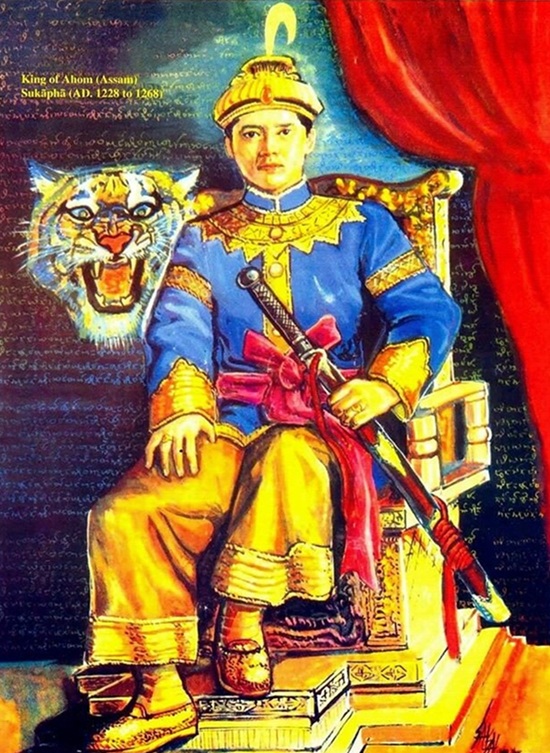
Establishment
- Founder: Sukapha, a Shan prince of Mong Mao
- Origin: Yunnan region of China
- Entered Assam in 1228, crossing the Patkai hills
Administration
- Monarchy; the king was called Swargadeo
- But real authority often rested with the Patra Mantris (Council of Ministers)
- In three periods during the 14th century, there was no king due to lack of suitable heirs
Culture
- Adopted Shaivism and Shakti traditions
- Rebuilt/renovated the Kamakhya Temple
- Deeply assimilated with local Assamese culture
Decline
- Weakened by repeated Burmese invasions
- Treaty of Yandaboo (1826) handed control to the British East India Company
- End of Ahom rule






 Contact Us
  New Batch : 9555124124/ 7428085757
  Tech Support : 9555124124/ 7428085757