
- UPSC Exam
- State PCS
- One Day Exam
- Current Affairs
- PT Quiz
- Downlaods
- About Coaching
- Blog
- Videos

| Prelims: (Science Technology + CA) Mains: (GS 2: International Relations; GS 3: Security, Defence Technology, Maritime Strategy) |
Reports indicate that Iran is close to finalising a deal with China to procure the CM-302 supersonic anti-ship cruise missile. The potential acquisition has drawn attention due to the missile’s advanced capabilities and its possible impact on regional maritime security, particularly in the Persian Gulf and Strait of Hormuz region.
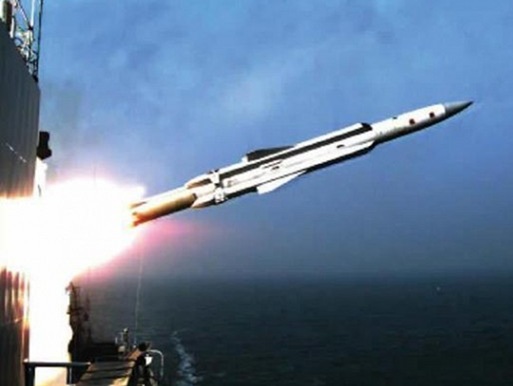
The CM-302 is an export variant of the YJ-12 missile deployed by the People's Liberation Army Navy. China has increasingly emerged as a key exporter of advanced missile systems, particularly to countries facing Western arms restrictions.
Iran has historically invested in anti-access/area denial (A2/AD) capabilities to deter superior naval forces operating near its coastline. The acquisition of a high-speed anti-ship missile like the CM-302 would significantly enhance its maritime strike capabilities.
The development reflects broader trends in:
The CM-302 is a supersonic anti-ship cruise missile designed to target large naval vessels and maritime assets.
It is primarily intended to:
1. Enhancement of Anti-Access/Area Denial (A2/AD)
The missile strengthens the ability of coastal states to deter naval incursions by threatening high-value targets such as aircraft carriers.
2. Impact on Gulf Maritime Security
If inducted by Iran, the CM-302 could:
3. Shift in Regional Military Balance
Supersonic anti-ship missiles complicate defence planning for technologically advanced navies, including those of the US and its regional partners.
4. China’s Expanding Defence Exports
The deal underscores China’s growing role as an alternative arms supplier, particularly for states under Western sanctions.
5. Implications for Global Trade Routes
Given the proximity of the Strait of Hormuz — a critical global energy chokepoint — enhanced missile capabilities may influence maritime risk calculations.
|
Feature |
CM-302 |
Subsonic Missiles |
|---|---|---|
|
Speed |
Supersonic (Mach 2.5–3) |
Subsonic (Mach 0.8–0.9) |
|
Interception Difficulty |
High |
Moderate |
|
Reaction Time for Target |
Very Limited |
Relatively Higher |
|
Strategic Role |
A2/AD, Carrier Strike |
Tactical/Surface Engagement |
While geographically distant, developments in advanced anti-ship missile proliferation:
For maritime powers, including India, strengthening naval air defence and early warning capabilities remains essential in an era of high-speed cruise missiles.
FAQsQ1. What is the CM-302 missile ? It is a Chinese-developed supersonic anti-ship cruise missile designed to strike large naval vessels and maritime targets. Q2. How fast is the CM-302 ? It travels at sustained supersonic speeds of approximately Mach 2.5–3, making interception challenging. Q3. How does it differ from subsonic anti-ship missiles ? Its higher speed drastically reduces reaction time for defensive systems and increases penetration capability. Q4. Why is Iran’s potential acquisition significant ? It would enhance Iran’s maritime deterrence posture and could alter the security dynamics of the Persian Gulf region. Q5. What role does satellite navigation play in the missile ? The missile uses China’s BeiDou satellite system for mid-course guidance, improving accuracy and strike probability. |



Our support team will be happy to assist you!

 Contact Us
  New Batch : 9555124124/ 7428085757
  Tech Support : 9555124124/ 7428085757