- UPSC Exam
- State PCS
- One Day Exam
- Current Affairs
- PT Quiz
- Downlaods
- About Coaching
- Blog
- Videos

| Prelims: Environment & Ecology, Government Schemes. GS Paper III – Infrastructure (Energy), Environment, Renewable Energy & Climate Change. |
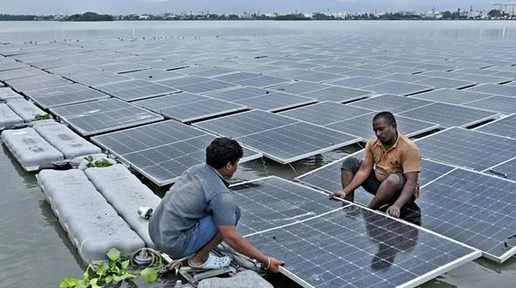
The Union Cabinet on 31 July 2026 approved the Pradhan Mantri Surya Sarovar Yojana (PM-SSY) to accelerate the development of floating solar power projects in India. The scheme aims to install 5,000 MW of floating solar capacity by 2030-31.
|
Feature |
Details |
|
Scheme Name |
Pradhan Mantri Surya Sarovar Yojana (PM-SSY) |
|
Objective |
Promote floating solar energy projects |
|
Target |
5,000 MW capacity by 2030-31 |
|
Financial Outlay |
₹5,070 crore |
|
Implementing Agency |
Solar Energy Corporation of India (SECI) |
|
Financial Assistance |
Up to ₹1 crore/MW |
|
Battery Storage Requirement |
Minimum 2 hours storage |
|
Total Storage Capacity |
Around 10,000 MWh |
Estimated cost:
The scheme supports India’s renewable energy objectives:
The Pradhan Mantri Surya Sarovar Yojana is a significant step towards expanding India's solar energy capacity. By utilising water bodies, reducing land dependency, integrating energy storage, and promoting domestic manufacturing, the scheme can contribute significantly to India's goal of achieving 500 GW of non-fossil fuel energy capacity by 2030 and advancing its clean energy transition.
Prelims QuestionQ. Consider the following statements regarding the Pradhan Mantri Surya Sarovar Yojana (PM-SSY):
Which of the statements given above is/are correct?
Mains Question"Discuss the significance of the Pradhan Mantri Surya Sarovar Yojana in achieving India's renewable energy targets. Highlight its opportunities and implementation challenges." |
Q1. What is the Pradhan Mantri Surya Sarovar Yojana (PM-SSY)?Answer: PM-SSY is a Central Government scheme aimed at promoting floating solar power plants on reservoirs and other water bodies by providing financial assistance to eligible projects. Q2. What is the objective of PM-SSY?Answer: The scheme aims to install 5,000 MW of floating solar capacity by 2030-31, reduce dependence on land-based solar projects, and support India's clean energy transition. Q3. Which agency will implement the PM-SSY?Answer: The scheme will be implemented by the Solar Energy Corporation of India (SECI). Q4. What is a floating solar power plant?Answer: A floating solar power plant is a solar photovoltaic (PV) system installed on floating platforms over reservoirs, lakes, dams, or other water bodies instead of on land. Q5. What financial assistance is provided under PM-SSY?Answer: The scheme provides Central Financial Assistance (CFA) of up to ₹1 crore per MW for eligible floating solar projects. |
| Prelims: Environment & Ecology, Climate Change, Wildfires, International Reports. GS Paper III: Environment, Disaster Management, Climate Change, Conservation, and Sustainable |
A new study by the World Weather Attribution (WWA) found that human-induced climate change made the wildfire weather in central Spain about 20 times more likely and in south-west France about twice as likely during July 2026.

Prelims QuestionQ. With reference to the World Weather Attribution (WWA), consider the following statements:
Which of the statements given above is/are correct?
Mains QuestionQ. "Climate change is increasing the frequency and intensity of wildfires across the world." Discuss the causes, impacts, and measures required to strengthen wildfire resilience. |
Q1. Why is the WWA report in the news?Answer: The World Weather Attribution (WWA) reported that human-induced climate change made wildfire weather 20 times more likely in central Spain and twice as likely in south-west France during July 2026. Q2. What is the World Weather Attribution (WWA)?Answer: WWA is an international scientific collaboration that studies how human-induced climate change influences extreme weather events, such as heatwaves, floods, droughts, and wildfires. Q3. What caused the severe wildfires in Spain and France?Answer: A combination of rapid vegetation growth, prolonged drought, extreme heat, and successive heatwaves created highly flammable conditions that fueled the wildfires. Q4. What is the Daily Severity Rating (DSR)?Answer: The Daily Severity Rating (DSR) is a wildfire danger index that measures the severity of fire weather by considering temperature, humidity, wind, and dryness, indicating how difficult a wildfire would be to control. Q5. Which areas were most affected by the wildfires?Answer: The worst-affected areas were Ávila, Madrid, Toledo, Guadalajara, and Castellón in Spain, and the Gironde department near Bordeaux in France. |
| Prelims: Governance, Public Administration, Fiscal Discipline, Department of Expenditure Mains: GS Paper II – Government Policies & Interventions, Public Administration, And Good Governance Keywords: One Officer One Official Car Policy, Staff Car Rules 2026, Department of Expenditure, Ministry of Finance, Government Vehicles, Fiscal Discipline, Administrative Efficiency |
The Ministry of Finance, through the Department of Expenditure, has introduced a "One Officer, One Official Car" policy to reduce unnecessary government expenditure, prevent misuse of official vehicles, and improve accountability in the use of public resources.
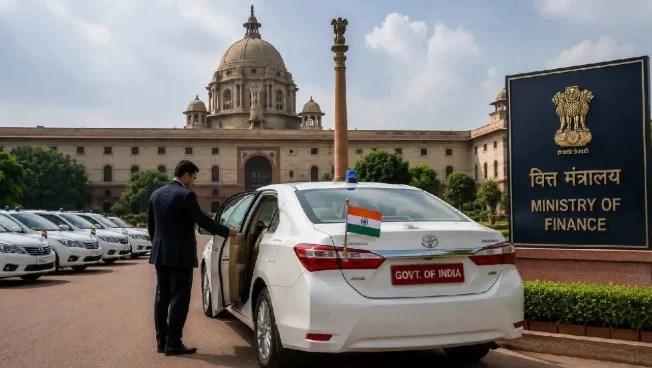
Under the new policy, an eligible Central Government officer can be allotted only one official staff car, even if the officer holds additional charge in another ministry, department, Public Sector Undertaking (PSU), autonomous body, or other government organisation. No additional government vehicle will be sanctioned for such officers.
The latest order supplements the Staff Car Guidelines issued in September 2022 by introducing stricter compliance measures. It specifically clarifies that officers holding multiple assignments cannot claim multiple official vehicles.
|
Particular |
Details |
|
Policy |
One Officer, One Official Car |
|
Issued By |
Department of Expenditure |
|
Ministry |
Ministry of Finance |
|
Objective |
Reduce expenditure and improve resource utilisation |
|
Applies To |
Eligible Central Government officers |
|
Additional Charge |
No additional official vehicle permitted |
|
Based On |
Staff Car Guidelines, 2022 |
Prelims MCQQ. With reference to the "One Officer, One Official Car" policy, consider the following statements:
Which of the statements given above is/are correct? A. 1 only Mains Practice Question"Efficient management of public resources is a key pillar of good governance." Discuss the significance of the 'One Officer, One Official Car' policy in promoting fiscal discipline, transparency, and administrative efficiency in India. |
Q1. What is the One Officer, One Official Car policy?It is a new Central Government policy allowing an eligible officer to use only one official vehicle, even while holding additional charge. It aims to prevent duplication and misuse of government resources. Q2. Why has the government introduced this policy?The policy seeks to reduce unnecessary government expenditure, strengthen fiscal discipline, and ensure efficient use of taxpayer-funded assets. Q3. Can officers use vehicles of PSUs or autonomous bodies?No. Central Government officers cannot use PSU or autonomous body vehicles except during authorised official duties or official tours. Q4. Which ministry issued the revised guidelines?The revised guidelines were issued by the Department of Expenditure under the Ministry of Finance through an Office Memorandum. Q5. Why is this policy important for UPSC?It is relevant for GS Paper II (Governance) and GS Paper III (Fiscal Management) as an example of administrative reforms, accountability, and efficient public resource management. |
The National Biodiversity Authority aims to:
The NBA performs facilitative, regulatory, and advisory functions.
The NBA advises the Central and State Governments on matters relating to biodiversity conservation and sustainable use.
Its major advisory functions include:
The NBA regulates access to biological resources and associated traditional knowledge.
Its regulatory responsibilities include:
For Indian citizens and Indian companies, approvals for commercial utilization are generally granted by the State Biodiversity Boards (SBBs).
Apart from regulation, the NBA actively supports biodiversity conservation through:
The NBA consists of:
All members are appointed by the Central Government.
The Biological Diversity Act establishes a three-tier institutional mechanism for biodiversity governance.
India is witnessing a rapid spread of Invasive Alien Species (IAS), which threaten:
Recognizing these threats, the National Green Tribunal (NGT) initiated suo motu proceedings, following which the NBA constituted the Expert Committee.
The Committee has been tasked with:
The committee will function for two years.
Invasive Alien Species (IAS) are plants, animals, fungi, or microorganisms that are introduced outside their natural geographical range and establish themselves in new ecosystems, causing ecological, economic, or health-related harm.
The Expert Committee will help:
Q1. What is the National Biodiversity Authority (NBA)?Answer: The National Biodiversity Authority (NBA) is an autonomous statutory body established under the Biological Diversity Act, 2002 to conserve biodiversity, promote sustainable use of biological resources, and ensure fair and equitable sharing of benefits arising from their use. Q2. Why is the National Biodiversity Authority in the news?Answer: The NBA has constituted an Expert Committee on Invasive Alien Species (IAS) to prepare a national list of invasive species and recommend strategies for their prevention, control, eradication, and ecological restoration. Q3. Under which Act was the National Biodiversity Authority established?Answer: The NBA was established under the Biological Diversity Act, 2002. Q4. Where is the headquarters of the National Biodiversity Authority located?Answer: The headquarters of the NBA is located in Chennai, Tamil Nadu. |
The Delhi Government has officially launched the Delhi Lakshmi Yojana on August 1, 2026, a flagship welfare scheme aimed at providing ₹2,500 per month as financial assistance to eligible women from economically weaker households.

The Delhi Lakshmi Yojana is a Direct Benefit Transfer (DBT)-based social welfare scheme launched by the Delhi Government to provide regular financial assistance to economically weaker women. The scheme is not limited to direct cash support but also seeks to promote financial savings, digital payments, and greater participation in social welfare programmes.
|
Feature |
Details |
|
Scheme Name |
Delhi Lakshmi Yojana |
|
State |
Delhi |
|
Beneficiaries |
Economically weaker women |
|
Monthly Assistance |
₹2,500 |
|
Budget Allocation |
₹5,110 Crore |
|
Expected Beneficiaries |
Over 17 lakh women |
|
Application Mode |
Online |
|
Payment Mode |
RD/FD Account or CBDC Wallet |
The Delhi Government has provided two payment options under the scheme.
The CBDC amount can only be used for purchasing government-approved essential goods.
The following women are not eligible under the scheme:
Applications will be accepted entirely through the official online portal.
Step 1: Visit the Delhi Lakshmi Yojana Portal.
Step 2: Register using your mobile number.
Step 3: Fill in Aadhaar details and other required information.
Step 4: Upload the necessary documents.
Step 5: Choose your preferred payment option (RD/FD or CBDDC Wallet).
Step 6: Submit the application.
Step 7: Save the Application Number for future reference.
Applicants may need the following documents:
Applications will be scrutinized by District Level Committees (DLCs).
Their responsibilities include:
The Delhi Lakshmi Yojana 2026 is a significant initiative by the Delhi Government to strengthen the economic security of women from economically weaker households. By providing ₹2,500 every month, the scheme aims to ensure regular financial support while promoting savings, digital financial inclusion, and women's empowerment. If implemented effectively and transparently, it has the potential to improve household incomes, encourage financial discipline, and contribute to broader social development goals such as education, healthcare, nutrition, and women's participation in the economy.

Our support team will be happy to assist you!

 Contact Us
  New Batch : 9555124124/ 7428085757
  Tech Support : 9555124124/ 7428085757