
- UPSC Exam
- State PCS
- One Day Exam
- Current Affairs
- PT Quiz
- Downlaods
- About Coaching
- Blog
- Videos

Indian puppetry is an integral part of India’s ancient cultural tradition. It is not just a form of entertainment but also a medium to convey social messages, folk tales, religious stories, and cultural heritage. In India, puppetry is broadly classified into four major types—String Puppets, Shadow Puppets, Glove Puppets, and Rod Puppets.
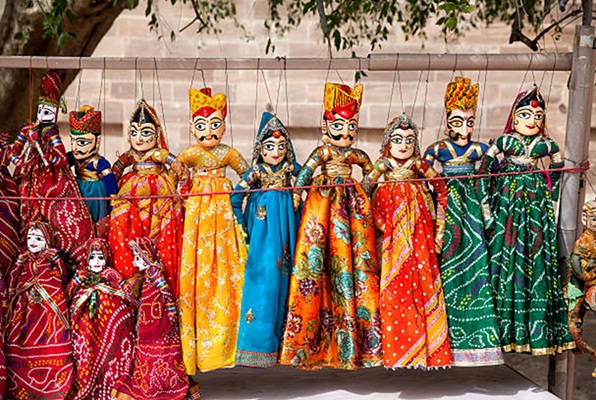
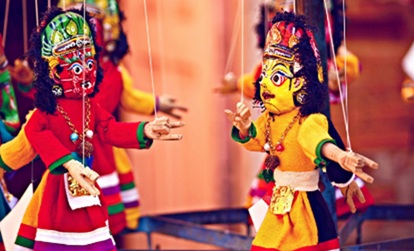
String puppets have jointed limbs controlled by strings.
Their flexibility, expressive movements, and realistic gestures make them the most lively and dynamic form of puppetry.
1. Kathputli – Rajasthan
2. Gombeyatta – Karnataka
3. Bommalattam – Tamil Nadu
4. Kundhei – Odisha
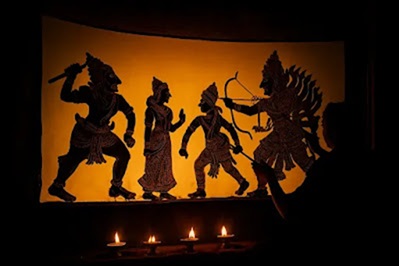
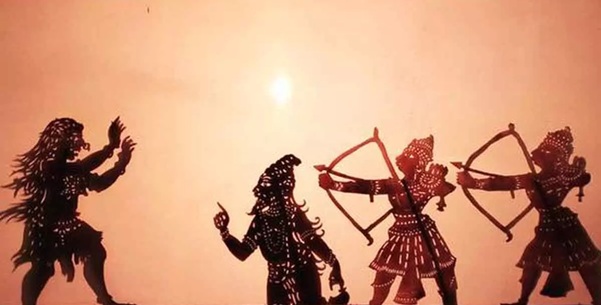
Shadow puppets are flat, usually made of processed leather to make them translucent. They are placed between a light source and a screen to create dramatic shadow performances.
1. Ravanachhaya – Odisha
2. Togalu Gombeyatta – Karnataka
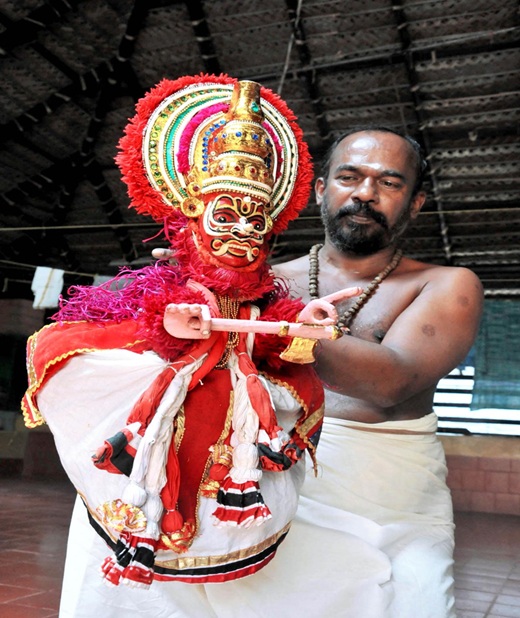
Glove puppets are worn on the hand like a glove. The performer uses fingers and palm movements to operate the puppet.
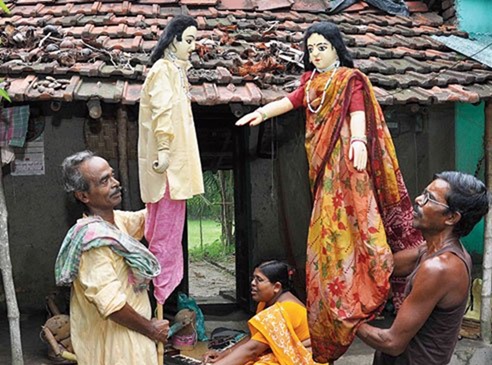
Rod puppets are larger in size and controlled by rods attached from below. They are considered an advanced form of glove puppets.
1. Putul Nach – West Bengal
2. Yampuri – Bihar
Indian puppetry is a vital part of the nation’s intangible cultural heritage. In the modern technological age, its preservation and revival require training support, digital promotion, and strong government assistance so that this rich art continues to thrive.
| Prelims: (UN Secretary + CA) Mains: (GS Paper 2 –Important International Institutions, agencies and fora - their Structure, Mandate ) |
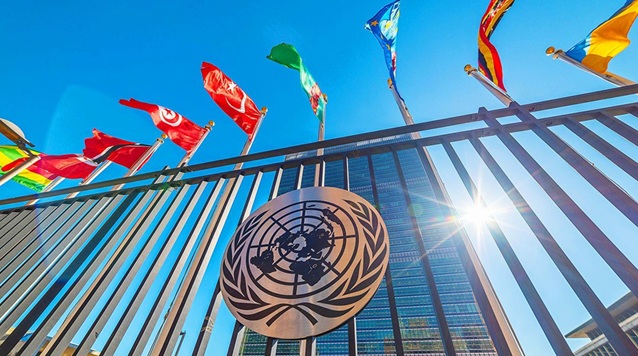
The United Nations has officially initiated the global selection process for appointing the next Secretary-General (SG), who will assume office in January 2027, following the conclusion of Antonio Guterres’s second term on 31st December 2026.
Initiation of the Nomination Process
Security Council Screening
Threshold for Recommendation
Appointment by the UNGA
Administrative & Executive Responsibilities
Diplomatic & Peacebuilding Role
Symbolic & Advocacy Role
FAQs1. Who appoints the UN Secretary-General ? The UN General Assembly, based on a recommendation from the UN Security Council, officially appoints the Secretary-General. 2. Can a P5 member block a candidate ? Yes. Any permanent member of the Security Council—US, UK, Russia, China, or France—can veto a candidate during the straw poll phase. 3. How long is the Secretary-General’s term? The SG serves a five-year term, typically renewable once, although this is based on convention rather than law. 4. Has any woman served as Secretary-General ? No. Despite increasing global support, no woman has ever been appointed as SG. 5. What is the SG’s power under Article 99 ? Article 99 empowers the SG to bring to the Security Council’s attention any matter that may threaten international peace and security, even without a member state's request. |
| Prelims: (Economy/Geography + CA) Mains: (GS 1 – Geography; GS 3 – Economic Development) |
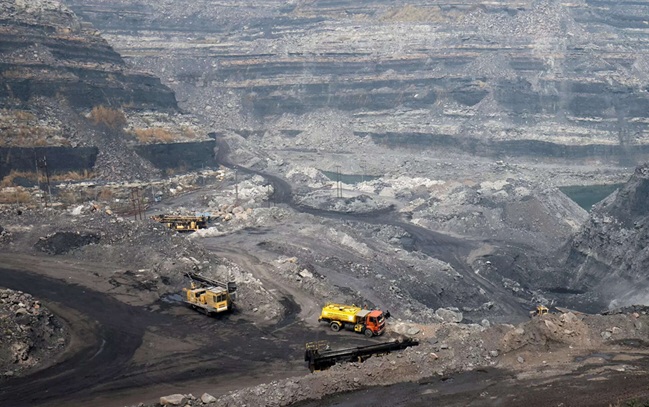
The government has authorised private entities accredited by the Quality Council of India (QCI) to act as Accredited Prospecting Agencies (APAs) under the Mines and Minerals (Development and Regulation) Act, 1957.
This reform aims to strengthen India’s mineral exploration ecosystem, enhance coal availability, and support long-term energy security through a more transparent, efficient, and diversified prospecting framework.
1. Backbone of India’s Power System
2. Major Contributor to Government Finances
3. Essential for Core Industries
4. Large Employment Base
5. Driver of Clean Energy Transition Funding
About Coal
Major Grades of Coal
1. Environmental & Health Damage
2. Import Dependence
3. Stranded Asset Risk
4. Social & Employment Transition
1. Phased Reduction in Coal Use
2. Enforcing Pollution Standards
3. Accelerated Renewable Expansion
4. Strengthening Grid Storage & Transmission
5. Strategic Role for Coal During Transition
FAQs1. What are Accredited Prospecting Agencies (APAs) ? Private or public entities accredited by QCI to undertake prospecting under the MMDR Act. 2. Why is coal still critical for India ? It provides stable baseload power, fuels industries, generates revenue, and supports millions of jobs. 3. Which states hold the largest coal reserves ? Odisha, Jharkhand, and Chhattisgarh (~69% of total). 4. Why does India import coking coal ? Domestic reserves are insufficient and low quality; high-grade coking coal is sourced globally. 5. What is India’s long-term coal strategy ? Gradual phase-down, pollution control, renewable expansion, BESS adoption, and a just transition for workers. |
| Prelims: (Polity + CA) Mains: (GS 2 – Governance, Constitution) |
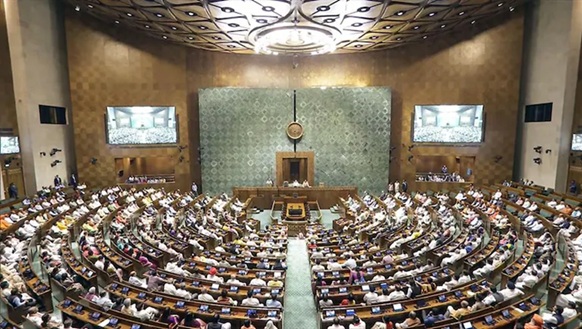
The Winter Session of Parliament has commenced amid concerns of a potential standoff over the Special Intensive Revision (SIR) of electoral rolls. Persistent issues—ranging from disruptions and reduced legislative scrutiny to growing executive dominance—have reignited debates on the declining deliberative health of the Indian Parliament.
Views from Constitutional Experts
Opinions from MPs
Government’s Position
Short-Term Variations
Long-Term Structural Decline — 17th Lok Sabha (2019–2024)
Historical Decline in Sittings
Weakening Committee Scrutiny
Cross-Government Trend
1. Anti-Defection Law: From Stability to Control
2. Executive Dominance Over Legislature
3. Erosion of Neutrality of Constitutional Offices
Historical Evolution
India’s Divergence
1. Restoring Government–Opposition Dialogue
2. Ensuring Adequate Sitting Days
3. Strengthening Standing Committees
4. Filling Constitutional Vacancies
5. Reforming Anti-Defection Law
6. Improving Parliamentary Neutrality
7. Reviving Question Hour & Zero Hour
8. Institutionalising PM’s Question Hour
FAQs1. Why is the decline in parliamentary functioning concerning ? It weakens legislative scrutiny, reduces accountability, and increases executive dominance. 2. What does productivity data show ? Sharp drops in recent sessions, minimal debates on major Bills, and historically low sitting days. 3. Why is the anti-defection law criticised ? It undermines MPs’ independence by binding them strictly to party whips. 4. How does India differ from other Westminster democracies ? Lacks mechanisms like PM’s weekly questioning and mandatory ministerial testimony before committees. 5. What reforms can improve parliamentary functioning ? More sittings, stronger committees, reduced whip control, impartial presiding officers, and institutionalised PM’s Question Hour. |
| Prelims: (Economy + CA) Mains: (GS 2 - Governance, GS 3 - Economic Development) |
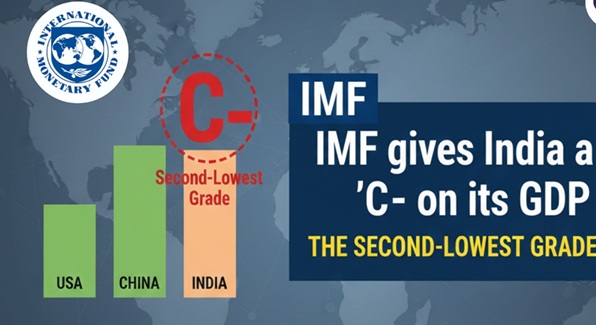
The International Monetary Fund (IMF), in its 2025 Article IV Staff Report, has once again awarded India’s national accounts—including GDP statistics—a C-grade, indicating the presence of methodological or coverage-related shortcomings that hinder effective economic surveillance.
This comes even as India reported a stronger-than-expected 8.2% GDP growth in July–September 2025, reviving long-standing debates about the credibility, consistency, and interpretation of the country’s GDP figures.
Article IV Consultations
Recommendations from the IMF
The Fund called for improvements in the quality, availability, and timeliness of macroeconomic datasets. It recommended:
India’s Response
What the IMF Grades Mean
India’s C rating indicates perceived gaps in GDP coverage, methodology, and consistency, even though most other datasets are considered broadly acceptable.
Overall Trend:
A gradual decline in confidence in statistical credibility over time.
India updated its GDP base year in 2015 to 2011–12. The revised data:
These inconsistencies made interpretation harder and became a recurring subject of scrutiny among economists and IMF staff.
Factors Behind the IMF’s Data Downgrade
The use of WPI—which does not fully represent producer-level prices—has long been viewed as a methodological weakness in real GDP estimation.
New GDP Series (2022–23 Base Year)
To be introduced on 27 February 2026, including:
Initial release will include:
Launching on 12 February 2026, based on:
This replaces the existing CPI series based on the 2011–12 consumption pattern.
FAQs1. What grade did India receive for its GDP data in the IMF 2025 report ? A C grade, indicating notable shortcomings. 2. Why does the IMF evaluate India’s statistics ? As part of its Article IV consultations, to ensure data is reliable for economic surveillance. 3. Why has confidence in India’s GDP data weakened since 2015 ? Due to large revisions, methodological issues, and discrepancies after switching to the 2011–12 base year. 4. What major updates are coming in 2026 ? A new GDP series, a new CPI series, a revised IIP, and monthly BoP data. 5. Why is the WPI–PPI issue important ? Using WPI to deflate GDP can distort real growth estimates; a PPI is considered more accurate. |
| Prelims: (Polity + CA) Mains: (GS 2 – Constitutional Bodies, Governance) |
The Election Commission of India (ECI) has informed the Supreme Court that the Union Government’s role in citizenship matters is limited and does not override the Commission’s constitutional power to verify citizenship for electoral roll maintenance. The clarification comes amid Opposition challenges to the Special Intensive Revision (SIR) exercise carried out in multiple states.
Section 9 of Citizenship Act — A Narrow Mandate
This does not prevent other authorities—including the ECI—from examining citizenship status for voter roll purposes.
Powers Under Articles 324 & 326
ROPA, 1950: Statutory Duties
Even Parliament’s power to make laws under Article 327 cannot dilute the Commission’s constitutional mandate.
To ensure electoral roll accuracy, the Commission seeks to remove:
Accurate rolls are crucial for both enrolment integrity and smooth voting at polling stations.
Concerns Raised
ECI’s Position
FAQs1. What triggered the ECI’s clarification to the Supreme Court ? Challenges alleging that SIR was a citizenship-screening exercise similar to NRC. 2. What does Section 9 of the Citizenship Act empower the Centre to do ? Determine how and when foreign citizenship was acquired—only for termination of Indian citizenship. 3. Under which constitutional articles does ECI claim the authority to verify citizenship ? Articles 324 and 326. 4. What is the purpose of the Special Intensive Revision (SIR) ? To correct, update, and purify electoral rolls—not to determine citizenship independently. 5. Does the SIR exercise require extensive documentation ? No. Voters only need to sign pre-filled forms delivered to their homes. |

Our support team will be happy to assist you!

 Contact Us
  New Batch : 9555124124/ 7428085757
  Tech Support : 9555124124/ 7428085757

