New
Hindi Medium: (Delhi) - GS Foundation (P+M) : 6th July 2026, 6:00 PM Hindi Medium: (Prayagraj) - GS Foundation (P+M) : 5th July 2026, 8:00 AM English Medium: (Delhi) - GS Foundation (P+M) : 20th July 2026 English Medium: (Prayagraj) - GS Foundation (P+M) : 15th July 2026, 8:00 AM Hindi Medium: (Delhi) - GS Foundation (P+M) : 6th July 2026, 6:00 PM Hindi Medium: (Prayagraj) - GS Foundation (P+M) : 5th July 2026, 8:00 AM English Medium: (Delhi) - GS Foundation (P+M) : 20th July 2026 English Medium: (Prayagraj) - GS Foundation (P+M) : 15th July 2026, 8:00 AM

Current Affairs for 01 July 2026

India's criminal justice system to be fully digital by 2027: What is Interoperable Criminal Justice System (ICJS)?

Why in the news ?

  • The Union Home Ministry has announced that from January 1, 2027, investigations and judicial proceedings under new criminal laws will be fully recorded digitally. To this end, the nationwide implementation of the Interoperable Criminal Justice System (ICJS) is in its final stages.
  • This initiative is a significant step towards transforming India's criminal justice system from a paper-based system to a digital, transparent, and integrated system.

What is the Interoperable Criminal Justice System (ICJS) ?

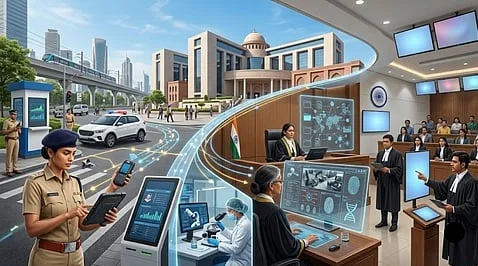
  • The Interoperable Criminal Justice System (ICJS) is a national digital platform of the Government of India, which aims to connect all key institutions involved in the criminal justice system through a common digital network.
  • The following institutions are being integrated under this system :
    • Police
    • Courts
    • Prisons
    • Forensic Science Laboratories
    • Prosecution
  • Through this platform, the entire process from filing an FIR to investigation, charge sheet, trial, and final judgment will be conducted digitally.
  • The entire data of the system is being stored securely on the Government of India's cloud platform, MeghRaj.

Why has the importance of the ICJS increased after the new criminal codes ?

  • Three new criminal laws, effective July 1, 2024, have given greater importance to digital processes and forensic investigations.
  • These three laws are :
    • The Indian Justice Code (Bharatiya Nyaya Sanhita - BNS) – replaced the Indian Penal Code (IPC).
    • The Indian Civil Security Code (BNSS) – replaced the Code of Criminal Procedure (CrPC).
    • The Indian Evidence Act (BSS) – replaced the Indian Evidence Act.
  • The effective implementation of these laws requires digital records, electronic evidence, and prompt coordination between various agencies.

What will happen by January 1, 2027 ?

  • According to the Union Home Ministry, from January 1, 2027, the investigation and judicial process will become completely digital.
  • Under this, the entire investigation process will be conducted digitally, digital records of court proceedings will be created, secure management of electronic evidence will be ensured, and real-time information will be shared between police, courts, prisons, prosecution, and forensic institutions.

Digital transmission of FIRs remains a major challenge

  • Although implementation of the ICJS is progressing rapidly, current data suggests that the system is not yet fully effective.
  • According to the National Crime Records Bureau (NCRB),
    • Only 46% of FIRs reach courts digitally.
    • This means that in more than half of cases, the digital data flow from police to court is still incomplete.
  • This situation indicates that much work remains to be done to fully implement the digital justice system.

Status of cases registered under new laws

  • After the implementation of the new criminal law –
    • 74.66 lakh FIRs were registered under the Indian Penal Code (BNSS).
    • 63,572 zero FIRs were registered under the BNSS.

What is a Zero FIR ?

  • A Zero FIR is a complaint that can be filed at any police station, regardless of jurisdiction.
  • It is then forwarded to the relevant police station.
  • Of these, approximately 13,000 cases were transferred to different districts within the same state.
  • The Home Ministry has clarified that no police officer can refuse to register a Zero FIR.

CCTNS: The Backbone of Digital FIRs

  • FIR registration across the country is being done through the Crime and Criminal Tracking Network & Systems (CCTNS).
  • Its key features :
    • Connects approximately 16,000 police stations.
    • FIRs can be registered in 23 Indian languages.
    • Translation of Zero FIRs into various languages ​​is possible through the Bhashini app.
  • This will facilitate the transfer of cases between states.

State Progress

  • Haryana, Goa, Assam, Punjab, and Chandigarh have implemented all key parameters for digitizing the criminal justice system so far.
  • Additionally, 23 states and union territories, including Delhi, are performing better than the national average.
  • Internet connectivity remains a major barrier in some northeastern states.

Rapid Expansion of Forensic Infrastructure

  • New laws mandate forensic examination of the crime scene for crimes punishable by seven years or more.
  • For this reason, forensic facilities are being expanded.
  • Key Achievements
    • Forensic laboratories in 2023 – 129
    • Increase to 154 in 2025
    • 25 new laboratories established in two years.
    • More than 700 mobile forensic units deployed.

Increasing number of forensic cases

Year

Cases Received

Cases Pending

2023

844,589

464,879

2025

1,111,798

390,786

  • It is clear that forensic capacity has increased, but the number of cases is increasing at a faster pace.

Progress in Implementation of New Criminal Codes

  • National Implementation Score of New Criminal Codes –
    • January 2025 - 46.47%
    • June 2026 - 70.06%

Other achievements

  • Chargesheet filing compliance within 60 days increased from 51% to 67%
  • Chargesheet compliance within 90 days increased from 40% to 61%
  • 46.5 lakh digital evidence (Sakshya IDs) were generated.
  • 56.74 lakh e-summons were issued.

How big is the National Police Database ?

  • As of May 31, 2026, the National Police Database will contain :
    • 376.8 million police records
    • 99 million FIRs
    • 76.4 million chargesheets.
  • This database has become the country's largest digital criminal record repository for police and investigative agencies.

Key Challenges

Although the ICJS is progressing rapidly, several significant challenges remain :

  • Strengthening internet connectivity in remote and northeastern regions.
  • Implementing uniform digital processes across all states.
  • Ensuring true interoperability between police, courts, prisons, prosecution, and forensic institutions.
  • Providing comprehensive training to officers and staff on the use of digital platforms.
  • Ensuring data security, cybersecurity, and privacy.

Importance of ICJS

  • If the ICJS is successfully implemented effectively, India's criminal justice system could see significant changes:
    • The speed of investigations will increase.
    • Delays in charge sheets and trials will decrease.
    • Better management of electronic evidence will be possible.
    • Coordination between various agencies will be strengthened.
    • The judicial process will become more transparent and accountable.
    • The likelihood of citizens receiving speedy and effective justice will increase.

Conclusion

India's criminal justice system is undergoing a historic digital transformation. The Interoperable Criminal Justice System (ICJS) is not just a technology project, but a comprehensive reform aimed at making the justice system more transparent, accountable, efficient, and citizen-centric. However, the fact that only 46% of FIRs have reached courts digitally indicates that many practical challenges remain. Therefore, the target of January 1, 2027, will be considered successful only when the digital system becomes an integral part of the everyday judicial process across the country, not just on paper.
Strait of Hormuz: Can Iran legally charge navigation fees?

Why in the news ?

  • Recently, following a framework agreement between the US and Iran on June 15, 2026, the Strait of Hormuz was reopened to global maritime traffic and the US embargo on Iranian shipping was lifted. Previously, Iran had used the Strait to exert strategic pressure after the US and Israel initiated military action against Iran.
  • During the war, Iran charged transit tolls on every ship, which have now been abolished, but it continued to charge navigation fees and environmental protection charges. This has raised questions under international law about whether Iran has the legal right to do so.

Why is the Strait of Hormuz important ?

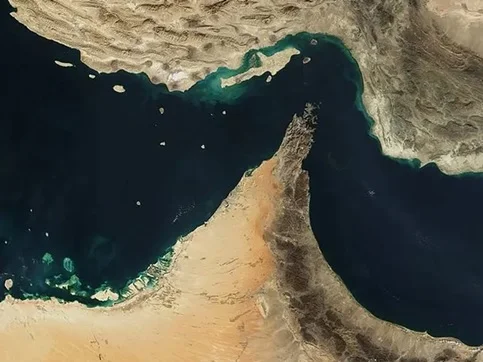
  • The Strait of Hormuz is one of the world's most important maritime trade routes. It connects the Persian Gulf with the Gulf of Oman and the Arabian Sea.
  • A large portion of the world's seaborne crude oil and natural gas is transported through this strait. The energy security of energy-importing countries such as India, China, Japan, and South Korea depends heavily on this route.
  • Therefore, any tension in this region directly impacts the global energy market and maritime trade.

What does international law say ?

  • Articles 37 to 44 of the United Nations Convention on the Law of the Sea (UNCLOS), 1982, contain provisions regarding straits used for international navigation.
  • According to these provisions, ships and aircraft of all countries have the right to transit passage, i.e., continuous and unhindered passage.
  • UNCLOS clearly states that this right cannot be interfered with or suspended in any way.
  • Its purpose is to ensure that no coastal country can use its geographical position to influence international trade.

Significance of the Corfu Channel Case

  • The International Court of Justice (ICJ) ruled in the Corfu Channel Case (1949) that foreign ships have the right to pass freely through a strait used for international navigation in peacetime, provided they do not pose a threat to the security of the coastal state.
  • This decision later became the basis for the principle of 'Freedom of Navigation' enshrined in UNCLOS.

Are Iran's navigation fees legal ?

  • In accordance with the spirit of UNCLOS, it is not considered appropriate to use a natural international strait as a means of generating revenue.
  • If a country charges ships a fee simply for passing through its territorial waters, it may be considered an obstruction of the right of transit passage.
  • Therefore, many international experts consider the navigation fees imposed by Iran to be controversial.

What legal arguments does Iran make in its favor ?

  • Iran's first argument is that the Strait of Hormuz is not entirely located in the High Seas, but rather falls within the territorial sea of ​​Iran and Oman. Therefore, not only does complete freedom of navigation apply here, but certain rights of coastal states also apply.
  • Second, Iran cites the provisions of UNCLOS regarding "Innocent Passage." According to Article 19, if a ship's activities pose a threat to the peace, security, or public order of a coastal state, the coastal state can take necessary measures. Iran argues that it can invoke this provision in the event of regional tensions.
  • Third, Iran argues that ships are also charged fees through other major waterways in the world, such as the Suez Canal and the Panama Canal. However, international experts do not fully accept this argument because they are both artificial canals, while the Strait of Hormuz is a natural strait and is subject to different UNCLOS rules.
  • Fourth, Iran also invokes the Persistent Objector Doctrine. Iran has signed UNCLOS but has not ratified it. It argues that the principle of transit passage is not part of customary international law for it, and therefore, it is not bound by it.
  • Fifth, Iran also cites its 1993 Law on Marine Areas of the Islamic Republic of Iran in the Persian Gulf and Oman Sea. This law allows for the control of foreign warships and certain categories of vessels and the implementation of environmental protection measures. Iran attempts to justify the environmental protection fee on this basis.

What are the broader implications of this dispute?

  • The dispute over the Strait of Hormuz demonstrates how intertwined economic and military power have become in modern times.
  • If shipping traffic through the Strait is disrupted, it could lead to increased crude oil prices, increased marine insurance costs, disruption of global supply chains, and a negative impact on the world economy.

Its Importance for India

  • India imports a large portion of its energy needs from West Asia, and most of its oil comes through the Strait of Hormuz.
  • Therefore, any tension in the region could adversely impact India's energy security, import costs, inflation, and current account deficit.
  • This is why India consistently supports stability, maritime security, and adherence to international law in the region.

Conclusion

The Strait of Hormuz is crucial for global energy security and international maritime trade. While UNCLOS ensures freedom of international navigation, legal aspects such as territorial waters, national security, domestic law, and the Persistent Objector Doctrine complicate the issue. A lasting resolution to this dispute is possible not solely through legal interpretations, but through diplomatic dialogue, regional cooperation, and respect for international rules.

Hamburg Sustainability Conference 2026: Global emphasis on development and clean energy in a fragmented world

Why in the news ?

At the Hamburg Sustainability Conference (HSC) 2026, held in Hamburg, Germany, on June 29-30, 2026, world leaders, senior UN officials, policymakers, and private sector representatives expressed serious concern about growing geopolitical conflicts, the energy crisis, the lack of development finance, and weakening multilateralism. The key message of the conference was that development is today's greatest strategic force (hard power) and clean energy has become the foundation of real security for the future.
What is the Hamburg Sustainability Conference 2026 ?

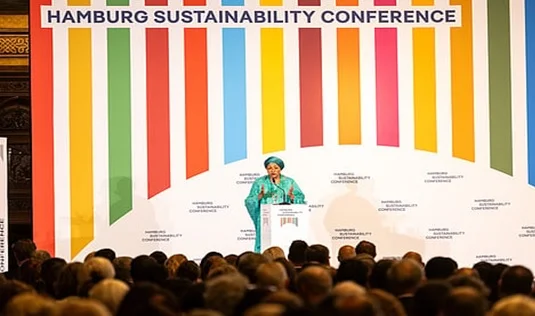
  • The Hamburg Sustainability Conference 2026 was held in Hamburg, Germany, on 29–30 June 2026. This year's theme was "The Power of Cooperation: Advancing Progress Together."
  • Approximately 1,600 delegates from 115 countries participated in the conference. These included ministers from 22 countries, top officials from 13 international organizations, and over 280 private sector representatives.
  • The conference was jointly organized by the United Nations Development Programme (UNDP), the German Federal Ministry for Economic Cooperation and Development (BMZ), the Michael Otto Foundation, and the Hamburg City Administration.

What was the main message of the conference ?

  • All speakers at the conference agreed that the solution to the challenges facing the world today lies not in weakening global cooperation but in making it more effective.
  • Speakers said that to address problems such as conflict, energy crises, and lack of development finance, it is necessary to redefine multilateralism in accordance with the new times.

Why was development called the new "hard power" ?

  • Alexander de Croo, Administrator of the United Nations Development Programme (UNDP), stated that development is not only a means to economic growth, but also the most effective means to global peace and stability. He explained that countries that achieve inclusive and balanced development are less likely to experience conflict, civil war, and political instability.
  • He stated that "Development is Hard Power," meaning that development itself has become a strategic force today.

Why is clean energy considered a cornerstone of national security ?

  • Alexander de Croo stated that renewable energy is no longer solely a matter of climate change. In the current global climate, it has become a crucial pillar of national security and economic stability.
  • He explained that clean energy sources, such as solar and wind, are cheaper, less volatile, and relatively more vulnerable to geopolitical crises than fossil fuels. He emphasized that energy transition and energy security cannot be separated from each other.

What concerns were raised about fossil fuel subsidies ?

  • According to data presented at the conference, ongoing conflicts in West Asia could lead to global fossil fuel subsidies reaching US$1.1 trillion in 2026, approximately US$410 billion more than in 2025.
  • Experts believe this could slow the transition to clean energy, increase the economic burden on developing countries, and deepen instability in the global energy market.

What did the German President warn about ?

  • German President Frank-Walter Steinmeier stated that the decades-old rules-based international order is facing a serious crisis. He stated that some powerful countries are openly violating international rules to serve their own interests.
  • Citing the example of the Strait of Hormuz, he said that if vital sea routes are disrupted, it impacts the entire world's economy, trade, and supply chains. Therefore, safe sea routes are essential for global economic development.

What did UN Deputy Secretary-General Amina J. Mohammed say ?

  • UN Deputy Secretary-General Amina J. Mohammed said that the development gains made over the past several decades are now under serious threat. She said that the ongoing war in West Asia has disrupted maritime trade, affected energy supplies, increased global inflation, and weakened vital supply chains.

The world is going through a period of unprecedented contradictions.

  • Alexander de Croo said that while the world is experiencing unprecedented economic prosperity and technological innovation, it is also facing increasing conflict, economic uncertainty, and global instability.
  • He said that for the first time since World War II, the world is facing so many crises simultaneously.

Which new global alliances will be announced at the conference ?

  • More than 15 new global alliances are expected to be announced or make significant progress during the conference.
  • These alliances aim to strengthen global cooperation in areas such as clean energy, Responsible AI, child malnutrition, skills development, sustainable development, and green investment.

New initiative to end child malnutrition

  • During the conference, the German Federal Ministry for Economic Cooperation and Development (BMZ), UNICEF, and the United Nations World Food Programme (WFP) are expected to announce a joint global initiative aimed at ending child malnutrition by 2030.

North-South Development Commission

  • The North-South Development Commission was launched on June 30, 2026, as the summit's key event.
  • The Commission will be co-chaired by former German Chancellor Olaf Scholz and former Costa Rican President Laura Chinchilla.
  • The Commission will have approximately 20 members, most of whom will be from countries in the Global South.
  • The Commission aims to develop new cooperation models consistent with a multipolar world order, increase the participation of the Global South, and foster new partnerships in the areas of development finance, climate change, and international trade.

Conclusion

The Hamburg Sustainability Conference 2026 sent a clear message that the solutions to current global challenges-such as war, energy crises, climate change, economic instability, and weakening multilateralism-lie not in isolation or protectionism, but in stronger international cooperation, inclusive growth, a clean energy-based economy, and effective global governance. The conference also underlined that the true power of the future will lie not solely in military capability, but in inclusive growth, energy self-sufficiency, climate-friendly policies, and strengthened multilateral cooperation.

« »
  • SUN
  • MON
  • TUE
  • WED
  • THU
  • FRI
  • SAT
Have any Query?

Our support team will be happy to assist you!

OR