| (Preliminary Examination: Current Events of National Importance) (Mains Examination, General Studies Paper 2: Topics Related to the Development and Management of Social Sectors/Services Related to Health, Education, Human Resources) |
Recently, a new chapter in integrative medicine began with the release of the "Delhi Declaration" at the World Health Organization's (WHO) Second Global Summit on Traditional Medicine.
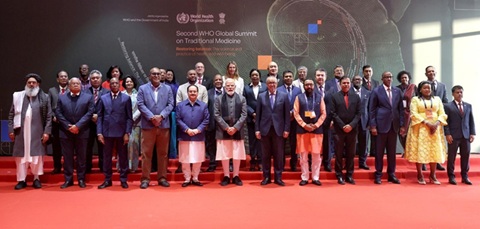
The Delhi Declaration focuses on resolutions related to four areas:
| (Prelims: Economic and Social Development) (Mains, General Studies Paper 3: Topics related to Indian economy and planning, resource mobilization, growth, development, and employment) |
Features of Unified Lending Interface (ULI)
|
This RBI report shows that the Indian banking system stands on a strong footing today, with minimal NPAs, strong capital, and a growing balance sheet. The key to sustainable success in the years ahead lies in trust-based technology adoption, transparent customer protection, and balanced regulation.
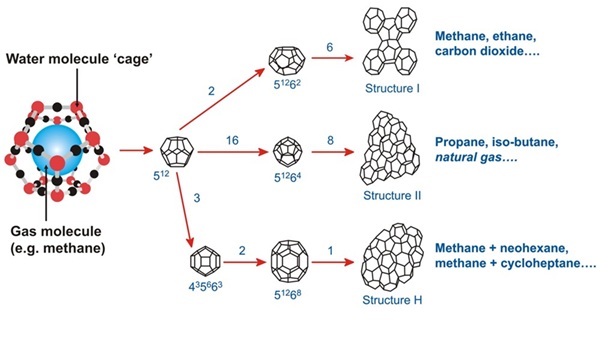
Gas hydrates form only when the following conditions coexist:
Therefore, they are typically found in:
Gas hydrates are mainly distributed in:
Scientists also hypothesize that under suitable conditions, gas hydrates may exist on other planets or icy moons as well.
| Prelims: (Economy + CA) Mains: (GS Paper 2: International Relations, Global Governance, WTO; GS 3: Climate Change, Industrial Policy, External Trade, Energy Transition) |
From January 1, the European Union has operationalised the Carbon Border Adjustment Mechanism (CBAM) on selected carbon-intensive imports. The move is expected to significantly impact India’s exports of steel, aluminium, and other energy-intensive products, raising concerns over trade competitiveness and climate equity.

As the European Union intensifies its climate action agenda to achieve net-zero emissions by 2050, it has adopted market-based mechanisms to prevent “carbon leakage”—a situation where industries relocate production to countries with weaker emission norms.
CBAM represents the EU’s attempt to align international trade with its domestic carbon pricing regime under the EU Emissions Trading System (ETS). However, for developing countries like India, which rely on carbon-intensive manufacturing for export-led growth, the measure has sparked concerns over protectionism disguised as climate action.
CBAM is a carbon pricing mechanism that imposes a levy on imports entering the EU based on the embedded carbon emissions generated during their production.
It effectively extends the EU’s domestic carbon costs to foreign producers, requiring importers to purchase CBAM certificates corresponding to the carbon footprint of their goods.
CBAM currently applies to imports from the following carbon-intensive sectors:
The EU retains the authority to expand the product scope in the future, increasing long-term uncertainty for exporters from developing economies.
India’s exports to the EU are heavily concentrated in steel, iron, and aluminium, making them particularly vulnerable to CBAM-induced costs.
Key concerns include:
Additionally, the United Kingdom is expected to introduce a similar carbon border tax, while high US tariffs on metals continue to strain India’s external trade environment.
CBAM has attracted resistance from several countries:
Critics argue that exempting countries with existing carbon taxes creates an uneven playing field, disadvantaging nations with limited fiscal and technological capacity.
CBDR, recognised under international environmental law and WTO norms, mandates differentiated responsibilities based on capacity and historical contribution.
To comply with CBAM, Indian exporters are under pressure to transition towards low-emission steelmaking technologies.
India’s steel sector is predominantly BF–BOF-based, making compliance costly and technologically challenging.
Indian exporters have urged the government to:
However, the EU has maintained that CBAM is non-negotiable, as it is framed as a climate instrument rather than a trade measure.
A key constraint for Indian steelmakers is limited access to steel scrap:
As a result, Indian manufacturers face a competitive disadvantage unrelated to efficiency or intent.
From January 1, 2026, CBAM will impose a direct carbon cost on every shipment of Indian steel and aluminium entering the EU.
According to the Global Trade Research Initiative (GTRI):
A major operational challenge lies in emissions data availability:
Experts recommend pursuing Mutual Recognition Agreements (MRAs) so that emissions certified by Indian authorities are accepted by the EU.
Indian trade experts argue that CBAM reflects commercial and strategic interests of developed economies more than genuine climate mitigation.
A UNCTAD study (2021) estimated that:
UNCTAD has suggested that CBAM revenues should be channelled towards financing green technologies in developing nations to uphold climate justice.
India has consistently opposed CBAM, describing it as:
The Finance Minister has formally conveyed India’s concerns to the EU, emphasising the need for cooperative, not punitive, climate action.
CBAM represents a critical intersection of climate policy, geopolitics, and economic development.
FAQsQ1. What is the main objective of the EU’s Carbon Border Adjustment Mechanism ? To prevent carbon leakage by imposing a carbon cost on imports equivalent to what EU producers pay domestically. Q2. Why is CBAM controversial for developing countries like India ? Because it increases trade costs, ignores historical emissions, and undermines the principle of Common But Differentiated Responsibilities. Q3. Which Indian sectors are most affected by CBAM ? Steel, aluminium, cement, fertilisers, and other energy-intensive industries. Q4. How does CBAM impact Indian MSMEs ? MSMEs face high compliance and verification costs and risk being priced out of EU markets due to lack of emissions data. Q5. What solutions can reduce CBAM’s adverse impact on India ? Green technology adoption, Mutual Recognition Agreements, climate finance support, and coordinated global climate governance. |
| Prelims: (Polity & Governance + CA) Mains: (GS 2: Governance, Federalism, Public Policy; GS 3: Infrastructure, Economic Development) |
Land acquisition has emerged as the single largest cause of delays in major infrastructure projects reviewed under the PRAGATI (Pro-Active Governance and Timely Implementation) mechanism, surpassing issues related to environment, forest clearances, and law-and-order concerns.

India’s infrastructure-led growth strategy—covering highways, railways, industrial corridors, urban transit, and energy projects—depends critically on timely access to land. However, land acquisition has historically been a contentious issue due to competing claims between development objectives and the rights of landowners, farmers, and local communities.
While India has moved away from colonial-era acquisition practices, balancing economic growth, social justice, and federal governance remains a persistent policy challenge. The renewed focus under PRAGATI highlights that administrative and institutional issues, rather than legal absence, are at the heart of current delays.
Land acquisition refers to the process by which the government acquires private land for public purposes, including:
Given India’s demographic pressures and development ambitions, land acquisition is foundational to economic expansion, yet continues to generate social resistance and political sensitivity.
The current legal regime is governed by the Right to Fair Compensation and Transparency in Land Acquisition, Rehabilitation and Resettlement Act, 2013 (LARR Act).
This law replaced the Land Acquisition Act of 1894 and sought to make acquisition more humane and participatory.
The Act reflects a shift from state-centric acquisition to a rights-based framework.
Compensation under the LARR Act includes:
Rehabilitation measures include:
These provisions were introduced to address historical displacement without adequate livelihood protection.
Despite its progressive design, land acquisition remains slow due to:
Since land is a State subject, differences in administrative capacity, political priorities, and implementation efficiency further complicate acquisition timelines.
Land-related delays disproportionately affect:
Even after financial approvals and technical clearances, unresolved land issues often lead to cost overruns, contractual disputes, and time overruns, undermining India’s infrastructure momentum.
Recent PRAGATI reviews have highlighted that:
This establishes land acquisition as a structural bottleneck in India’s development pipeline.
Despite the magnitude of the issue, the government has clarified that:
PRAGATI enables escalation of unresolved issues to higher institutional levels, ensuring accountability and time-bound decision-making.
Since its inception, PRAGATI has:
Although fiscal savings are not precisely quantified, faster execution has helped unlock stalled capital and reduce economic losses due to delays.
Efficient land acquisition is not merely a legal issue but a governance challenge.
The focus must remain on execution efficiency, not legislative dilution.
FAQsQ1. Why is land acquisition a major cause of infrastructure delays in India ? Because of complex procedures, consent requirements, valuation disputes, and coordination challenges between multiple authorities. Q2. Which law governs land acquisition in India today ? The Right to Fair Compensation and Transparency in Land Acquisition, Rehabilitation and Resettlement Act, 2013. Q3. What role does PRAGATI play in resolving land issues ? PRAGATI reviews stalled projects, escalates unresolved land disputes, and improves inter-ministerial and Centre–State coordination. Q4. Why hasn’t the government amended the land acquisition law despite delays ? The government believes the issue lies in implementation and administration rather than in the legal framework itself. Q5. How can land acquisition be improved without diluting landowner rights ? Through better planning, early consultations, digital land records, faster dispute resolution, and stronger institutional coordination. |
| Prelims: (Environment + CA) Mains: (GS 3: Environment, Biodiversity Conservation; GS 2: Governance) |
The Satipo Municipality in Peru has adopted the Declaration of Rights for Native Stingless Bees (Tribe Meliponini) through a municipal ordinance, granting legal rights to Amazonian stingless bees. This marks the world’s first legal recognition of insect rights, reinforcing biocultural conservation and rights-of-nature–based governance.

In recent decades, environmental governance has witnessed a paradigm shift from human-centric conservation to rights-of-nature frameworks, where ecosystems and species are recognised as legal entities. Countries like Ecuador and Bolivia have constitutionalised nature’s rights, while courts in New Zealand, Colombia, and India have experimented with legal personhood for rivers and ecosystems.
The recognition of legal rights for Amazonian stingless bees represents a significant evolution of this framework—extending legal protection to insects, which are foundational yet often overlooked components of biodiversity and food systems.
Stingless bees face escalating threats from:
These pressures threaten not only bee populations but also Indigenous knowledge systems and rainforest resilience.
The Declaration is a Rights of Nature–based legal framework incorporated into municipal law by Satipo, setting a global precedent for insect conservation.
Rights Recognised Include:
Since stingless bees cannot represent themselves, human guardians—such as Indigenous leaders, environmental experts, or community institutions—are authorised to act on their behalf and initiate legal action against polluters.
India has witnessed similar judicial thinking, though not yet extended to insects:
These cases reflect India’s evolving environmental jurisprudence, though legislative backing remains limited.
The move signals a shift from symbolic conservation to enforceable ecological justice.
FAQsQ1. Why are Amazonian stingless bees ecologically important ? They pollinate over 80% of Amazonian flora, sustaining biodiversity and forest regeneration. Q2. What makes this declaration globally significant ? It is the world’s first legal recognition of insect rights, extending rights-of-nature jurisprudence. Q3. How are stingless bees represented legally ? Human guardians such as Indigenous leaders or experts can represent them in legal proceedings. Q4. What is meliponiculture ? It is the traditional practice of rearing stingless bees for honey and medicinal purposes. Q5. Does India recognise legal rights of animals or nature ? Indian courts have recognised animal welfare and experimented with legal personhood for rivers, but comprehensive rights-of-nature legislation is still absent. |
| Prelims: (Economy + CA) Mains: (GS 2: Governance; GS 3: Infrastructure, Transport, Security, Environment) |
The year 2025 marked a landmark phase for Indian Railways, as rail connectivity finally reached the Kashmir Valley and Aizawl (Mizoram), integrating India’s last major unconnected regions into the national rail network. Alongside historic infrastructure expansion, the Railways also grappled with safety challenges, crowd management issues, freight constraints, and financial stress, highlighting the dual narrative of achievement and challenge.

Indian Railways is not merely a transport utility but a strategic national asset, playing a vital role in:
In recent years, Railways has pursued high-capacity corridors, advanced technology, and regional connectivity, while balancing rising passenger demand, freight competitiveness, and fiscal sustainability. The developments of 2025 encapsulate this transformation.
The idea of a railway connection to the Kashmir Valley dates back to 1898, when Maharaja Pratap Singh first envisioned it. After Partition, the Jammu–Sialkot rail link went to Pakistan, leaving Jammu and Kashmir disconnected from India’s rail grid.
This changed in June 2025, when the Prime Minister inaugurated the final 63-km Katra–Sangaldan section of the 272-km Udhampur–Srinagar–Baramulla Rail Link (USBRL).
A Vande Bharat train service between Katra and Srinagar marked the operational integration of the Valley.
Significance: Enhances strategic mobility, economic integration, tourism, and all-weather connectivity in a sensitive border region.
Mizoram’s late integration into the rail network stemmed from:
The breakthrough came with the inauguration of the Bairabi–Sairang line in September 2025, connecting Bairabi to Sairang near Aizawl.
Significance: Boosts regional development, reduces logistics costs, and strengthens Act East connectivity.
In 2025, Railways inaugurated the new 2.08-km Pamban Bridge, replacing the 110-year-old cantilever bridge.
The year began with tragedy:
Indian Railways prioritised:
By 2030, Railways aims to achieve:
Despite constraints, Railways remains one of India’s cleanest transport modes:
FAQsQ1. Why is rail connectivity to Kashmir strategically important ? It enhances all-weather connectivity, strategic mobility, economic integration, and national security in a sensitive border region. Q2. Why is freight diversification critical for Indian Railways ? Over-dependence on coal and bulk commodities exposes Railways to demand volatility and long-term revenue risks. Q3. What makes Indian Railways a green transport mode ? High electrification, low emission share, solar power use, and development of hydrogen trains make Railways environmentally sustainable. |
| Prelims: (Geography + CA) Mains: (GS 1: Physical Geography; GS 3: Disaster Management, Climate Change, Environment) |
A powerful bomb cyclone recently swept across the northern United States, triggering severe winter weather across the Midwest and the East Coast. The storm led to intense snowfall, blizzards, strong winds, and widespread disruption, once again drawing attention to extreme mid-latitude weather systems.
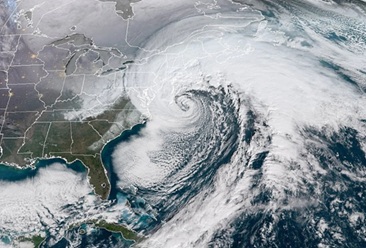
Mid-latitude regions frequently experience extratropical cyclones, which derive their energy from the interaction between contrasting air masses. While most such systems intensify gradually, some undergo explosive intensification, leading to exceptionally powerful storms known as bomb cyclones.
In recent years, bomb cyclones have gained prominence in climate discussions due to their increasing frequency, intensity, and associated socio-economic impacts, particularly during winter months in the Northern Hemisphere.
A bomb cyclone is a large mid-latitude storm resulting from explosive cyclogenesis (also known as bombogenesis).
Structurally, a bomb cyclone is indistinguishable from other intense extratropical cyclones but is defined by its rate of intensification rather than its structure.
The rapid deepening of the low-pressure system is the defining feature.
Bomb cyclones typically form when:
They most commonly occur in winter, when temperature gradients are strongest.
The four most active regions for extratropical explosive cyclogenesis are:
These regions combine strong jet streams, oceanic heat sources, and sharp thermal contrasts.
Bomb cyclones are associated with extreme and rapidly changing weather conditions, including:
Such storms can cause widespread disruption to transport, power supply, agriculture, and public safety.
While bomb cyclones are not new phenomena, climate scientists suggest that:
This raises concerns about more frequent or intense winter storms in mid-latitude regions.
For countries in temperate regions, bomb cyclones are a growing concern for resilience planning.
FAQsQ1. How is a bomb cyclone different from a normal extratropical cyclone ? A bomb cyclone intensifies extremely rapidly due to explosive cyclogenesis, whereas normal extratropical cyclones deepen gradually. Q2. Why do bomb cyclones mostly occur in winter ? Winter provides strong temperature contrasts between cold polar air and warm ocean air, which is essential for explosive intensification. Q3. Are bomb cyclones the same as hurricanes ? No. Bomb cyclones are mid-latitude systems driven by temperature contrasts, while hurricanes are tropical systems powered by warm ocean waters. |

Our support team will be happy to assist you!


 Contact Us
  New Batch : 9555124124/ 7428085757
  Tech Support : 9555124124/ 7428085757