
- UPSC Exam
- State PCS
- One Day Exam
- Current Affairs
- PT Quiz
- Downlaods
- About Coaching
- Blog
- Videos

| Mains: GS Paper III: Science & Technology – Biotechnology, Genetic Disorders, Advances in Medical Science and Rare Disease Therapies Keywords: Alexander Disease | Leukodystrophy | GFAP Gene | Glial Fibrillary Acidic Protein | Myelin Sheath | White Matter | Rosenthal Fibers | Astrocytes | Zanvastro | Zilganersen | Rare Genetic Disease | Precision Medicine |
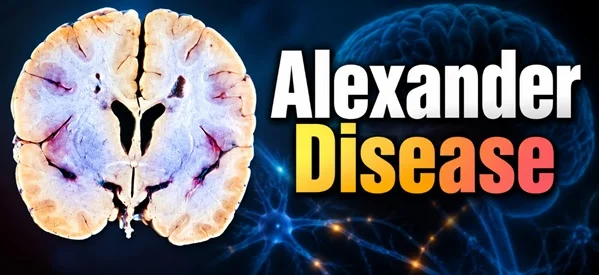
Alexander disease is primarily associated with mutations in the GFAP gene.
In most patients, the GFAP mutation occurs spontaneously, meaning it is a new genetic mutation and is not inherited from either parent. However, in some cases, Alexander disease can be inherited from an affected parent.
Historically, treatment for Alexander disease was largely supportive and symptomatic, as there was no therapy capable of directly addressing the underlying disease mechanism. This changed with the approval of Zanvastro (zilganersen) by the U.S. FDA.
|
Q. With reference to Alexander disease, consider the following statements:
Which of the statements given above are correct? (a) 1 and 2 only Mains QuestionQ. What are leukodystrophies? Discuss the genetic basis and neurological effects of Alexander disease. How can targeted therapies transform the treatment of rare genetic disorders? |
What is Alexander disease?Alexander disease is a rare genetic neurological disorder that damages the white matter of the brain and causes progressive deterioration of the nervous system. Which gene causes Alexander disease?Most cases are associated with mutations in the GFAP (Glial Fibrillary Acidic Protein) gene. What are Rosenthal fibers?Rosenthal fibers are abnormal protein accumulations found primarily within astrocytes and are a characteristic pathological feature of Alexander disease. Is Alexander disease inherited?Most cases result from a new or spontaneous mutation, although some cases can be inherited from an affected parent. Is there a cure for Alexander disease?There is currently no complete cure, but the approval of Zanvastro (zilganersen) represents the first disease-modifying treatment targeting the underlying mechanism of the disorder. |
| Prelims: Science & Technology, Artificial Intelligence, Generative AI, Frontier AI Models Mains: GS Paper III Science & Technology — Developments and Applications of Artificial Intelligence, Cybersecurity and Emerging Technologies Keywords: GPT-6 Astra, OpenAI, Frontier AI, AI Agents, Cybersecurity, Computer Use |
Recently, OpenAI released GPT-6 Astra, its newest frontier artificial intelligence model. OpenAI describes Astra as its most capable model for complex end-to-end work, with major advances in computer use, software engineering, scientific research and cybersecurity.
1. End-to-End Work: Astra is designed to complete complex workflows rather than merely provide answers. It can understand a task, plan different steps, interact with software and produce a finished output.
2. Computer and Browser Use: GPT-6 Astra can directly perform a range of computer-based activities, including:
3. Better Task Orientation: Astra is better at retaining the original objective of a task even when users modify instructions during the workflow. Earlier AI systems could sometimes treat new instructions as entirely new goals. Astra is designed to incorporate new requirements without losing track of the broader objective.
4. Scientific Research
The model can assist researchers by:
This could expand the role of AI from providing scientific information to actively assisting in the research workflow.
5. Software Engineering: GPT-6 Astra has advanced coding and software engineering capabilities. It can build websites, write and test software, conduct frontend quality checks, install software and troubleshoot technical problems.
6. Large Context Window: GPT-6 Astra supports a 1,050,000-token context window. This allows the model to process extremely large amounts of information within a single task. It also supports a maximum output of 128,000 tokens.
Prelims MCQQ. Consider the following statements regarding GPT-6 Astra:
Which of the statements given above are correct? (a) 1 and 2 only Mains Question“The emergence of highly autonomous frontier AI models is transforming artificial intelligence from a knowledge tool into an active digital agent.” Discuss the opportunities and governance challenges associated with this transition. |
What is GPT-6 Astra?GPT-6 Astra is OpenAI’s frontier AI model designed for complex reasoning, computer use, coding, research and end-to-end professional workflows. What is special about Astra’s cybersecurity capability?It is the first OpenAI model to reach the Critical cybersecurity capability threshold under OpenAI’s Preparedness Framework. What is its context window?GPT-6 Astra supports a 1,050,000-token context window. What is its maximum output?It supports up to 128,000 output tokens. Why is Astra considered closer to an AI agent?It can use computers and software to execute multi-step tasks rather than merely generating answers to prompts. |
| Prelims: ECLGS 5.0, MSME, Credit Guarantee, Financial Inclusion, NCGTC, Working Capital, Jan Samarth Portal. Mains (GS Paper III): Indian Economy – Growth, Development, Employment and Mobilization of Resources. Keywords: ECLGS 5.0, Emergency Credit Line Guarantee Scheme, NCGTC, MSME, Credit Guarantee, Government-backed Credit, Working Capital, Institutional Credit, Financial Inclusion, Jan Samarth Portal, Economic Resilience, Supply Chain Resilience, Employment Protection, External Economic Shocks. |
ECLGS 5.0 provides government-backed credit guarantees to eligible borrowers so that lending institutions can provide additional working capital with lower credit risk.
The scheme covers:
The scheme is designed to help businesses deal with liquidity pressures caused by external disruptions and maintain their operations.
The Emergency Credit Line Guarantee Scheme (ECLGS) was originally launched in 2020 under the Aatmanirbhar Bharat package to help businesses deal with the financial impact of the COVID-19 pandemic.
Covered MSMEs, business enterprises, MUDRA borrowers and individual business loans. Eligible borrowers had outstanding loans of up to ₹50 crore as of 29 February 2020, with overdue amounts of up to 60 days.
Expanded support to 26 stressed sectors identified by the Kamath Committee and the healthcare sector. It covered borrowers with outstanding loans above ₹50 crore and up to ₹500 crore, subject to the prescribed conditions.
Extended support to the hospitality, travel and tourism, leisure and sports, and civil aviation sectors.
Focused on strengthening healthcare infrastructure during the pandemic. It covered hospitals, nursing homes, clinics, medical colleges and manufacturers of liquid oxygen and oxygen cylinders, among others. Overall, ECLGS 1.0 to 4.0 issued 1.19 crore guarantees worth ₹3.68 lakh crore. These phases ended on 31 March 2023.
|
Category |
Guarantee Coverage |
|
Eligible MSMEs |
100% |
|
Eligible non-MSMEs |
90% |
|
Scheduled passenger airlines |
90% |
Certain sectors are excluded from ECLGS 5.0 for non-MSME borrowers. These include:
If a borrower operates in both eligible and non-eligible sectors, eligibility is determined based on the share of turnover generated from eligible sectors during FY 2025-26.
The scheme provides loans at regulated interest rates.
External Benchmark Lending Rate (EBLR) is a benchmark used by banks for determining floating interest rates on eligible retail and micro and small enterprise loans.
Marginal Cost of Funds-Based Lending Rate (MCLR) is an internal reference rate used by banks to determine their minimum lending rates for different types of loans.
ECLGS 5.0 also provides special support to eligible scheduled passenger airlines.
Airline businesses must have outstanding fund-based and non-fund-based credit facilities as of 31 March 2026. Their credit facilities should have been classified as standard, subject to the prescribed conditions.
Member Lending Institutions are financial institutions registered under ECLGS 5.0 to provide additional credit facilities to eligible borrowers.
They include:
As of 20 August 2026, ECLGS 5.0 had recorded:
These figures indicate strong participation by businesses and lending institutions under the scheme.
The government is also conducting outreach programmes to increase awareness about ECLGS 5.0.
Outreach programmes were conducted at 9 locations between 20 May and 6 June 2026 through State Level Bankers' Committees (SLBCs). NCGTC, PSB Alliance, banks, industry associations and businesses participated in these programmes.
Outreach activities are continuing at 10 additional locations, of which 4 have already been completed.
ECLGS 5.0 is important for maintaining business activity during periods of economic uncertainty. It can help businesses:
By reducing the credit risk for lending institutions through government-backed guarantees, the scheme aims to ensure that eligible businesses continue to receive credit even during periods of external economic stress.
ECLGS 5.0 builds on the earlier phases of the Emergency Credit Line Guarantee Scheme. While the earlier versions primarily addressed the economic impact of COVID-19, the latest phase focuses on helping businesses manage external economic disruptions and liquidity pressures. With a target of facilitating up to ₹2.55 lakh crore of additional credit, the scheme seeks to strengthen business continuity, protect jobs and support India's economic growth.
Prelims Practice QuestionWith reference to ECLGS 5.0, consider the following statements:
Which of the statements given above is/are correct? A. Only 1 Mains Practice QuestionQ. ECLGS 5.0 seeks to strengthen the resilience of Indian businesses against external economic disruptions. Discuss its key features and assess its significance for MSMEs, employment and supply-chain stability. |
1. What is ECLGS 5.0?ECLGS 5.0 is a government-backed credit guarantee scheme designed to provide additional credit support to eligible businesses affected by external economic disruptions. 2. Who implements ECLGS 5.0?The scheme is implemented by the National Credit Guarantee Trustee Company (NCGTC). 3. What is the maximum credit support under ECLGS 5.0?For eligible MSMEs and non-MSMEs, additional credit can be provided up to 20% of the highest eligible working-capital outstanding, subject to a maximum of ₹100 crore per borrower. 4. What is the guarantee coverage for MSMEs?Eligible MSMEs receive 100% credit guarantee coverage under the scheme. 5. What is the guarantee coverage for non-MSMEs?Eligible non-MSME borrowers receive 90% credit guarantee coverage. |
| Prelims: Map Projections, Mercator Projection, Equal Earth Projection, African Union, United Nations General Assembly Mains: GS-I World Geography | GS-II International Institutions, Global South and Representation Keywords: Mercator Projection, Equal Earth Projection, Map Projection, Cartographic Distortion, African Union, Togo, UN General Assembly, Global South, Cartographic Representation, Equatorial Regions |
The United Nations General Assembly (UNGA) has adopted the “Correct the Map” resolution, calling for greater use of world maps that represent the relative sizes of continents more accurately, particularly Africa.
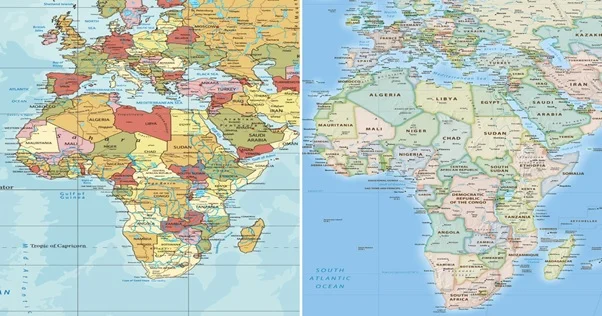
Earth is a three-dimensional sphere-like body, while a conventional map is a two-dimensional flat surface. Converting the Earth's curved surface into a flat map inevitably creates some form of distortion.
A map projection may attempt to preserve:
But no flat world map can perfectly preserve all these characteristics simultaneously. The Mercator projection prioritises angles and direction, making it useful for navigation, but sacrifices the accurate representation of area.
|
Feature |
Mercator Projection |
Equal Earth Projection |
|
Main Purpose |
Navigation |
General world representation |
|
Developed |
1569 |
2018 |
|
Area Preservation |
No |
Yes |
|
Shape/Angle |
Locally preserved |
Some distortion |
|
Polar Regions |
Highly enlarged |
More proportionate |
|
Africa |
Appears relatively smaller |
Reflects actual relative area |
|
Navigation |
Highly useful |
Not primarily designed for navigation |
Africa is particularly affected because much of the continent lies near the Equator, while Europe, Russia, Canada and Greenland extend into higher latitudes.
The African Union argues that the issue extends beyond geography because repeated visual representations can influence how societies perceive the economic, political and strategic importance of different regions.
1. Cartographic Accuracy: It promotes maps that better reflect the actual relative areas of countries and continents.
2. Representation of Africa: The initiative seeks to correct the longstanding visual underrepresentation of the African continent.
3. Education: School textbooks and educational maps could increasingly adopt equal-area projections.
4. Digital Mapping: The initiative could encourage digital platforms and technology companies to reconsider how the world is visually represented.
5. Global South: The debate reflects a wider demand from developing countries for more equitable representation in global institutions, knowledge systems and international narratives.
France was among the countries supporting the initiative and announced plans to move away from Mercator for relevant map representations.
The United States was the only country to vote against the resolution. According to reports, the US argued that the proposal promoted an “ideological agenda” and diverted attention from more pressing international challenges related to peace, prosperity and international relations.
Prelims MCQQ. With reference to map projections, consider the following statements:
Which of the statements given above are correct? (a) 1 only Mains Question“Map projections are not merely technical representations of geography but can also influence perceptions of geopolitical importance.” Discuss in the context of the UN-backed ‘Correct the Map’ initiative. |
1. What is the Correct the Map resolution?It is a UN General Assembly resolution promoting more accurate cartographic representation of continents, particularly Africa, and encouraging greater use of alternatives to the Mercator projection. 2. Which country led the initiative?Togo championed the initiative on behalf of the African Group, with strong backing from African Union members. 3. How many countries supported the resolution?164 countries voted in favour, while six abstained and the United States was the only country to vote against it. 4. What is wrong with the Mercator projection?It exaggerates the size of regions closer to the poles and therefore makes equatorial regions such as Africa appear relatively smaller. 5. Is Africa really 14 times larger than Greenland?Yes. Africa's land area is roughly 14 times that of Greenland, although Mercator maps can make them appear broadly similar in size. |
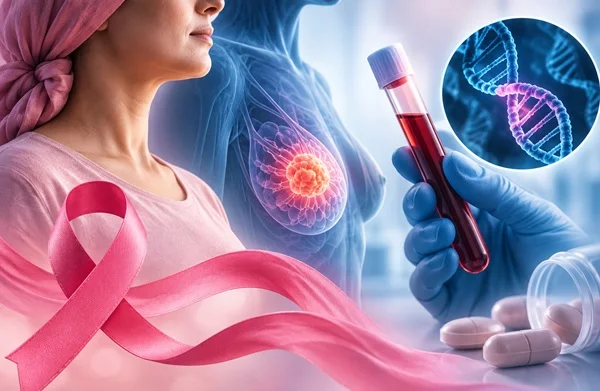
| Prelims: Camizestrant (Etcamah), Breast Cancer, ESR1 Mutation, Circulating Tumour DNA (ctDNA), Liquid Biopsy, CDK4/6 Inhibitors, Companion Diagnostics, Guardant360 CDx, FDA Accelerated Approval, Precision Medicine Mains: GS Paper II: Health, Government Policies & Interventions, Health Regulation GS Paper III: Science & Technology, Biotechnology, Precision Medicine, Cancer Research, Genomics and Healthcare |
|
Feature |
Details |
|
Drug |
Camizestrant |
|
Brand name |
Etcamah |
|
Company |
AstraZeneca |
|
Approval |
FDA Accelerated Approval |
|
Date |
4 September 2026 |
|
Disease |
Locally advanced/metastatic breast cancer |
|
Cancer subtype |
HR-positive, HER2-negative |
|
Key mutation |
ESR1 |
|
Type of drug |
Estrogen receptor antagonist |
|
Combination |
CDK4/6 inhibitor |
|
Companion diagnostic |
Guardant360 CDx |
|
Key technology |
ctDNA blood testing |
|
Major clinical trial |
SERENA-6 |
|
Patients in trial |
315 |
|
Median PFS |
16 months vs 9.2 months |
HER2 stands for Human Epidermal Growth Factor Receptor 2. It is a protein involved in cell growth. Some breast cancers contain unusually high amounts of HER2 and are classified as HER2-positive.
Examples: Anastrozole and Letrozole.
Prelims MCQQ. With reference to camizestrant (Etcamah), recently in the news, consider the following statements:
Which of the statements given above are correct? A. 1 and 2 only B. 2 and 3 only C. 1 and 3 only D. 1, 2 and 3 Mains Practice QuestionQ. How can circulating tumour DNA (ctDNA) and companion diagnostics transform cancer treatment? Discuss their role in the emerging field of precision medicine. |
What new breast cancer treatment has the FDA approved?The FDA granted accelerated approval to camizestrant (Etcamah) in combination with a CDK4/6 inhibitor for certain adults with HR-positive, HER2-negative advanced or metastatic breast cancer carrying an acquired ESR1 mutation. What is ESR1?A gene encoding an estrogen receptor. Certain acquired mutations can contribute to resistance to endocrine therapy. What is ctDNA?Circulating tumour DNA consists of small fragments of DNA released by tumour cells into the bloodstream. What makes this FDA approval special?The first cancer-therapy approval guided by detection of a resistance mutation in ctDNA before imaging shows disease progression. What is a liquid biopsy?It analyses tumour-derived material, such as ctDNA, in blood or another body fluid to obtain molecular information about a cancer. |

Our support team will be happy to assist you!

 Contact Us
  New Batch : 9555124124/ 7428085757
  Tech Support : 9555124124/ 7428085757

