| (Prelims: Current Events of National Importance, General Science) (Mains, General Studies Paper 3: Infrastructure: Energy, Ports, Roads, Airports, Railways, etc.) |
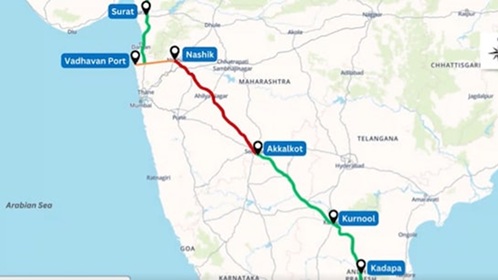
Recently, the Cabinet Committee on Economic Affairs (CCEA), chaired by Prime Minister Narendra Modi, approved the construction of a six-lane greenfield corridor connecting Nashik, Solapur, and Akkalkot in Maharashtra at a total cost of ₹19,142 crore.
| (Prelims: Current Events of National Importance, General Science) (Mains, General Studies Paper 3: Achievements of Indians in Science and Technology; Indigenous Technology Development and Development of New Technologies) |
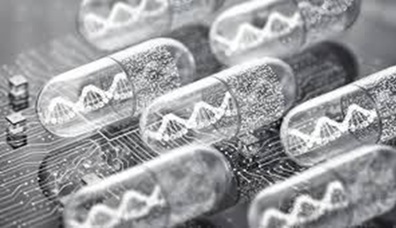
Recently, the Ministry of Science and Technology has developed a new open-source software called PathGennie, which is being considered a significant advancement in the field of drug discovery and molecular simulation.
The use of PathGennie is not limited to drug discovery. Its potential applications include:
| Prelims: (Polity + CA) Mains: (GS 2: Governance, Constitutional Rights, Judicial Interpretation; GS 3: Internal Security, Terrorism, Role of Anti-Terror Laws) |
The Supreme Court of India granted bail to five accused in the 2020 Northeast Delhi riots case but denied bail to Umar Khalid and Sharjeel Imam, holding that all accused did not stand on equal footing despite facing similar charges under the Unlawful Activities (Prevention) Act (UAPA).
The ruling is significant not only for its bail outcome but for its expansive interpretation of “terrorist act” under UAPA, the creation of a hierarchy of culpability, and its clarification on the limits of prolonged pre-trial incarceration under anti-terror laws.

The Supreme Court rejected a blanket approach to culpability and emphasised that each accused must be assessed based on their role within the alleged conspiracy.
The Court introduced a graded or hierarchical framework of responsibility, distinguishing between:
In the case of Umar Khalid and Sharjeel Imam, the Court accepted the prosecution’s claim that they occupied a central and directive role.
They were described as:
The Court held that they allegedly planned coordinated disruptions, including chakka jams, intended to paralyse civic life and escalate protests into mass disorder.
The five accused granted bail were characterised as:
Their roles were deemed derivative, lacking autonomy or strategic control over the alleged conspiracy.
Since the investigation was complete and trial delays were substantial, continued incarceration of such accused was considered disproportionate and punitive.
Section 15 of the UAPA defines a terrorist act as one committed with intent to:
It lists specific violent means (explosives, firearms, etc.) and includes a broad residual clause — “or any other means.”
The prosecution argued that planned, synchronised road blockades choking arterial roads could fall under “any other means”, even without conventional weapons, because of their intended impact, scale, and consequences.
The defence argued that:
The Court rejected a narrow reading and held that:
This marks a broadened judicial understanding of terrorism, extending beyond traditional violence to include calibrated mass disruption.
Section 43D(5) bars bail if accusations appear prima facie true.
For the co-accused with limited roles, the bar was held not to operate with equal force.
All accused highlighted:
They relied on Union of India v. K.A. Najeeb (2021), where the Supreme Court held that constitutional courts may grant bail under UAPA to prevent violation of Article 21 if trials are indefinitely delayed.
The Court clarified that:
Given:
The delay could not be attributed solely to the prosecution.
Balancing Liberty and Security
Thus, bail was granted selectively.
FAQsQ1. What is the significance of this Supreme Court ruling ? It broadens the interpretation of “terrorist act” and clarifies bail standards under UAPA. Q2. Did the Court equate protest with terrorism ? No, but it held that coordinated, disruptive acts with strategic intent may qualify as terrorism. Q3. What is Section 43D(5) of UAPA ? It restricts bail if accusations appear prima facie true. Q4. How does this affect Article 21 rights ? The Court balanced liberty against national security, limiting automatic bail due to delay. Q5. Why is this judgment important for future cases ? It shapes how courts assess conspiracy, intent, and proportionality under anti-terror laws. |
| Prelims: (International Relations + CA) Mains: (GS 2: International Relations, International Law; GS 3: Strategic Resources, Critical Minerals, Geopolitics) |
Denmark and Greenland have strongly rejected US President Donald Trump’s assertion that the United States needs Greenland “for defence”, calling any attempt to annex or purchase the island unacceptable and absurd.
The sharp response follows renewed US signalling—including provocative maps and statements—suggesting strategic interest in taking control of the Arctic island, escalating tensions over sovereignty, Arctic security, and international law.
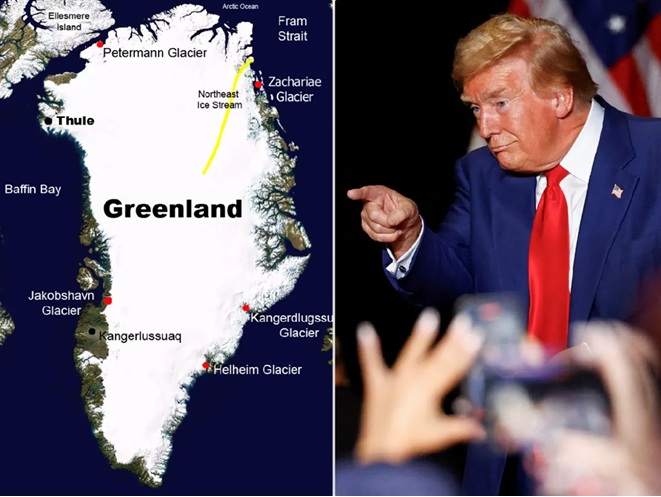
Greenland occupies a critical position between North America, Europe, and the Arctic, making it strategically invaluable.
Its location allows monitoring of potential threats from Russia, China, and North Korea, reinforcing US global defence posture.
US interest in Greenland is not new:
According to a Danish Broadcasting Corporation (DR) report, the Trump administration allegedly pursued a three-phase approach:
Denmark has accused Washington of undermining Greenland’s political stability.
Yes, the US has expanded through purchases, but under vastly different historical conditions:
However, modern international law prohibits territorial acquisition by coercion or force, making Greenland fundamentally different.
FAQsQ1. Why is Greenland strategically important ? Its location enables missile defence, Arctic access, and monitoring of rival powers. Q2. Does Greenland belong to Denmark ? Yes, Greenland is an autonomous territory within the Kingdom of Denmark. Q3. Can the US legally buy Greenland today ? No. Modern international law rejects territorial acquisition without consent. Q4. Why are rare earth minerals significant ? They are critical for defence, electronics, and clean energy technologies. Q5. What makes this issue globally important ? It reflects rising Arctic militarisation and challenges to international norms. |
| Prelims: (Science & Technology + CA) Mains: (GS 3: Energy, Infrastructure, Environment) |
In a major step towards expanding renewable energy and ensuring 24×7 electricity supply, the Tripura government has identified 10 river sites to generate about 185 MW of power using Hydrokinetic Turbine Technology. The initiative reflects India’s growing focus on innovative, low-impact renewable energy solutions.
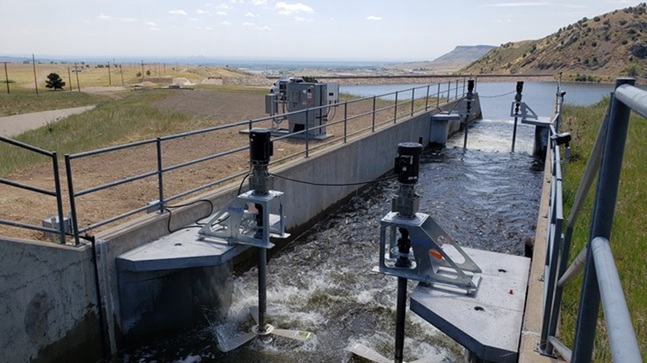
Hydrokinetic turbine technology is an emerging form of hydropower generation that harnesses the kinetic energy of flowing water—such as rivers, canals, and tidal streams—to produce electricity.
Unlike conventional hydropower plants, hydrokinetic systems:
Electricity is generated as the natural movement of water rotates turbine blades, converting kinetic energy into electrical energy.
|
Aspect |
Conventional Hydropower |
Hydrokinetic Technology |
|---|---|---|
|
Energy Source |
Potential energy (head) |
Kinetic energy (flow) |
|
Infrastructure |
Dams, weirs, barrages |
In-stream turbines |
|
Environmental Impact |
High |
Low |
|
Land Submergence |
Significant |
Negligible |
|
Ecosystem Disruption |
Often high |
Minimal |
This makes hydrokinetic technology particularly suitable for ecologically sensitive regions.
FAQsQ1. What is the main principle behind hydrokinetic turbines ? They generate electricity using the kinetic energy of flowing water without creating a water head. Q2. How are hydrokinetic turbines environmentally safer than dams ? They do not obstruct river flow, cause submergence, or significantly disrupt aquatic ecosystems. Q3. Where can hydrokinetic turbines be installed ? In rivers, canals, tidal streams, and other flowing water bodies. Q4. Why is Tripura suitable for hydrokinetic power projects ? Due to its river systems, ecological sensitivity, and need for decentralised renewable energy. Q5. Can hydrokinetic turbines replace conventional hydropower ? No, but they can complement it, especially in ecologically fragile or remote areas. |
| Prelims: (Economy + CA) Mains: (GS 2 - Trade Relations, Government Policies; GS 3 - Agriculture & Fisheries, Exports, Economy) |
India’s seafood exports recorded strong growth in FY 2025–26 despite higher tariffs imposed by the United States, signalling a successful shift towards market diversification and enhanced export resilience.
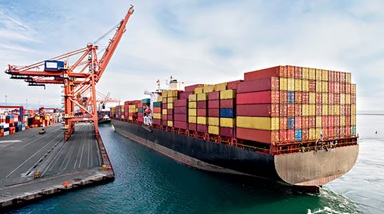
India possesses one of the world’s most diverse seafood sectors, supported by:
The sector plays a vital role in:
Aquaculture-led production has helped India stabilise supply, improve quality control, and meet global demand consistently.
Improved cold-chain infrastructure and adherence to international food safety standards have strengthened India’s export competitiveness.
Traditionally, India’s top seafood export destinations have been:
However, policy and industry efforts in recent years have focused on reducing over-dependence on a single market, especially the U.S.
This trend reflects a clear eastward and European pivot in India’s seafood export strategy.
Despite diversification, the U.S. remains India’s largest individual seafood market, underscoring the need to balance diversification with retention.
FAQsQ1. Why are shrimp central to India’s seafood exports ? Because shrimp farming offers high yields, strong global demand, and better export value. Q2. What caused the decline in exports to the U.S. ? Higher tariffs and trade-related barriers imposed by the U.S. Q3. Which markets have compensated for the U.S. decline ? China, Vietnam, Belgium, Malaysia, and Germany. Q4. What role does MPEDA play ? Export promotion, quality assurance, traceability, and market access facilitation. Q5. Why is diversification important for seafood exports ? It reduces dependence on single markets and improves resilience to global trade shocks. |
| Prelims: (Environment + CA) Mains: GS Paper 2: Global Climate Governance, International Agreements; GS Paper 3: Biodiversity, Sustainable Development, Climate Change) |
The Paris Agreement, adopted in 2015 under the UN Framework Convention on Climate Change (UNFCCC), completed ten years in November 2025, prompting a global assessment of its effectiveness, ambition, and equity in addressing climate change.

FAQsQ1. Why is the Paris Agreement considered a landmark climate treaty ? Because it ensured universal participation and introduced a flexible, bottom-up framework. Q2. How is the Paris Agreement different from the Kyoto Protocol ? Kyoto imposed binding targets on developed nations, while Paris relies on voluntary NDCs by all countries. Q3. What is the Global Stocktake ? A periodic assessment of collective progress towards Paris goals, conducted every five years. Q4. Why has India criticised the NCQG on climate finance ? Because the USD 300 billion target is inadequate for developing countries’ needs. Q5. What is the biggest challenge facing the Paris Agreement today ? The gap between stated commitments and actual implementation |

Our support team will be happy to assist you!


 Contact Us
  New Batch : 9555124124/ 7428085757
  Tech Support : 9555124124/ 7428085757