- UPSC Exam
- State PCS
- One Day Exam
- Current Affairs
- PT Quiz
- Downlaods
- About Coaching
- Blog
- Videos

India’s education system is vast and diverse, facing several challenges such as unequal access to quality education, shortage of resources, high teacher–student ratios, and linguistic diversity. In this context, Artificial Intelligence (AI) has the potential to play a transformative role in the education sector. AI-based technologies can make education more personalized, inclusive, accessible, and effective.

AI-based systems analyze each student’s learning pace, abilities, and weaknesses to provide personalized learning.
AI helps teachers make the teaching process more effective.
AI-based assessment systems can overcome many limitations of traditional examinations.
AI-based dashboards and predictive analytics allow education administrators to make data-driven decisions.
AI technologies can make education more inclusive.
The NEP 2020 emphasizes technological innovation in education and recognizes the importance of emerging technologies such as AI, Big Data, and Machine Learning.
Under NEP 2020 and the National Curriculum Framework (NCF) 2023, institutions such as CBSE and NCERT are incorporating AI into school curricula.
This allows students to develop digital and technological skills from an early stage.
The University Grants Commission (UGC) included subjects such as Artificial Intelligence, Machine Learning, Big Data Analytics, and 3D Machining in undergraduate curricula in 2022.
This helps students develop skills aligned with emerging technologies.
1. Lack of Digital Infrastructure
Many rural areas in India still lack proper internet connectivity and digital infrastructure, limiting the effective use of AI-based educational resources.
2. Quality and Accuracy of Content
Ensuring the accuracy, quality, and reliability of AI-generated educational content is a major challenge.
3. Linguistic Diversity
India has numerous languages and dialects. Developing high-quality localized and multilingual educational content remains a challenge.
4. Data Privacy and Security
AI systems use sensitive data of students and teachers, raising concerns about data privacy and cybersecurity.
5. Algorithmic Bias
AI algorithms often function like “black boxes”, where decision-making processes are not transparent, leading to concerns about bias and fairness.
| Prelims : (Economics + CA) Mains : (GS 2 – Government Policies and Interventions; GS 3 – Energy Security and Infrastructure) |
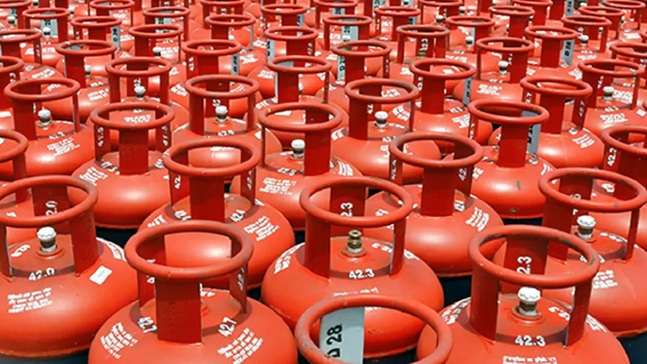
Amid escalating tensions in West Asia and disruptions in maritime movement through the Strait of Hormuz, India faces potential risks to its supply of Liquefied Petroleum Gas (LPG).
Since more than 80% of India’s LPG imports transit through this route, the Government of India has invoked emergency provisions under the Essential Commodities Act, 1955 to ensure uninterrupted cooking gas supplies for over 33 crore households.
The Ministry of Petroleum and Natural Gas (MoPNG) has directed oil refiners to maximize LPG production and prioritise domestic consumption, preventing diversion of propane and butane streams to petrochemical industries.
The government issued the directive under:
These provisions empower the government to regulate production, storage, distribution, and supply of essential commodities during emergencies.
The emergency order mandates that :
Domestic LPG supply is mainly handled by three major public sector OMCs :
These companies distribute cooking gas cylinders across India and meet almost the entire household LPG demand.
India’s LPG consumption in 2024–25 was approximately 31 million tonnes.
Although domestic refining capacity is large, limited availability of propane and butane feedstock restricts local LPG production.
India traditionally imports LPG from West Asian countries, including :
Most of these shipments pass through the Strait of Hormuz, making the route strategically critical.
The Strait of Hormuz is one of the world’s most important energy transit chokepoints.
For India, the route carries :
Any disruption in this corridor can significantly affect India’s energy security.
India has recently signed an LPG supply agreement with the United States.
Key features
Import of 2.2 million tonnes of LPG in 2026
Equivalent to about 10% of India’s annual LPG imports
Supplies from the US Gulf Coast
This agreement aims to reduce dependence on West Asian suppliers.
India is also coordinating with major international commodity traders, including :
The goal is to secure additional LPG and crude oil cargoes from alternative markets.
Current Fuel Stock Levels
Indian refiners currently maintain :
Additionally, roughly half of the crude stock is replenished regularly through shipments from non-Hormuz regions.
India maintains emergency crude oil reserves at :
These reserves serve as a buffer against global supply disruptions.
India’s daily oil consumption currently stands at around 5.6 million barrels per day (bpd).
Vulnerability in LNG Supply
India is the world’s fourth-largest importer of Liquefied Natural Gas (LNG).
However, unlike crude oil, LNG cannot be easily stored in large quantities, making supply disruptions more difficult to manage.
The state-run Petronet LNG Limited has issued force majeure notices to suppliers and domestic customers.
The supplier QatarEnergy has also warned of possible production disruptions due to the conflict.
In India, natural gas allocation prioritises key sectors such as :
If shortages intensify, the government may re-prioritise gas allocation to safeguard essential sectors.
1. Limited Domestic LPG Production
Despite large refining capacity, domestic feedstock availability remains limited.
2. LNG Storage Constraints
Building large LNG reserves is technically complex and expensive.
3. Global Price Volatility
Geopolitical conflicts often trigger sharp increases in energy prices.
4. Fiscal Pressure
Higher import costs could increase government subsidy burdens.
5. Dependence on Maritime Routes
Reliance on sea lanes makes India vulnerable to geopolitical disruptions.
India should expand LPG imports from the United States, Africa, and Latin America.
Increasing Strategic Petroleum Reserve capacity can strengthen energy security.
Enhancing gas exploration and refining efficiency can increase domestic LPG availability.
Promoting alternatives such as :
Strengthening naval presence and diplomatic coordination to ensure secure Sea Lanes of Communication (SLOCs).
Ensures uninterrupted cooking gas supply for millions of households.
Emergency regulation helps stabilise domestic energy markets.
Demonstrates proactive government intervention during global crises.
The crisis reveals India’s heavy reliance on external energy supply routes.
The situation may accelerate India’s transition to cleaner and alternative fuels.
FAQs1. Why is the Strait of Hormuz important for India’s energy supply ? A large portion of India’s LPG, crude oil, and LNG imports pass through this strategic chokepoint. 2. What emergency law has the government invoked to ensure LPG supply ? The government invoked provisions under the Essential Commodities Act, 1955. 3. Which companies supply LPG to Indian households ? Public sector oil marketing companies such as Indian Oil Corporation, BPCL, and HPCL supply most of the LPG used in India. 4. Why is LNG supply more vulnerable than crude oil supply ? LNG is difficult to store in large quantities, making supply disruptions harder to manage. 5. What long-term steps can strengthen India’s energy security ? Diversifying import sources, expanding strategic reserves, boosting domestic production, and adopting alternative energy sources. |
| Prelims: (Environment & Ecology + Current Affairs) Mains: (GS 3 – Environment, Biodiversity Conservation; GS 2 – International Environmental Agreements) |
A recent interim update to the State of the World’s Migratory Species Report has raised serious concerns about the health of migratory wildlife globally. The report warns that nearly half of the world’s migratory species populations are declining, while a significant proportion faces an increasing risk of extinction.
The findings highlight growing ecological threats such as habitat destruction, overexploitation, disease outbreaks, and climate change, emphasizing the urgent need for stronger international conservation cooperation.
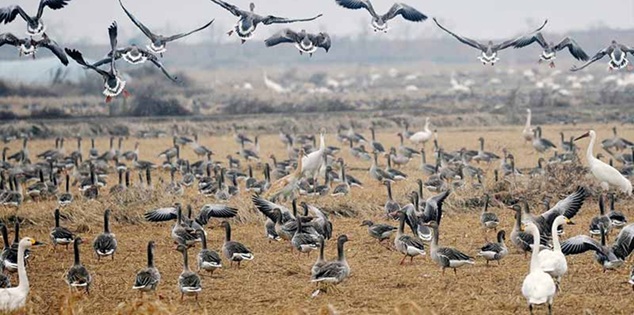
Migratory species are animals that periodically move across regions or countries as part of their life cycle, usually in search of breeding grounds, food, or favorable climatic conditions. These movements often span thousands of kilometres and involve multiple ecosystems and national jurisdictions.
Recognizing the need for coordinated international protection, the global community established the Convention on the Conservation of Migratory Species of Wild Animals (CMS) in 1979 under the United Nations Environment Programme (UNEP).
The CMS is a legally binding international treaty that focuses on:
To evaluate the status of migratory wildlife globally, CMS periodically publishes the State of the World’s Migratory Species Report, a comprehensive global assessment of migratory species and the threats they face.
The first global report released in 2024 represented the most detailed evaluation of migratory wildlife to date, covering:
The report relies on data from sources such as the International Union for Conservation of Nature (IUCN) Red List, population monitoring studies, and peer-reviewed scientific research.
Migratory species play a critical ecological and socio-economic role in maintaining environmental stability and supporting human livelihoods.
Many migratory birds assist in pollination and help control agricultural pests, contributing to food security.
Marine migratory species such as whales, sharks, and large fish maintain ocean food chains and regulate marine ecosystems.
Large terrestrial migratory animals transport nutrients across landscapes, enriching soil and supporting vegetation growth.
Migration links different ecosystems—forests, wetlands, grasslands, and oceans—helping maintain biodiversity across regions.
Migratory species also contribute to:
However, migration itself creates vulnerability. Since migratory species depend on multiple habitats along their migration routes, destruction of even a single critical site can disrupt the entire migration cycle.
Therefore, conservation of migratory species requires international cooperation and coordinated environmental policies across countries.
The report highlights a worrying decline in migratory wildlife populations worldwide.
Major statistics include:
The situation has worsened in recent years, with the proportion of declining populations increasing by around 5 percentage points within just two years.
This trend indicates growing pressure on migratory species due to human activities and environmental changes.
The report also notes an increase in extinction risks among several migratory species.
According to updated data from the International Union for Conservation of Nature Red List, 26 migratory species have moved into higher extinction-risk categories.
Among them:
Examples of affected migratory animals include:
These findings underline the growing vulnerability of migratory wildlife across terrestrial, marine, and freshwater ecosystems.
The report identifies habitat loss and overexploitation as the two biggest threats facing migratory species globally.
Human-driven changes disrupting migratory habitats include:
Infrastructure projects such as roads, railways, pipelines, and fencing are also fragmenting habitats and blocking migration corridors.
For example, fences and transport infrastructure in Central Asia have disrupted migration routes of large ungulates such as Saiga Antelope, reducing their access to seasonal grazing grounds.
Because migratory species rely on a chain of habitats along their routes, the destruction of even one link can have severe cascading effects on their survival.
Another emerging threat highlighted in the report is the growing impact of Avian Influenza, particularly the H5N1 strain, on migratory wildlife.
Highly Pathogenic Avian Influenza has caused mass mortality events among several migratory bird populations and has also affected marine mammals.
Species affected include:
Marine mammals such as the South American Sea Lion and South American Fur Seal have also been affected.
Disease outbreaks add to existing pressures from habitat destruction, climate change, and pollution.
Despite the overall decline, the report identifies some encouraging conservation successes.
Seven migratory species listed under CMS have shown improvements in their conservation status due to coordinated international efforts.
Examples include:
These cases demonstrate that strong conservation measures, habitat protection, and cross-border cooperation can reverse population declines.
The report identified 9,372 Key Biodiversity Areas (KBAs) that serve as important habitats for migratory species.
However, nearly 47% of these areas currently lack formal protection, leaving critical habitats vulnerable to:
Strengthening protection and management of these areas is essential for ensuring the survival of migratory species.
The State of the World’s Migratory Species Report has major implications for global biodiversity governance and conservation policies.
Strengthening Global Environmental Cooperation
Since migratory species cross national boundaries, the report highlights the need for international coordination and multilateral environmental agreements.
Protecting Ecosystem Services
Migratory species contribute to pollination, fisheries productivity, pest control, and ecosystem stability, which directly affect human well-being.
Supporting Global Biodiversity Targets
Conservation of migratory species is crucial for achieving the goals of global biodiversity frameworks such as the Kunming-Montreal Global Biodiversity Framework.
Informing Policy and Conservation Strategies
The report provides scientific evidence that can guide:
Habitat Fragmentation
Infrastructure and land-use changes disrupt migration routes and ecological connectivity.
Weak Cross-Border Cooperation
Migratory species often travel through multiple countries with different conservation policies.
Climate Change
Changing temperatures and rainfall patterns alter migration timings and habitat availability.
Illegal Wildlife Trade
Poaching and illegal hunting continue to threaten many migratory species.
To protect migratory species effectively, the following measures are essential:
FAQs1. What is the State of the World’s Migratory Species Report ? It is a global scientific assessment that evaluates the conservation status, population trends, and threats faced by migratory wildlife worldwide. 2. Which organisation publishes this report ? The report is prepared under the Convention on the Conservation of Migratory Species of Wild Animals (CMS), an international treaty established under the United Nations Environment Programme (UNEP). 3. What are migratory species ? Migratory species are animals that move seasonally across long distances between breeding, feeding, or wintering habitats. 4. What are the major threats to migratory species ? Key threats include habitat loss, overexploitation, infrastructure barriers, climate change, pollution, and emerging diseases such as avian influenza. 5. Why is international cooperation important for conserving migratory species ? Because migratory animals cross national boundaries, their protection requires coordinated conservation actions among multiple countries sharing the same migration routes. |
| Prelims: (Economy + CA) Mains: (GS 3 – Infrastructure & Energy; GS 3 – Environmental Conservation; GS 2 – Environmental Governance) |
The Karnataka High Court has issued notices to the Central and State governments regarding a Public Interest Litigation (PIL) challenging the approvals granted for the Sharavathi Pumped Storage Hydroelectric Project (PSHP).
The petition questions the legality of clearances provided by the State Wildlife Board and the in-principle approval given by the National Board for Wildlife.
The project has generated debate over the balance between renewable energy development and ecological conservation in the Western Ghats.
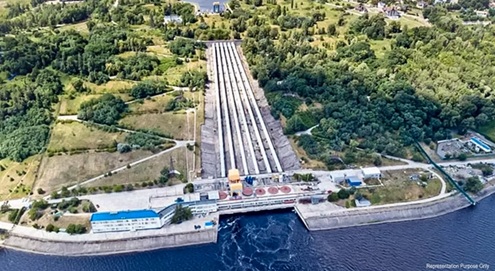
The Sharavathi Pumped Storage Hydroelectric Project is a proposed hydropower project on the Sharavathi River in Shivamogga district.
The project aims to enhance grid stability and support integration of renewable energy sources such as solar and wind.
The project is designed as a pumped storage hydropower system, which uses two reservoirs at different elevations.
Reservoir System
Talakalale dam currently regulates water for the existing Sharavathi hydropower project, while Gerusoppa will serve as the lower reservoir.
These components allow water to be pumped back to the upper reservoir during periods of low electricity demand and released during peak demand to generate power.
Beyond electricity generation, the project aims to:
The project is also partly inspired by large-scale water management systems like the Kaleshwaram Lift Irrigation Project.
It also aims to provide drinking water supply to Bengaluru, addressing the city’s growing water demand.
The project area falls within the Eco-Sensitive Zone (ESZ) of the Sharavathi Wildlife Sanctuary, which is part of the ecologically fragile Western Ghats.
The sanctuary is home to several endangered and endemic species, including:
Environmental groups argue that construction activities, tunnels, and infrastructure could fragment habitats and threaten biodiversity.
Pumped storage hydropower is a form of energy storage technology that supports renewable energy systems.
India is increasingly exploring pumped storage projects as part of its clean energy transition strategy.
The Sharavathi River is one of the major rivers of Karnataka.
Unlike most Indian rivers that flow eastwards, Sharavathi flows westward.
The river basin features diverse landscapes including:
A major attraction along its course is Jog Falls, one of the highest waterfalls in India.
1. Renewable Energy Expansion
The project will contribute 2,000 MW of clean electricity, supporting India’s renewable energy goals.
2. Grid Stability
Pumped storage projects help store excess renewable power and supply electricity during peak demand.
3. Energy Storage Infrastructure
PSHPs act as large-scale battery systems for electricity grids.
4. Water Resource Management
The project may support drinking water supply to Bengaluru, which faces increasing water stress.
5. Economic Development
Infrastructure investments can promote regional economic growth and job creation.
FAQs1. What is the Sharavathi Pumped Storage Hydroelectric Project ? It is a proposed 2,000 MW pumped storage hydropower project in Karnataka designed to store and generate electricity using two reservoirs. 2. Which company is developing the project ? The project is being developed by Karnataka Power Corporation Limited (KPCL). 3. Why is the project controversial ? It is located in the eco-sensitive zone of the Sharavathi Wildlife Sanctuary, raising concerns about biodiversity and environmental damage. 4. What is pumped storage hydropower ? It is an energy storage system that pumps water to a higher reservoir using surplus electricity and releases it to generate power during peak demand. 5. Why is the Sharavathi River important ? The river flows through the Western Ghats, forms the famous Jog Falls, and supports diverse ecosystems and water resources in Karnataka. |
| Prelims: (International Relations + Current Affairs) Mains: (GS 2 – International Relations, Global Governance; GS 3 – Economy, Technology, Climate Diplomacy) |
The Prime Minister of India recently inaugurated the 11th edition of the Raisina Dialogue in New Delhi, reaffirming India’s growing role as a global convenor of strategic and geopolitical discussions.
The event brings together policymakers, diplomats, scholars, industry leaders, and strategic experts from across the world to deliberate on key issues shaping global politics, security, technology, and economic governance.

The Raisina Dialogue is India’s flagship international conference on geopolitics and geo-economics, designed to address some of the most pressing global challenges.
It is organised by the Observer Research Foundation (ORF) in partnership with the **Ministry of External Affairs, Government of India.
The conference derives its name from Raisina Hill, the seat of India’s central government institutions in New Delhi, symbolizing the country’s strategic and diplomatic vision.
The dialogue was launched in 2016 with the aim of creating a platform where global leaders could discuss security, economic cooperation, technology governance, climate change, and multilateral diplomacy.
Over time, the event has emerged as one of the most influential strategic conferences in the world, comparable to global platforms such as the Munich Security Conference and the Shangri-La Dialogue held in Singapore.
The conference is structured as a multi-stakeholder and cross-sectoral dialogue, bringing together diverse actors involved in global governance.
Participants typically include :
This broad participation reflects the changing nature of global governance, where non-state actors, private corporations, and think tanks increasingly influence international policy discussions.
The 2026 edition marks the 11th iteration of the dialogue and represents one of the largest gatherings of global strategic experts hosted by India.
The theme of Raisina Dialogue 2026 is : “Saṁskāra – Assertion, Accommodation, Advancement”
The theme reflects the evolving international order where nations must balance:
The conference has witnessed growing international participation, highlighting India’s rising diplomatic profile.
Key participation statistics include :
Participants include global political leaders, policymakers, diplomats, academics, industry experts, and civil society representatives.
The event is held over three days, featuring multiple formats such as :
These formats allow diverse perspectives to interact and generate policy ideas for global governance.
The discussions during the 2026 edition are organised around six major thematic pillars, each addressing key challenges confronting the international community.
This theme focuses on the changing global power structure, including:
The discussions explore governance of global commons, including:
It also examines new forms of international cooperation beyond traditional institutions.
This theme examines the global progress toward achieving the United Nations Sustainable Development Goals (SDGs) under the 2030 Agenda for Sustainable Development.
It evaluates challenges such as :
This pillar addresses the intersection between climate change, geopolitical conflicts, and economic stability.
Discussions focus on :
The sessions explore the rapidly evolving landscape of emerging technologies, including :
The discussions also examine how technology is reshaping international relations and economic competitiveness.
This theme focuses on global economic recovery in an era marked by:
It explores strategies to enhance resilience and reinvention of global trade systems.
The dialogue has emerged as a key platform for India’s strategic diplomacy, enabling the country to shape global policy discussions.
It reinforces India’s image as a bridge between the Global North and Global South.
In a period of geopolitical tensions and declining trust in multilateral institutions, the conference provides an informal platform for dialogue and confidence building.
The event encourages policy innovation and strategic thinking by bringing together experts from diverse fields.
The dialogue complements India’s broader diplomatic initiatives such as:
Despite its growing importance, forums like the Raisina Dialogue face several challenges:
Increasing rivalry among major powers can limit consensus on global issues.
Ideas discussed in such dialogues do not always translate into concrete policy outcomes.
Competing institutions and regional blocs sometimes weaken coordinated action.
Emerging technologies create complex challenges for international regulation.
To maximize its global impact, the Raisina Dialogue can contribute to :
As global politics becomes increasingly complex and multipolar, platforms like the Raisina Dialogue will play a critical role in shaping future global governance frameworks.
FAQs1. What is the Raisina Dialogue ? The Raisina Dialogue is India’s premier international conference on geopolitics and geo-economics that brings together global leaders, policymakers, and experts to discuss major international challenges. 2. Who organizes the Raisina Dialogue ? It is organized by the Observer Research Foundation in partnership with the Ministry of External Affairs, Government of India. 3. When was the Raisina Dialogue first held ? The conference was first held in 2016 in New Delhi. 4. What is the theme of Raisina Dialogue 2026 ? The theme for the 2026 edition is “Saṁskāra – Assertion, Accommodation, Advancement.” 5. Why is the Raisina Dialogue important for India ? It strengthens India’s global diplomatic engagement, promotes international strategic discussions, and enhances the country’s role as a major voice in shaping global governance. |
| Prelims : (Economics + CA) Mains : (GS 3 – Indian Economy; Economic Growth and Data Governance) |
The Ministry of Statistics and Programme Implementation (MoSPI) has released a new Gross Domestic Product (GDP) series to provide a more accurate assessment of India’s economy.
Under the revised methodology, 2022–23 has been adopted as the new base year, replacing the earlier base year. Updated GDP estimates for recent years have also been released, with previous figures set to be revised accordingly.
The new estimates indicate that India’s economy is smaller than previously calculated, pushing the country further away from its widely discussed $5 trillion economy target.
Gross Domestic Product (GDP) measures the total market value of all final goods and services produced within a country’s borders during a specific period.
GDP is the most widely used indicator to measure :
However, as economies evolve over time, prices, consumption patterns, technology, and industrial structures change.
Therefore, statistical authorities periodically revise the base year to ensure GDP estimates reflect the current structure of the economy.
In India, GDP estimation is conducted by the National Statistical Office (NSO).
GDP series revisions occur periodically to improve accuracy, coverage, and methodology.
For example :
The revision responds to criticism from economists and policymakers who argued that previous GDP estimates did not adequately capture informal sector activity and structural changes in the economy.
By updating methodologies and incorporating new datasets, the government aims to present a more realistic picture of India’s economic performance.
The revised GDP series introduces several methodological improvements.
The new methodology incorporates Goods and Services Tax (GST) data, which provides real-time information about economic activity across industries.
GST data improves the accuracy of quarterly GDP estimates, especially for the formal sector.
India’s economy has a large informal sector.
The new GDP series uses annual surveys of unincorporated enterprises to better capture economic activity in this segment.
This improves representation of :
Earlier GDP calculations faced criticism for problems in double deflation methods in agriculture and manufacturing sectors.
The revised methodology corrects these issues to ensure more reliable estimates of value addition.
Key economic ratios have been revised using recent surveys and studies, improving the reliability of national accounts.
The revised GDP estimates show that India’s economy is smaller than previously reported.
For instance :
This downward revision affects multiple macroeconomic indicators.
Per capita income represents the average income of a person in a country and is calculated by dividing GDP by population.
Under the earlier estimates :
Average annual income (2025–26): ₹2,51,393
Under the revised GDP series :
This suggests that the average income level in India is slightly lower than previously estimated.
India’s ambition to become a $5 trillion economy is based on nominal GDP, which measures the value of goods and services at current market prices.
For global comparison, nominal GDP in rupees is converted into US dollars using the exchange rate.
Earlier estimates suggested that India’s GDP had crossed $4 trillion in 2025–26.
However, two factors have changed the picture :
Assuming an exchange rate of ₹88 per dollar, India’s GDP is now estimated at around $3.9 trillion.
This means India is further away from the $5 trillion milestone than earlier believed.
The revised series offers a more realistic representation of economic activity by incorporating richer datasets.
Reliable GDP data helps policymakers design effective fiscal, monetary, and development policies.
Periodic revisions strengthen the credibility of national statistical systems.
The revision may lead to reconsideration of timelines for achieving the $5 trillion economy goal.
Capturing informal sector activity more accurately improves understanding of employment and productivity patterns.
Despite improvements, certain challenges remain:
FAQs1. What is GDP ? GDP is the total market value of all final goods and services produced within a country during a specific period. 2. Why are GDP base years revised periodically ? Base years are updated to reflect changes in economic structure, consumption patterns, and production methods. 3. What is the new base year for India’s GDP calculations ? The latest GDP series adopts 2022–23 as the new base year. 4. Why has India’s GDP been revised downward ? Improved data sources and revised estimation methods resulted in more accurate but slightly lower GDP estimates. 5. How does this affect India’s $5 trillion economy target ? With revised GDP figures and rupee depreciation, India’s economy is currently estimated at about $3.9 trillion, making the $5 trillion target slightly further away. |

Our support team will be happy to assist you!

 Contact Us
  New Batch : 9555124124/ 7428085757
  Tech Support : 9555124124/ 7428085757